
Best Cameras Under $500: Top Picks for Budget Photographers (2026)
Best cameras under $500 from Canon, Nikon, and Sony. We review the top budget cameras that deliver excellent image quality for beginners.
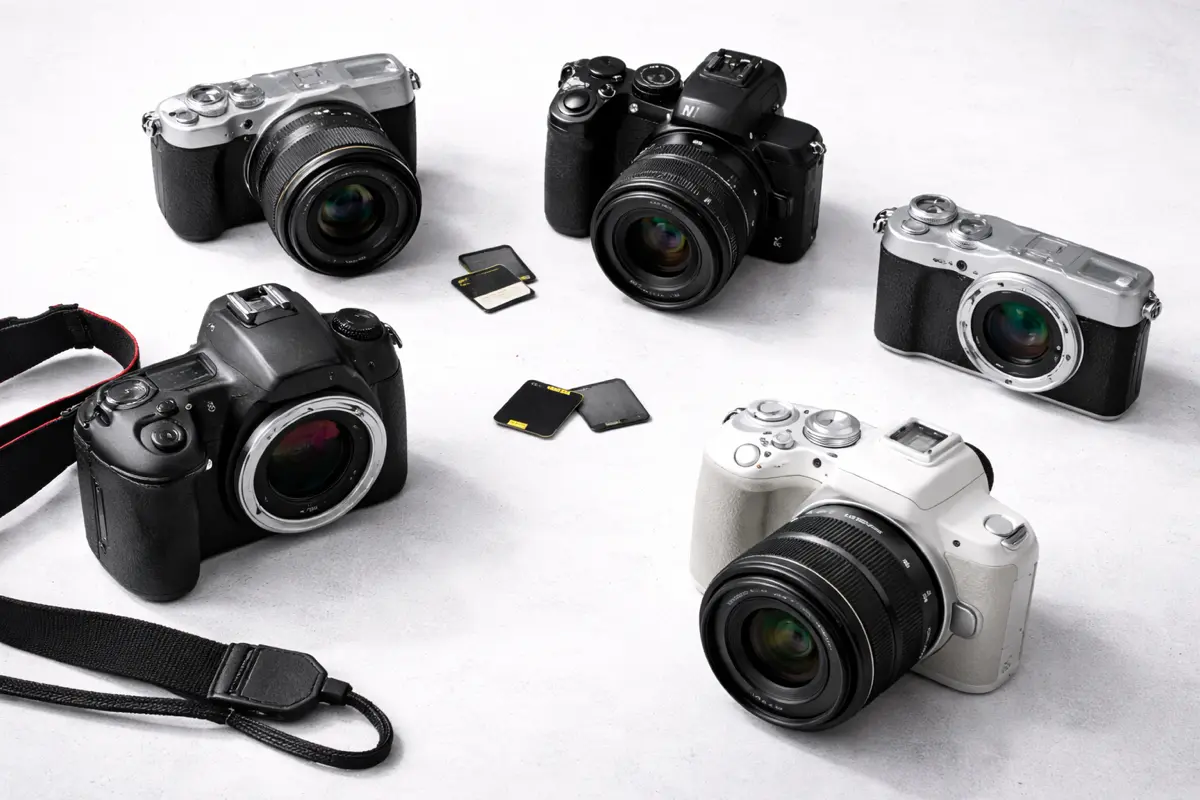
You don’t need to spend a fortune to take great photos. The best cameras under $500 deliver image quality that would have cost thousands just a few years ago. Whether you’re a beginner starting out or an enthusiast on a budget, this price range offers serious photography tools.
In this guide, I’ll review the best budget cameras available in 2026, comparing features, image quality, and value to help you find the perfect camera under $500.
Best Cameras Under $500: Quick Comparison
| Camera | Price | Type | Sensor | Best For |
|---|---|---|---|---|
| Canon EOS R100 | ~$480 | Mirrorless | 24.1MP APS-C | Best Overall |
| Nikon Z50 (Used) | ~$450 | Mirrorless | 20.9MP APS-C | Best Used Value (successor: Z50 II ~$860) |
| Sony A6000 | ~$450 | Mirrorless | 24.3MP APS-C | Best for Speed |
| Canon Rebel T7 | ~$400 | DSLR | 24.1MP APS-C | Best Budget DSLR |
| Fujifilm X-T200 | ~$500 | Mirrorless | 24.2MP APS-C | Best for Video |
1. Canon EOS R100 - Best Overall Under $500
Price: ~$480 with kit lens | Sensor: 24.1MP APS-C
The Canon EOS R100 represents the best value in mirrorless cameras under $500. It’s Canon’s most affordable entry into their modern RF mount system, offering features that punch well above its price point.
Why It’s the Best Budget Camera
Modern Mirrorless Technology: Unlike older DSLRs at this price, the R100 gives you electronic viewfinder preview, silent shooting, and Canon’s latest autofocus algorithms.
Excellent Autofocus: Dual Pixel CMOS AF with eye detection makes focusing nearly foolproof. The camera tracks faces and eyes automatically, ensuring sharp portraits every time.
Compact and Light: At just 356g body-only, the R100 is one of the lightest interchangeable lens cameras available. Perfect for travel and everyday carry.
Future-Proof System: Canon’s RF mount is their primary system going forward. Starting here gives you access to Canon’s entire lens ecosystem as you grow.
Specifications
- 24.1MP APS-C CMOS sensor
- Dual Pixel CMOS AF with eye detection
- ISO 100-12,800 (expandable to 25,600)
- 6.5 fps continuous shooting
- 4K 24p video / 1080p 60p
- 3.0” fixed LCD screen
- Built-in flash
- 356g body weight
Pros and Cons
Pros:
- Best autofocus in this price range
- Intuitive Guided Display mode
- Lightweight and compact
- Access to RF lens ecosystem
- Great image quality
Cons:
- Fixed LCD (no tilting)
- No in-body image stabilization
- Limited 4K video (cropped, 24p only)
- Single card slot
Best For: Beginners wanting modern mirrorless technology, family photographers, travel photography. For a detailed side-by-side, see our Canon R100 vs Nikon Z50 II comparison.
2. Nikon Z50 (Used) - Best Used Value
Price: ~$450-500 used with kit lens | Sensor: 20.9MP APS-C
The Nikon Z50 has been replaced by the Nikon Z50 II (~$860 with kit lens), which features an improved EXPEED 7 processor, better autofocus with subject detection, and 4K 30fps uncropped video. The Z50 II is an excellent camera, but at ~$860 it’s above our $500 budget. The original Z50, now available used for under $500, offers significantly more camera than anything new at this price.
Why Consider Used
Buying used from reputable dealers like MPB or KEH gets you:
- 6-12 month warranty
- Quality-checked equipment
- Significant savings (40-50% off retail)
- Access to higher-tier cameras
Pro tip: Japanese auction sites and proxy services often have even better deals on used cameras — Japan’s secondhand market is legendary for well-maintained gear.
What You Get
Superior Build Quality: The Z50 feels more substantial than budget cameras. Better weather resistance and a deeper grip make it comfortable for extended shooting.
Excellent Image Quality: Nikon’s 20.9MP sensor produces beautiful colors and impressive low-light performance. Files are clean up to ISO 6400.
Better Kit Lens: The Nikkor Z DX 16-50mm f/3.5-6.3 is sharper than most kit lenses, with a collapsing design for portability.
Tilting Touchscreen: Unlike the Canon R100, the Z50 has a tilting LCD perfect for vlogging and creative angles.
Specifications
- 20.9MP APS-C CMOS sensor
- 209-point hybrid autofocus
- ISO 100-51,200
- 11 fps continuous shooting
- 4K 30p video / 1080p 120p
- 3.2” tilting touchscreen
- 395g body weight
Pros and Cons
Pros:
- Excellent image quality
- Better build than new budget cameras
- Tilting touchscreen
- Superior video specs
- Deep, comfortable grip
Cons:
- No warranty if buying private sale
- Limited Z DX lens selection
- Battery life average (300 shots)
- Older autofocus than newest models
Best For: Those comfortable buying used, low-light shooters, video creators needing better specs. If your budget stretches to ~$860, consider the current Nikon Z50 II new instead.
3. Sony A6000 - Best for Speed
Price: ~$450 with kit lens | Sensor: 24.3MP APS-C
Released in 2014, the Sony A6000 remains a capable camera thanks to its excellent sensor and fast autofocus. At current prices, it’s remarkable value.
Why It’s Still Relevant
179 Phase-Detection Points: Even by 2026 standards, the A6000’s autofocus is impressive. It locks on quickly and tracks moving subjects reliably.
11 fps Continuous Shooting: The fastest burst rate under $500. Perfect for sports, wildlife, and active kids.
Mature Lens Ecosystem: Sony E-mount has the largest selection of APS-C lenses. Third-party options from Sigma and Tamron add even more choices.
Specifications
- 24.3MP APS-C CMOS sensor
- 179 phase-detection AF points
- ISO 100-25,600
- 11 fps continuous shooting
- 1080p 60p video (no 4K)
- 3.0” tilting LCD
- 344g body weight
Pros and Cons
Pros:
- Fast autofocus and continuous shooting
- Excellent image quality
- Huge lens selection
- Compact body
- Great value
Cons:
- No 4K video
- Older menu system
- Battery life limited (360 shots)
- No eye detection AF
Best For: Action photography, sports, parents capturing active kids, those prioritizing speed.
4. Canon EOS Rebel T7 - Best Budget DSLR
Price: ~$400 new with kit lens | Sensor: 24.1MP APS-C
If you want a new camera with warranty and have the tightest budget, the Canon Rebel T7 (EOS 2000D internationally) remains available and capable.
Why Choose a DSLR in 2026?
Not sure which type to pick? Our DSLR vs mirrorless guide breaks down the key differences.
Lower Price Point: New DSLRs are cheaper than comparable mirrorless cameras. That savings can go toward lenses or accessories.
Optical Viewfinder: Some photographers prefer seeing the actual scene rather than an electronic preview. DSLRs offer this traditional experience.
Exceptional Battery Life: The T7 shoots 500+ images per charge - nearly double most mirrorless cameras.
Specifications
- 24.1MP APS-C CMOS sensor
- 9-point autofocus system
- ISO 100-6400 (expandable to 12,800)
- 3 fps continuous shooting
- 1080p 30p video
- 3.0” fixed LCD
- 475g body weight
Pros and Cons
Pros:
- Lowest price for new camera with kit lens
- Excellent battery life
- Huge EF lens ecosystem
- Full warranty
- Simple, beginner-friendly
Cons:
- Outdated autofocus (9 points)
- Slow continuous shooting
- No 4K video
- Larger and heavier than mirrorless
- DSLR technology is end-of-life
Best For: Absolute beginners on tight budgets, those who prefer optical viewfinders, extended shooting without charging.
5. Fujifilm X-T200 - Best for Video
Price: ~$500 with kit lens | Sensor: 24.2MP APS-C
The Fujifilm X-T200 stands out for its video capabilities and gorgeous color science. If you plan to shoot both photos and video, this is the best option under $500.
Why Fujifilm?
Film Simulations: Fujifilm’s color profiles replicate classic film stocks. Get beautiful, ready-to-share images straight from the camera without editing.
Excellent Video: Full-width 4K with no crop, clean HDMI output, and built-in image stabilization make the X-T200 a capable video camera.
Large, Articulating Screen: The 3.5” vari-angle touchscreen is the largest in this price range and fully articulates for vlogging.
Specifications
- 24.2MP APS-C CMOS sensor
- 425 phase-detection AF points
- ISO 200-12,800
- 8 fps continuous shooting
- 4K 30p video (full width)
- 3.5” vari-angle touchscreen
- Digital image stabilization
- 370g body weight
Pros and Cons
Pros:
- Best video under $500
- Beautiful Fujifilm colors
- Large articulating touchscreen
- Digital stabilization
- Attractive retro design
Cons:
- Smaller lens selection
- Autofocus slower than Sony/Canon
- No in-body stabilization for photos
- Plastic build feels less premium
Best For: Video creators, content creators, Instagram photographers, those who love film aesthetics.
Honorable Mentions
Nikon D3500 (Used) - ~$300
The best beginner DSLR ever made. Used prices make it incredible value for those who don’t need mirrorless features.
Olympus PEN E-PM2 (Used) - ~$150-220
A hidden gem in the Micro Four Thirds world. Tiny body, excellent sensor borrowed from pro models, and one of the best value-for-money cameras on the used market. Read our full Olympus PEN E-PM2 guide for buying tips and lens recommendations.
Sony A6100 (Used) - ~$450-500
If you find a good used A6100, it offers eye-detection autofocus that the A6000 lacks. Worth the hunt.
Canon EOS M50 Mark II - ~$500
Canon’s older mirrorless system (EF-M mount) offers great value, though the system is discontinued.
What to Consider When Buying
New vs. Used
Buy New If:
- You want full warranty coverage
- Latest autofocus matters to you
- You’re not comfortable evaluating used gear
- You prefer Canon R100 or Rebel T7
Buy Used If:
- You want more camera for your money
- You’re comfortable with reputable dealers
- Features like tilting screens matter
- You’re eyeing the Nikon Z50 (used) or Sony A6100
Key Features to Prioritize
For Portraits: Prioritize autofocus with eye detection (Canon R100, used Z50 or new Z50 II)
For Action/Sports: Prioritize continuous shooting speed (Sony A6000)
For Video: Prioritize 4K and screen articulation (Fujifilm X-T200)
For Learning: Prioritize ease of use and guided modes (Canon R100, Rebel T7)
Lens Considerations
Your camera body is just the beginning. Consider lens availability:
- Canon RF (R100): Growing selection, some affordable options
- Nikon Z (Z50/Z50 II): Smaller selection, adapters available for F-mount
- Sony E (A6000/A6100): Largest selection, many third-party options
- Canon EF (T7): Massive used lens market
- Fujifilm X (X-T200): Quality over quantity, all lenses are good
Accessories to Budget For
Don’t forget these essentials when planning your purchase:
Must-Have ($50-80)
- Memory card: 64GB UHS-I ($15-20)
- Spare battery ($30-50)
- Camera bag ($20-40)
Recommended ($50-100)
- UV filter for lens protection ($15-25)
- Cleaning kit ($15-20)
- Basic tripod ($30-60)
My Recommendation
For most photographers on a budget in 2026, the Canon EOS R100 is the best camera under $500. It offers modern mirrorless technology, excellent autofocus, and a path to grow within Canon’s ecosystem.
If you’re comfortable buying used, the Nikon Z50 offers significantly more camera for similar money. Its superior build quality, tilting screen, and better video specs make it worth considering. For those with a larger budget, the Nikon Z50 II (~$860 with kit lens) is the current model and an excellent all-around beginner camera.
For action and speed, the Sony A6000 remains relevant despite its age. Its fast autofocus and 11fps burst rate are unmatched at this price.
Whatever you choose, remember that any camera in this guide can produce professional-quality images. The best camera is the one you’ll actually use - so pick one that feels right in your hands and start shooting.
Ready to learn more? Check out our guide to the best cameras for beginners or learn about DSLR vs mirrorless cameras. For the full picture, see our Photography Guide and Photography Buying Guide.
Related Articles
Photography Buying Guide: Everything You Need to Start in 2026
The complete guide to buying your first camera in 2026. From budget options to the DSLR vs mirrorless debate, we cover everything without the gear-head jargon.
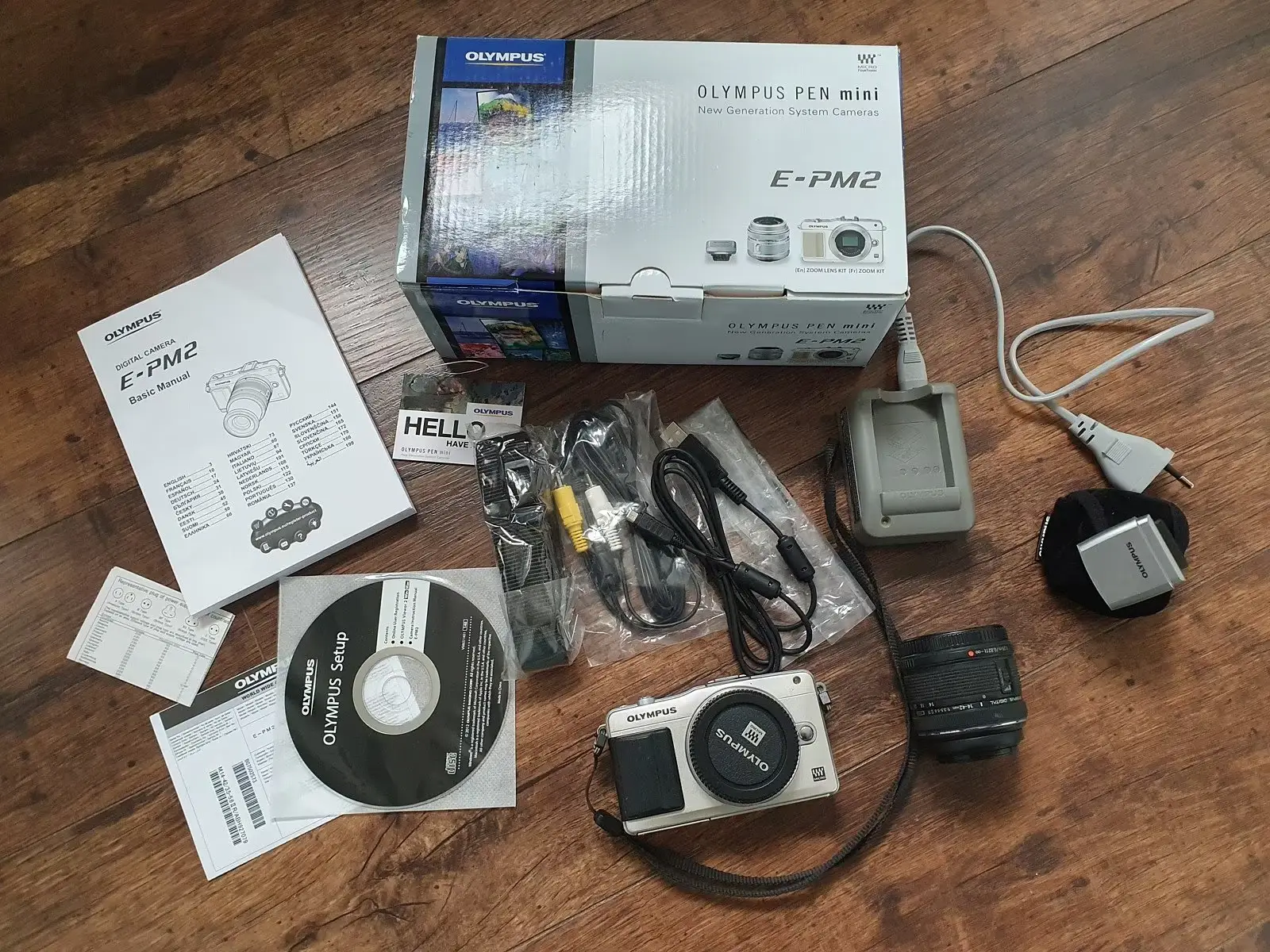
The Tiny Powerhouse: Is the Olympus PEN Lite E-PM2 the Perfect 'Work-Boredom' Camera?
Discover why the Olympus PEN Lite E-PM2 is a hidden gem for photography enthusiasts and bored office workers alike. Specs, prices, and tips included.
Camera vs Smartphone: Is a Dedicated Camera Still Worth It in 2026?
Should you buy a camera when your smartphone takes great photos? We compare image quality, features, and real-world use cases to help you decide.