
DSLR vs Mirrorless for Beginners: Which Camera Type Should You Buy?
DSLR or mirrorless camera? We explain the key differences, pros and cons, and help beginners decide which camera type is right for their photography journey.
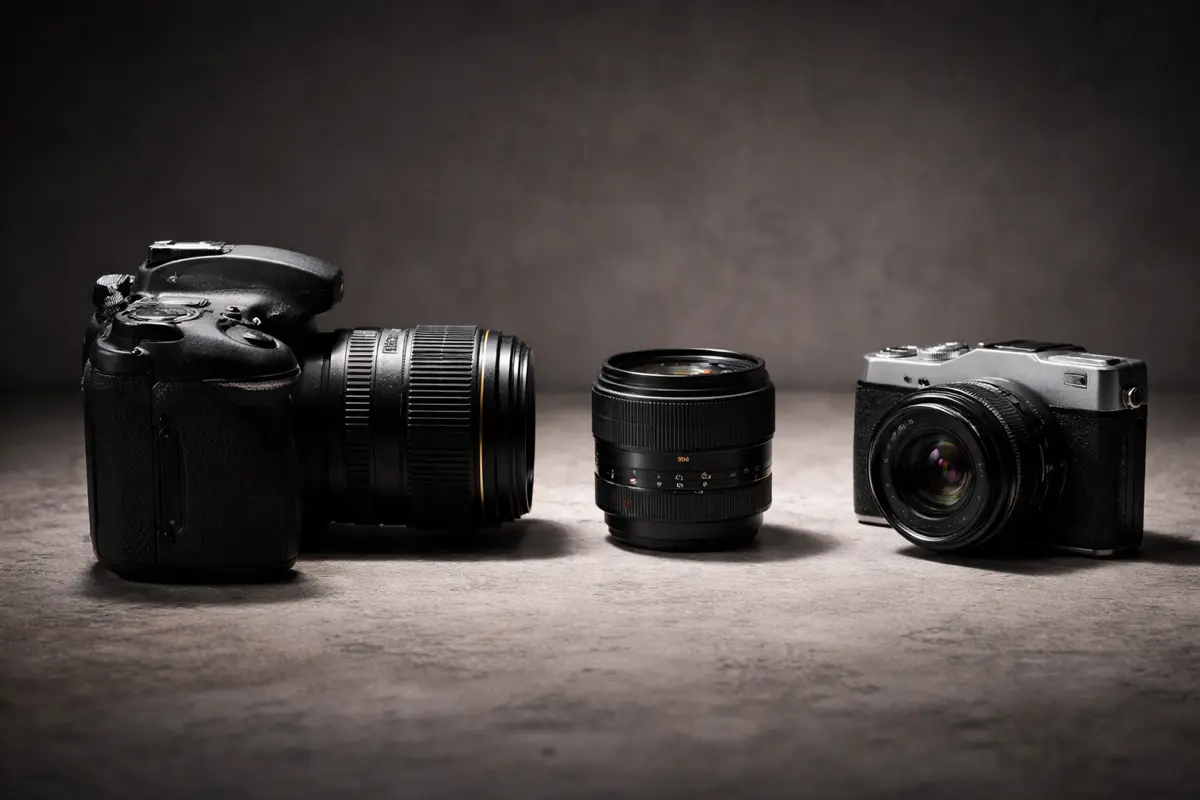
The DSLR vs mirrorless debate is one of the first decisions every beginner photographer faces. With camera manufacturers shifting entirely to mirrorless, is it still worth considering a DSLR? Or should you go mirrorless from the start?
In this comprehensive guide, I’ll explain exactly how these camera types differ, the real-world advantages of each, and help you decide which is right for your photography journey.
How Do DSLR and Mirrorless Cameras Work?
Before comparing them, let’s understand what makes these cameras different.
DSLR: The Traditional Approach
DSLR stands for Digital Single-Lens Reflex. Here’s how it works:
- Light enters through the lens
- A mirror reflects the light up into an optical viewfinder
- You see the actual scene through the viewfinder
- When you press the shutter, the mirror flips up
- Light hits the sensor, capturing the image
- The mirror drops back down
Key Component: The mirror mechanism that gives you an optical view of the scene.
Mirrorless: The Modern Approach
Mirrorless cameras eliminate the mirror entirely:
- Light enters through the lens
- Light hits the sensor directly
- The sensor creates a digital preview
- You see this preview on the LCD or electronic viewfinder (EVF)
- When you press the shutter, the sensor captures the image
Key Component: The electronic viewfinder (EVF) that shows a digital representation of the scene.
DSLR vs Mirrorless: Key Differences
| Feature | DSLR | Mirrorless |
|---|---|---|
| Viewfinder | Optical (OVF) | Electronic (EVF) |
| Size/Weight | Larger, heavier | Smaller, lighter |
| Battery Life | 800-1500 shots | 300-500 shots |
| Autofocus | Phase detection (sensor) | Hybrid (on-sensor) |
| Continuous Shooting | Limited by mirror | Very fast (no mirror) |
| Silent Shooting | No (mirror slap) | Yes (electronic shutter) |
| Video AF | Poor (mirror up) | Excellent |
| Exposure Preview | No | Yes |
| Future Development | Discontinued | Active |
Advantages of Mirrorless Cameras
1. What You See Is What You Get (WYSIWYG)
This is the biggest advantage for beginners. In a mirrorless viewfinder, you see the actual exposure before taking the photo.
Change ISO? See it brighten in real-time. Adjust aperture? Watch depth of field change. Wrong white balance? Notice the color shift immediately.
With a DSLR, you only see these changes after taking the photo. Mirrorless cameras accelerate learning by providing instant visual feedback.
2. Superior Autofocus
Modern mirrorless autofocus is remarkable:
- Eye detection: Automatically focuses on human or animal eyes
- Subject tracking: Follows moving subjects across the frame
- More focus points: 400+ points vs. 9-61 on entry DSLRs
- Consistent accuracy: Phase detection across the entire sensor
DSLR autofocus uses a separate sensor and is only accurate at the center. Mirrorless autofocus works anywhere in the frame.
3. Smaller and Lighter
Without the mirror box, mirrorless cameras are significantly more compact:
| Camera | Type | Body Weight |
|---|---|---|
| Canon EOS R100 | Mirrorless | 356g |
| Canon Rebel T7 | DSLR | 475g |
| Nikon Z50 II | Mirrorless | 550g |
| Nikon D3500 | DSLR | 415g |
The difference seems small, but add a lens and shoot all day - it matters. Lighter cameras mean you’re more likely to bring them everywhere.
4. Better Video
Mirrorless cameras dominate video for one simple reason: the mirror doesn’t need to move.
DSLR video problems:
- Mirror must stay up (no optical viewfinder)
- Autofocus switches to slower contrast detection
- Continuous AF often hunts and misses
Mirrorless video advantages:
- Full use of phase-detection autofocus
- Eye tracking works in video
- 4K common at all price points
- Better stabilization options
If video matters to you at all, mirrorless is the clear choice.
5. Silent Shooting
Mirrorless cameras can use an electronic shutter - completely silent operation. Perfect for:
- Weddings and ceremonies
- Wildlife photography
- Street photography
- Sleeping babies
- Quiet environments
DSLRs always make noise from the mirror movement. You can’t eliminate it.
6. Future-Proof Investment
This is crucial for beginners building a system:
Canon: Stopped DSLR development. RF mount is the future. Nikon: Stopped DSLR development. Z mount is the future. Sony: Never made DSLRs (Alpha mount discontinued). Fujifilm: Never made DSLRs. Olympus/OM System: Never made DSLRs. (Older Olympus mirrorless bodies like the PEN E-PM2 remain incredible value on the used market.)
All new lenses, features, and innovation are mirrorless-only. Starting with mirrorless means your system grows with the industry.
Advantages of DSLR Cameras
1. Better Battery Life
DSLRs use the optical viewfinder most of the time, which requires no power. The result is significantly better battery life:
| Camera | Type | Shots Per Charge |
|---|---|---|
| Nikon D3500 | DSLR | 1,550 |
| Canon Rebel T7 | DSLR | 500 |
| Canon EOS R100 | Mirrorless | 310 |
| Nikon Z50 II | Mirrorless | 300 |
For extended shooting without charging access, DSLRs have a real advantage.
2. Optical Viewfinder (OVF)
Some photographers prefer the optical viewfinder experience:
- No lag: Optical view is instantaneous
- No blackout: See continuously during burst shooting
- Natural view: Shows the actual scene, not a digital representation
- Works in bright sun: No screen glare issues
This is largely personal preference. Most beginners adapt quickly to EVFs, and many prefer them for the exposure preview.
3. Lower Cost (Especially Used)
DSLRs offer exceptional value, particularly used:
| Camera | Type | Typical Price |
|---|---|---|
| Nikon D3500 (used) | DSLR | $250-350 |
| Canon Rebel T7 (new) | DSLR | $400 |
| Canon EOS R100 (new) | Mirrorless | $480 |
| Nikon Z50 II (new) | Mirrorless | ~$860 |
If budget is your primary constraint, a used DSLR gets you into interchangeable lens photography for less money.
4. Massive Used Lens Market
Decades of DSLR production created an enormous used lens market:
- Canon EF mount: Thousands of lens options
- Nikon F mount: Lenses going back to 1959
- Third-party options: Sigma, Tamron, Tokina, etc.
Used DSLR lenses are plentiful and affordable. A 50mm f/1.8 costs $50-100 used.
Mirrorless lens markets are growing but not yet as mature. Native mirrorless lenses are often more expensive.
5. Proven, Mature Technology
DSLRs have been refined for decades. They’re reliable, well-understood, and any problem has been solved. Entry-level DSLRs are essentially perfected products.
Which Should Beginners Choose?
Choose Mirrorless If You:
Want to learn faster: Exposure preview in the viewfinder teaches you how settings affect the image in real-time.
Plan to shoot video: Mirrorless video autofocus is generations ahead of DSLRs.
Value portability: Smaller, lighter cameras are more likely to come with you everywhere.
Want the latest features: Eye detection, subject tracking, and computational photography are mirrorless-exclusive.
Are building a long-term system: Your investment in mirrorless lenses will remain relevant as the technology evolves.
Choose DSLR If You:
Have a very tight budget: A used Nikon D3500 or Canon Rebel is hard to beat for value.
Need exceptional battery life: Extended shooting without charging favors DSLRs.
Prefer optical viewfinders: If you’ve tried both and prefer OVF, that’s valid.
Want access to cheap used lenses: The DSLR lens market offers incredible variety and value.
Are inheriting DSLR equipment: If someone’s giving you DSLR lenses, start with a compatible body.
My Recommendation for 2026
For most beginners, mirrorless is the better choice.
The learning advantages of exposure preview alone justify the recommendation. Add superior autofocus, better video, smaller size, and future-proof investment - mirrorless wins on almost every practical measure.
The Canon EOS R100 at $480 or Canon EOS R50 at $680 are excellent starting points. They’re affordable, capable, and part of Canon’s growing RF ecosystem.
The exception: severe budget constraints.
If your budget is under $350, a used Nikon D3500 or Canon Rebel offers more camera than any new mirrorless option at that price. Learn the fundamentals, then upgrade to mirrorless later if desired.
Common Concerns Addressed
”Won’t my DSLR become obsolete?”
Your DSLR will work indefinitely. Image quality doesn’t degrade over time. The concern is future ecosystem development - new DSLR lenses and features won’t be coming. For beginners learning fundamentals, this is years away from mattering.
”I heard EVFs are laggy and look bad”
Modern EVFs are excellent. Entry-level mirrorless cameras have EVFs that most users find indistinguishable from optical in normal use. The exposure preview benefits far outweigh any minor lag.
”Professionals still use DSLRs”
Fewer every year. Most professional photographers have switched or are actively switching to mirrorless. The advantages for professional work (eye tracking, silent shooting, video) are too significant to ignore.
”I want to buy used - should I get a used DSLR or used mirrorless?”
Both are viable:
- Used DSLR: More selection, lower prices, but older technology
- Used Mirrorless: Less selection, higher prices, but modern features
For tight budgets, used DSLR offers better value. For moderate budgets, used mirrorless (Nikon Z50/Z50 II, Sony A6100) offers more capability.
The Bottom Line
The DSLR vs mirrorless debate is essentially settled. Mirrorless has won, and camera manufacturers have voted with their R&D budgets.
For beginners starting in 2026:
- Mirrorless first unless budget forces otherwise
- DSLR for value if you need to spend under $350
- Don’t stress - both make great photos
The camera is a tool. Master composition, light, and timing. Those skills transfer regardless of camera type. Pick a camera you’ll actually use, and start shooting.
Ready to choose? See our best cameras for beginners or compare specific models in our Canon R100 vs Nikon Z50 II comparison. For the full picture, check out our Photography Guide and Photography Buying Guide.
Related Articles
Photography for Beginners: The Complete Guide (2026)
Your complete guide to photography—from choosing your first camera to taking better photos. Everything beginners need to start their photography journey.
Photography Buying Guide: Everything You Need to Start in 2026
The complete guide to buying your first camera in 2026. From budget options to the DSLR vs mirrorless debate, we cover everything without the gear-head jargon.
![7 Best Cameras for Beginners in 2026 [Tested & Ranked]](/images/best-cameras-beginners.webp)
7 Best Cameras for Beginners in 2026 [Tested & Ranked]
Tested 7 beginner cameras from Canon, Nikon, and Sony. Mirrorless vs DSLR compared with real photos — find your perfect first camera.