
Best Programming Languages to Learn in 2026
Discover the best programming languages to learn in 2026. From Python for AI to Rust for performance, find the right language for your career.

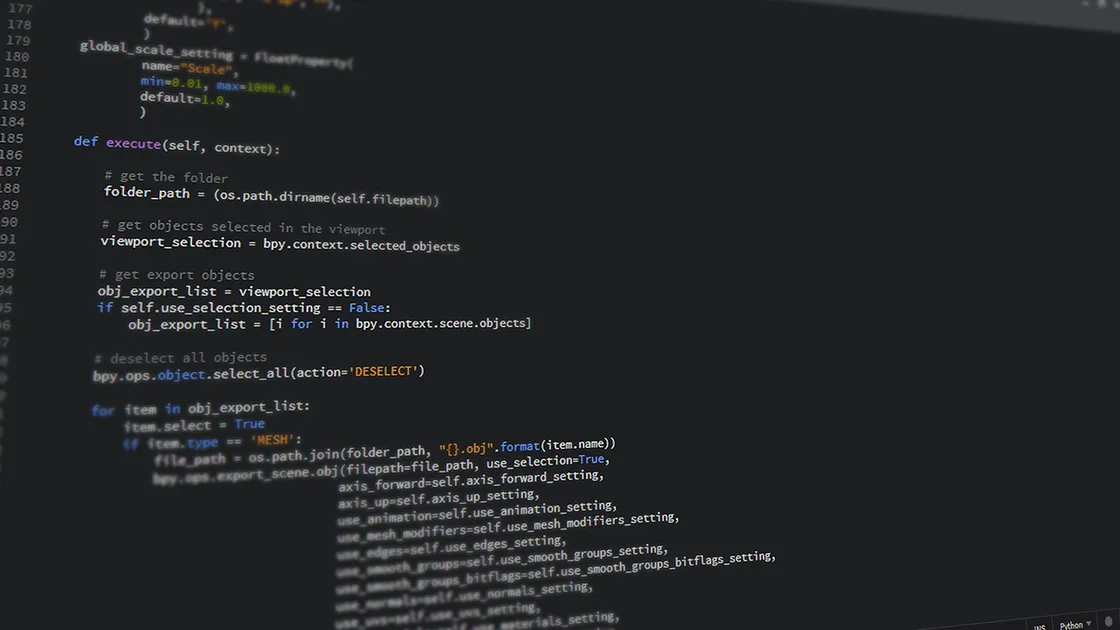
The landscape of software development has undergone a tectonic shift over the last few years. As we navigate through 2026, the skills that companies are looking for have evolved, driven by the unprecedented integration of artificial intelligence, the maturation of cloud-native architectures, and a growing emphasis on system safety and security. If you are wondering which programming languages to learn in 2026, the answer depends entirely on your career goals, the type of software you want to build, and how you want to interact with the modern ecosystem of AI-assisted coding tools.
Gone are the days when learning a programming language meant memorizing endless syntax rules. Today, AI coding assistants handle much of the boilerplate, meaning that a developer’s true value lies in system design, logical problem solving, and understanding the core paradigms of the languages they use. The best programming languages to learn today are those that empower you to build scalable, secure, and intelligent applications.
Want a structured roadmap? Check out our comprehensive Guide to Learning AI in 2026 with step-by-step milestones, free courses, and career advice.
In this comprehensive guide, we will break down the top programming languages to learn in 2026, exploring their primary use cases, their learning curves, and why they deserve your attention. Whether you are an absolute beginner looking for your first language, or a seasoned senior engineer looking to expand your toolkit, this guide will help you make an informed decision.
The AI Shift in Software Engineering
Before diving into the specific languages, it is crucial to understand the context of software engineering in 2026. The widespread adoption of Large Language Models (LLMs) and advanced coding assistants has changed how we code.
Languages that are well-supported by AI tools have a distinct advantage. If a language has a massive amount of open-source code available, AI models are better at generating, debugging, and explaining that code. Consequently, popular languages have become even more accessible, while niche languages might require more manual effort.
Furthermore, the demand for AI integration means that languages with robust machine learning ecosystems are highly sought after. However, not everyone needs to be an AI researcher. The tech industry still desperately needs engineers who can build reliable web applications, highly concurrent backend systems, and secure, high-performance infrastructure.
Let’s explore the languages that dominate these domains.
1. Python: The Undisputed King of AI and Data
Best For: Artificial Intelligence, Machine Learning, Data Science, Backend Web Development, Automation.
If there is one language that defines the current era of computing, it is Python. For years, Python has been steadily climbing the ranks of popularity, but the explosion of artificial intelligence and machine learning has cemented its position at the absolute top. In 2026, Python is not just a language; it is the lingua franca of AI.
Why Python Dominates in 2026
The reason for Python’s dominance is its unparalleled ecosystem. Frameworks like PyTorch, TensorFlow, and LangChain are built around Python, making it the default choice for anyone building or integrating AI models. Even if you are not developing foundational models from scratch, integrating AI capabilities into an existing application usually involves Python-based APIs and libraries.
Beyond AI, Python remains a powerhouse for data analysis (thanks to Pandas and NumPy) and backend web development (using frameworks like FastAPI and Django).
The Learning Experience
Python is widely considered the best programming language for beginners. Its syntax is remarkably clean and intuitive, often reading like plain English. This allows new programmers to focus on learning programming concepts, like loops, conditionals, and data structures, without wrestling with complicated syntax, semicolons, or memory management.
However, Python is notoriously slow compared to compiled languages like C++ or Rust. While this historically limited its use in high-performance computing, the modern approach is to write the performance-critical parts of a system in a lower-level language (like C, C++, or Rust) and use Python as a highly expressive “glue” language to orchestrate the logic.
Recommended Courses
- Harvard CS50P (Free) - An incredible, rigorous introduction to Python programming.
- 100 Days of Code: Python Bootcamp - A massive, project-based Udemy course.
- If you’re specifically interested in AI, check out our guide on the best AI courses in 2026.
Verdict: If you are a beginner, or if you want to work in AI, data science, or automation, Python is an absolute must-learn.
2. Rust: Performance, Safety, and the Future of Infrastructure
Best For: Systems Programming, WebAssembly, Embedded Systems, High-Performance Tooling.
Rust has been the most loved programming language in developer surveys for over a decade, and in 2026, that love has translated into massive industry adoption. Rust was designed to solve one of the most persistent and dangerous problems in computer science: memory safety.
The Memory Safety Revolution
Historically, systems programming languages like C and C++ gave developers fine-grained control over memory, enabling incredible performance. However, this control came with a catch: human error often led to memory leaks, buffer overflows, and segmentation faults. In fact, major tech companies have reported that the vast majority of their critical security vulnerabilities stem from memory safety bugs.
Rust solves this through its unique “ownership” model and borrow checker. The compiler meticulously tracks memory usage, guaranteeing at compile-time that your code is memory-safe and free of data races in concurrent environments. This means you get the blistering speed and low-level control of C++, but with the safety guarantees of a garbage-collected language like Java or C#.
Industry Adoption in 2026
Rust is no longer just a trendy experiment; it is foundational technology. The Linux kernel now accepts Rust code, Microsoft is actively rewriting core Windows components in Rust, and Amazon Web Services uses Rust to power mission-critical infrastructure like Firecracker. Furthermore, Rust has become the language of choice for building modern developer tools (like the JavaScript bundler Turbopack) and WebAssembly applications.
The Catch: The Learning Curve
Rust is famously difficult to learn. The borrow checker, while incredibly helpful, forces you to think about memory management in a completely new way. You will spend a lot of time “fighting the compiler” initially. However, developers who push through the learning curve often report that Rust makes them better programmers overall, as it forces them to think deeply about system architecture and concurrency.
Recommended Courses
- The Rust Programming Language (Free) - The official, affectionately nicknamed “Rust Book”.
- Rust in Motion - A great video course for developers coming from other languages.
Verdict: If you want to build blazing-fast tools, work on operating systems, or write secure, high-concurrency applications, Rust is the ultimate language to learn. It is challenging, but highly rewarding.
3. TypeScript (and JavaScript): The Monopolists of the Web
Best For: Frontend Web Development, Full-Stack Web Development, Cross-Platform Mobile Apps.
You cannot discuss programming in 2026 without talking about JavaScript and its strongly-typed superset, TypeScript. JavaScript is the only language that runs natively in the web browser, giving it an undeniable monopoly over frontend web development.
The Rise and Rule of TypeScript
While JavaScript is ubiquitous, writing large, complex applications in vanilla JavaScript can be a nightmare due to its dynamic typing. A typo or a mismatched data type might not be discovered until the code is actually executed in the browser.
TypeScript solves this by adding static typing to JavaScript. It allows developers to define the exact shape of their data, catching errors at compile-time rather than runtime. In 2026, starting a new, large-scale web project in plain JavaScript is considered a massive anti-pattern. TypeScript has become the industry standard.
Full-Stack Ubiquity
The power of the TypeScript ecosystem lies in its versatility. Thanks to runtimes like Node.js, Deno, and Bun, you can use the exact same language to write your backend server as you use for your frontend (using frameworks like React, Vue, or Svelte). This “full-stack” capability makes TypeScript developers incredibly valuable to startups and enterprises alike.
Furthermore, frameworks like React Native allow you to use TypeScript to build native mobile applications for iOS and Android, meaning a single developer can theoretically build a web app, a backend API, and a mobile app using just one language.
Recommended Courses
- The Complete JavaScript Course - Master the fundamentals of JS first.
- Total TypeScript - The absolute best resource for mastering TypeScript.
Verdict: If you have any interest whatsoever in building user interfaces, web applications, or working as a full-stack developer, you must learn TypeScript. It is non-negotiable for web development in 2026.
4. Go (Golang): The Cloud-Native Champion
Best For: Backend Web Services, Microservices, Cloud Infrastructure, DevOps Tooling.
Developed by Google, Go (or Golang) was designed to solve the problems of building large-scale, highly concurrent network services. In 2026, as cloud-native architecture and Kubernetes-based deployments are the norm, Go is arguably the best language for backend engineering.
Simplicity and Concurrency
Go’s philosophy is rooted in simplicity. The language has a very small feature set, meaning you can learn the entire language in a matter of weeks. This simplicity makes Go code incredibly easy to read and maintain, even when working on massive codebases with hundreds of other engineers.
But Go’s true superpower is its concurrency model. Using “goroutines,” Go makes it trivial to write programs that can handle thousands of concurrent tasks simultaneously without consuming excessive memory. This makes it perfect for building high-traffic web servers, APIs, and microservices.
The DevOps Language
Go compiles down to a single, statically linked binary. This means you do not need to install a runtime environment (like the JVM for Java or Node.js for JavaScript) on your server; you just drop the binary onto a Linux machine and run it. This trait, combined with its performance, has made Go the de facto language for DevOps and cloud infrastructure. Tools like Docker, Kubernetes, and Terraform are all written in Go.
Recommended Courses
- Go: The Complete Developer’s Guide - Excellent practical introduction on Udemy.
- Tour of Go (Free) - The official interactive introduction to Go.
Verdict: If you want to be a backend engineer, work in DevOps, or build scalable microservices, Go is the most practical, employable, and developer-friendly language you can learn.
5. Zig: The Modern C Alternative
Best For: Low-Level Systems Programming, Drop-in C Replacement, Tooling.
While Rust has taken the spotlight for safe systems programming, Zig has quietly emerged as a powerful, pragmatic alternative to C. By 2026, Zig has gained serious traction, particularly among developers who find Rust’s borrow checker too restrictive or complex for their needs.
Pragmatic Simplicity
Zig is designed to be a direct competitor to C, rather than C++. It prioritizes simplicity, manual memory management, and predictability. There is no hidden control flow, no hidden memory allocation, and no preprocessor. When you read a Zig program, you know exactly what the CPU is going to do.
Crucially, Zig is also a C compiler. You can include existing C code directly into a Zig project with zero friction. This makes it an incredibly powerful tool for modernizing legacy codebases, as you can incrementally rewrite C code in Zig without having to rewrite everything at once.
While it lacks the strict mathematical safety guarantees of Rust, Zig provides much better safety features than C, such as spatial memory safety and robust error handling. It is becoming a favorite for game engine development, low-level tooling, and environments where absolute control is required without the immense complexity of C++.
Recommended Courses
- Ziglings (Free) - A fun, hands-on way to learn Zig by fixing tiny broken programs.
- Zig Guide (Free) - A comprehensive community-driven introduction to the language.
Verdict: If you are interested in low-level systems programming but prefer the straightforward simplicity of C over the complex type system of Rust, Zig is a fantastic, cutting-edge language to learn.
How to Choose Your Path
With so many excellent options, choosing which language to learn can feel overwhelming. The key is to avoid “tutorial hell”, the trap of constantly switching languages without ever building anything substantial. Instead, let your goals dictate your choice:
- I want to build websites and web apps: Learn HTML, CSS, and TypeScript. Focus on a framework like React or Vue.
- I want to work with AI, Data, or start quickly: Learn Python. It is accessible, powerful, and opens doors to the most exciting technologies of 2026.
- I want to build scalable backend systems: Learn Go. Its simplicity and concurrency make it the ultimate backend language.
- I want to build ultra-fast, secure, and low-level software: Learn Rust. It is difficult, but it is the future of secure infrastructure.
- I want to make iOS or Android apps: Learn Swift (for iOS) or Kotlin (for Android). Alternatively, use TypeScript with React Native for cross-platform development.
The most important advice for 2026 is to remember that languages are just tools. Do not tie your identity to a single programming language. The best software engineers are polyglots who understand the underlying concepts of computer science and choose the right tool for the job. Once you master your first language, picking up a second or third becomes exponentially easier.
Pick a language that aligns with your interests, start building projects immediately, and embrace the AI tools that can help accelerate your learning journey. The world of software development in 2026 is more exciting and accessible than ever before.
Related Articles

Advanced AI Courses for 2026: Agentic Workflows & Local LLMs
A comprehensive guide to the most impactful AI courses in 2026, focusing on agentic design, local model deployment, and specialized industry applications.

How to Learn AI in 2026: The Complete Roadmap
Your step-by-step guide to learning AI in 2026. From absolute beginner to job-ready skills, free courses, certifications, and practical projects included.

AI at Work: Every Guide, Course and Tool in One Place
Our full library of AI guides for office workers: tool reviews, free course picks, tutorials and career advice. Browse by what you need, not by skill level.