
Efficient Commute Guide: Reclaim Your Time Before Work
Discover actionable strategies to transform your daily commute from a soul-crushing chore into the most productive and relaxing part of your day.

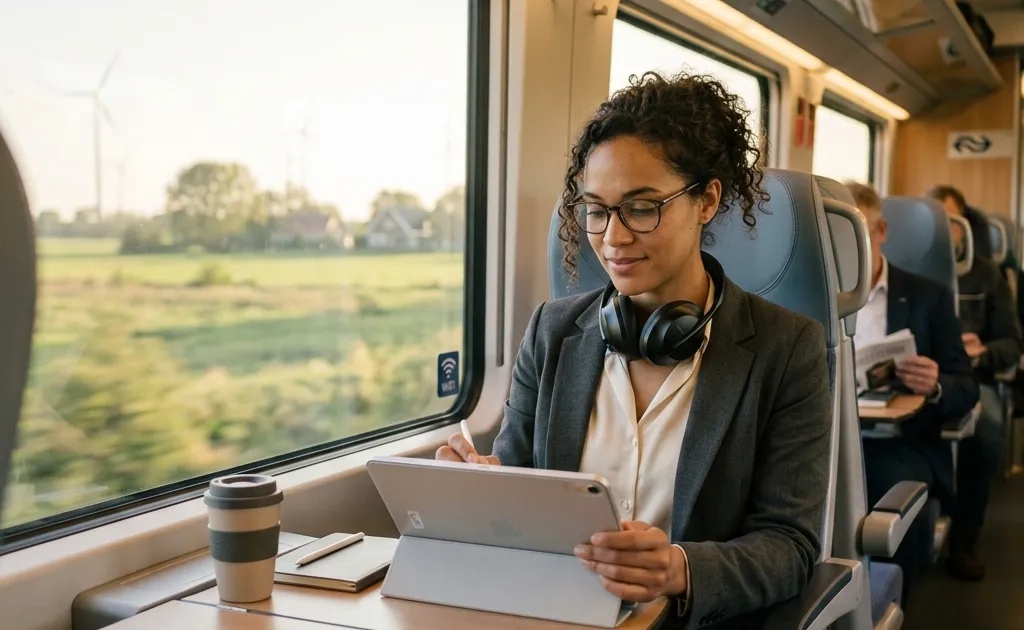
For many professionals, the daily commute is the most dreaded part of the workday. It is often seen as a necessary evil, a period of “dead time” squeezed between the comfort of home and the demands of the office. The average American spends nearly an hour each day commuting. Over a typical career, that equates to thousands of hours, months of your life, spent sitting in traffic, waiting for delayed trains, or squeezed onto crowded buses.
But what if we reframed the commute? What if, instead of viewing it as a soul-crushing chore, we treated it as an opportunity?
Want a structured roadmap? Check out our comprehensive Guide to Learning AI in 2026 with step-by-step milestones, free courses, and career advice.
The truth is, your commute can become the most efficient, productive, or relaxing part of your day if you approach it with intention. Whether you are behind the wheel, riding a train, or pedaling a bicycle, there are myriad ways to reclaim this time. In this comprehensive guide, we will explore advanced strategies for transforming your commute, focusing on preparation, mode-specific tactics, and the psychology of transitioning between work and personal life.
1. The Foundation: Preparation and Mindset
The key to an efficient commute begins long before you leave your front door. If you are rushing out of the house, stressed and disorganized, your commute will invariably feel chaotic.
Prepare the Night Before
The most productive commuters share a common habit: evening preparation. Lay out your clothes, pack your bag, and prepare your lunch the night before. This eliminates decision fatigue in the morning and ensures you aren’t running late because you couldn’t find your keys.
Define Your Commute’s Purpose
Before you step out the door, decide what the purpose of your commute will be that day. Your commute doesn’t always have to be about grinding through work tasks. It can be categorized into three main modes:
- Productivity Mode: Tackling emails, reading industry news, or organizing your day.
- Personal Growth Mode: Listening to educational podcasts, reading a book, or learning a language.
- Decompression Mode: Listening to music, practicing mindfulness, or simply resting.
By actively choosing your mode, you take control of the time, rather than letting the time control you.
Build in a Buffer
Nothing destroys the efficiency and peace of a commute faster than the stress of running late. Always aim to leave 15 minutes earlier than necessary. This buffer absorbs unexpected traffic, transit delays, or minor emergencies, ensuring you arrive at work in a calm, focused state rather than a frantic panic.
2. Strategies for the Public Transit Commuter
If you take a train, subway, or bus, you have a distinct advantage: your hands and eyes are free. This opens up a world of possibilities for reclaiming your time.
The “Commute Office” Setup
If you plan to work on transit, optimize your setup. Invest in a good pair of noise-canceling headphones to block out chatter and engine noise. Use a privacy screen on your laptop or tablet if you are working on sensitive documents. Ensure your devices are fully charged, or carry a high-capacity power bank. We rounded up the hardware that makes this practical in our guide to the of the top 10 commuting gadgets.
Tackle the “Shallow Work”
Public transit is rarely the place for deep, uninterrupted focus. Instead, use this time for “shallow work”, tasks that need to get done but don’t require intense cognitive load. This includes:
- Clearing out your email inbox.
- Reviewing your calendar and setting your daily priorities.
- Reading industry newsletters or articles you’ve saved to apps like Pocket or Instapaper.
- Outlining a presentation or drafting quick memos.
By clearing these minor tasks before you even reach your desk, you free up your prime office hours for complex, high-value projects.
Offline Readiness
Transit Wi-Fi is notoriously unreliable, and subways often have dead zones. Always have offline work ready. Download articles, sync your email for offline access, or bring a physical book. If the internet drops, you seamlessly pivot to offline tasks rather than staring blankly at a loading screen.
3. Strategies for the Driving Commuter
Driving requires your full visual and physical attention, which significantly limits what you can do. Safety must always be the absolute priority. However, the driving commute can still be highly efficient if you focus on audio-based learning and hands-free technology.
The Rolling University
Your car is the perfect environment for uninterrupted listening. Instead of mindlessly flipping through radio stations, turn your vehicle into a mobile classroom.
- Audiobooks: Platforms like Audible or Libby (connected to your local library) offer endless opportunities to consume literature, biographies, or business books.
- Podcasts: Curate a playlist of high-quality podcasts relevant to your industry or personal interests.
- Language Learning: Audio-based language courses (like Pimsleur) are designed specifically for repetition and speaking out loud, making them perfect for solo driving.
Hands-Free Productivity
Modern vehicles and smartphones offer robust voice-to-text capabilities. While keeping your eyes on the road, you can:
- Use Siri or Google Assistant to dictate quick reminders or to-do list items.
- Send voice memos to colleagues or yourself for ideas that spark while driving.
- Make necessary phone calls (using a hands-free system, of course). The morning commute is a great time to catch up with family members in different time zones or handle routine appointments.
Route Optimization
Efficiency isn’t just about what you do in the car; it’s about minimizing the time spent in it. Use apps like Waze or Google Maps every single day, even if you know the route perfectly. These apps analyze real-time traffic data and can route you around accidents or sudden congestion, saving you countless hours over a year.
4. The Rise of Active Commuting
One of the most efficient ways to commute is to combine it with something else you already need to do: exercise. Active commuting, cycling, running, or briskly walking to work, is gaining massive popularity.
The Double-Duty Advantage
If you spend 45 minutes driving to work and then 45 minutes at the gym later, that’s an hour and a half of your day consumed. If you cycle to work in 45 minutes, you have accomplished both transportation and exercise simultaneously. You essentially gain back 45 minutes of your life.
Mental and Physical Benefits
Studies consistently show that active commuters arrive at work more alert, less stressed, and with higher energy levels than those who drive. The physical activity releases endorphins, clearing brain fog and setting a positive tone for the day. Over time, the cardiovascular benefits contribute to better overall health and fewer sick days.
Overcoming the Logistics
The main barrier to active commuting is logistics, sweat, weather, and distance.
- E-Bikes: The advent of affordable e-bikes has revolutionized commuting. They allow you to travel further distances without arriving drenched in sweat, flattening out hills and cutting travel time.
- Facilities: Check if your office has showers and secure bike parking. If not, look for a nearby gym where you can shower before heading into the office.
- The Hybrid Approach: If you live too far to bike the whole way, consider driving part of the way, parking, and biking the rest. Alternatively, combine cycling with public transit if your local system allows bikes on board.
5. The Commute as a Psychological Boundary
Beyond productivity and efficiency, the commute serves a vital psychological function: it is the liminal space between your personal life and your professional life.
The Morning Ramp-Up
Use the morning commute to transition into your professional persona. Review your goals for the day, mentally walk through upcoming meetings, and set your intentions. This psychological preparation means that when you sit down at your desk, you are already “in the zone” and ready to execute.
The Evening Decompression
The evening commute is arguably more important for your mental health. It is the time to shed the stress of the workday so you don’t carry it into your home.
- The “Shutdown Routine”: As you begin your commute home, mentally review what you accomplished, note where you will start tomorrow, and explicitly tell yourself that the workday is over.
- Switching Gears: Change the input. If you listened to industry podcasts in the morning, listen to fiction, comedy, or calming music in the evening.
- The Third Space: Sometimes, efficiency means taking a detour. Stopping at a coffee shop to read for twenty minutes, or hitting the gym before going home, creates a “third space” that physically and mentally separates the office from your living room.
6. Embracing Flexibility
Finally, an efficient commute is a flexible one. The pandemic permanently altered our relationship with the office, proving that we don’t always need to travel to be productive.
Negotiating Off-Peak Travel
If your company allows it, negotiate your hours to avoid rush hour. Commuting from 7:00 AM to 3:00 PM or 10:00 AM to 6:00 PM can cut your travel time in half simply by avoiding peak congestion. The time saved can be reinvested into your work or personal life.
Remote Work Integration
The most efficient commute is the one you don’t take. If you have a hybrid schedule, be strategic about which days you go into the office. Stack your in-person meetings on office days, and save your deep, focused work for your remote days, completely eliminating the commute when you need maximum concentration.
Conclusion
The daily commute does not have to be a drain on your time and energy. By shifting your mindset, leveraging technology, and planning ahead, you can transform this daily ritual into a valuable asset.
Whether you use the time to crush your inbox on the train, learn a new language in the car, or get your daily workout on a bicycle, the choice is yours. Stop letting the commute happen to you. Take control, be intentional, and reclaim your time. Your career, your health, and your sanity will thank you.
Related Articles

Feeling Stuck in Corporate Life? How to Break Free
Are you feeling trapped in a mundane corporate job? Discover actionable steps to reignite your passion, pivot your career, and find fulfillment outside work.

The Ultimate Guide to Achieving Real Work Life Balance
Struggling to disconnect after hours? Learn actionable strategies to achieve work life balance, set boundaries, and reclaim your personal time.

How to Never Be Bored at Work Again
Discover actionable strategies to eliminate boredom at work, boost your productivity, and find renewed purpose in your daily professional life.