
Why You Need a VPN in 2026: The Ultimate Guide to Digital Privacy
Everything you need to know about Virtual Private Networks (VPNs). Discover why they are essential for your online security, privacy, and remote work.

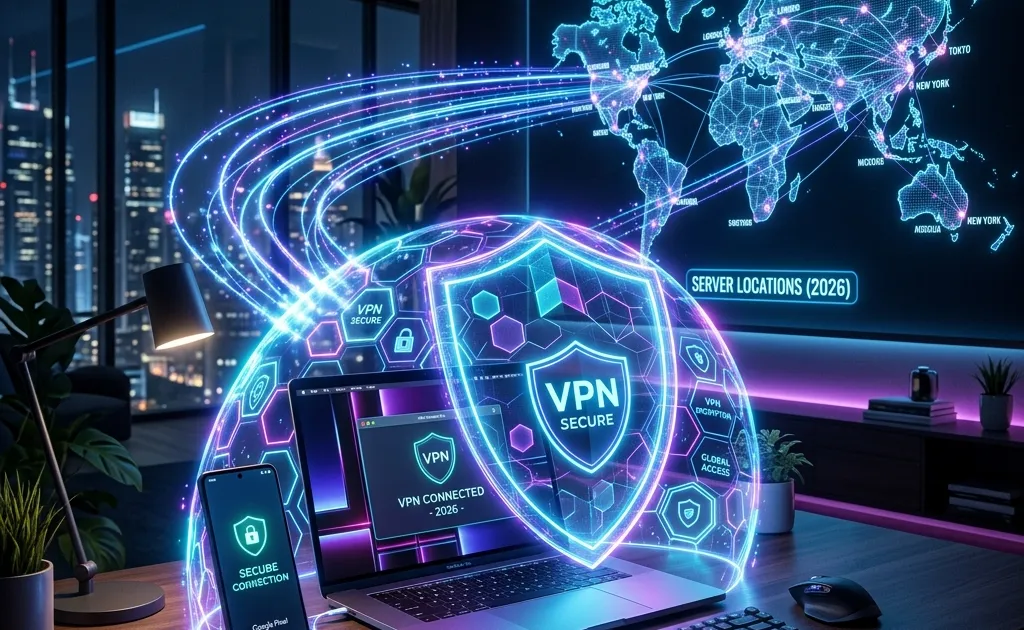
If you’ve spent any time on the internet in recent years, you’ve almost certainly heard the acronym “VPN.” You’ve probably heard YouTubers reading ad reads for them, read tech articles recommending them, or had your IT department force you to use one for remote work. But despite their ubiquity, there remains a lot of confusion about what a Virtual Private Network actually is, and more importantly, why the average person would need one.
In 2026, the digital landscape is more complex than ever. Our lives are inextricably linked to the internet, our banking, our medical records, our personal communications, and our entertainment all flow through digital pipes. As our reliance on the internet has grown, so too have the threats to our privacy and security, on both sides: attackers and defenders now use the same machine learning tooling, a shift we trace in AI in IT security.
Upgrading your workstation? See our all-in-one Desk Upgrade & Home Office Guide to build a comfortable, productive workspace.
This comprehensive guide will demystify the VPN, explaining exactly how it works, why it’s a non-negotiable tool for the modern internet user, and how to choose the right one for your needs.
What is a VPN, and How Does It Work?
At its core, a Virtual Private Network (VPN) does two main things: it encrypts your internet traffic and masks your IP address.
To understand why this matters, you first need to understand how a normal internet connection works. Without a VPN, your device connects directly to your Internet Service Provider (ISP). Your ISP then routes your traffic to the websites you want to visit. In this scenario, your ISP can see everything you do. They see which websites you visit, how long you stay there, and what files you download. Furthermore, your IP address, a unique numerical identifier assigned to your device, is visible to the websites you visit, allowing them to track your location and browsing habits.
When you turn on a VPN, this process changes dramatically.
- The Encrypted Tunnel: The VPN software on your device creates a secure, encrypted “tunnel” between your device and a VPN server. Your data is scrambled before it even leaves your device.
- The Server Relay: Instead of routing your traffic directly to the destination website, your ISP routes it to the VPN server. Because the data is encrypted, the ISP cannot see what the data is or where it’s ultimately going; they only see that you are sending encrypted data to a VPN server.
- The IP Masking: The VPN server then decrypts your data and forwards it to the destination website. Crucially, the website sees the IP address of the VPN server, not your real IP address.
Think of it like sending a physical letter. Normally, you write your return address on the envelope, and the postal service (your ISP) knows exactly where it’s from and where it’s going. With a VPN, you put the letter inside a locked box (encryption) and send it to a trusted middleman (the VPN server). The middleman opens the box, takes the letter, puts a new return address on it (their own), and delivers it to the final destination.
7 Reasons Why You Absolutely Need a VPN in 2026
While VPNs were originally developed for corporate use, allowing remote workers to securely access company networks, their consumer applications have exploded. Here are the primary reasons why you need a VPN today.
1. Ironclad Security on Public Wi-Fi
This is arguably the most common and critical use case for a VPN. Public Wi-Fi networks, the free connections at coffee shops, airports, hotels, and libraries, are notoriously insecure.
Because these networks are open, it’s incredibly easy for malicious actors on the same network to intercept your traffic. They can use a technique called a “Man-in-the-Middle” (MitM) attack to spy on your data, stealing passwords, credit card numbers, and personal emails. Furthermore, hackers often set up “evil twin” networks, fake Wi-Fi hotspots with legitimate-sounding names (like “Starbucks Free WiFi”) designed to trick you into connecting.
When you use a VPN on public Wi-Fi, your data is encrypted before it leaves your device. Even if a hacker intercepts your traffic, all they will see is an unbreakable string of gibberish. A VPN is essential armor for anyone who works from coffee shops or travels frequently.
2. Protecting Your Privacy from Your ISP
In many countries, Internet Service Providers are legally permitted to collect, log, and even sell your browsing data to third parties, such as marketing firms and data brokers. Your ISP has a comprehensive dossier of your digital life, every website you visit, every app you use.
By encrypting your traffic, a VPN blinds your ISP. They can see that you are connected to the internet and how much bandwidth you are using, but the contents of your traffic and your final destinations remain hidden. If you believe your internet history is your own business, a VPN is the only reliable way to keep it that way.
3. Bypassing Geo-Restrictions and Censorship
The internet is not a truly global, borderless entity. Much of the content on the web is restricted based on your geographical location.
This is most obvious with streaming services like Netflix, Hulu, Disney+, and BBC iPlayer. Licensing agreements dictate that certain movies and shows can only be broadcast in specific countries. A VPN allows you to virtually change your location by connecting to a server in a different country. For example, if you are traveling in Europe but want to watch a show only available on US Netflix, you can connect to a US VPN server. The streaming service will see the US IP address of the server and grant you access.
Beyond entertainment, a VPN is vital for individuals living in or traveling to countries with strict internet censorship. Authoritarian regimes often block access to news sites, social media platforms, and communication tools. A VPN allows users to bypass these government firewalls and access the free and open internet.
4. Preventing ISP Throttling
Have you ever noticed that your internet connection seems to mysteriously slow down when you’re downloading a large file, torrenting, or streaming a 4K movie? This might not be a coincidence; it could be ISP throttling.
Internet providers sometimes intentionally slow down (throttle) your connection if they detect that you are engaging in bandwidth-heavy activities. They do this to manage network congestion, but it can be incredibly frustrating for the user.
Because a VPN encrypts your traffic, your ISP cannot inspect it to determine what you are doing. If they don’t know you are streaming Netflix or downloading a large game update, they cannot target that specific traffic for throttling. Many users report significant speed improvements during peak hours simply by turning on their VPN.
5. Safe and Anonymous Torrenting (P2P)
Peer-to-Peer (P2P) file sharing, commonly known as torrenting, is a highly efficient way to distribute large files. While the technology itself is neutral, it is frequently used to share copyrighted material. As a result, ISPs and copyright trolls heavily monitor torrenting networks.
If you torrent without a VPN, your real IP address is visible to everyone else sharing that file (the “swarm”). This makes it easy for copyright holders to track you down and send threatening letters to your ISP, which can result in service termination or legal action.
A VPN hides your real IP address, routing your P2P traffic through the VPN server. Good VPNs also offer a “kill switch” feature, which instantly cuts your internet connection if the VPN tunnel drops unexpectedly, ensuring your real IP address is never accidentally exposed while torrenting.
6. Avoiding Price Discrimination
Price discrimination is a common tactic in the travel and e-commerce industries. Airlines, hotels, and online retailers often use dynamic pricing algorithms that change the cost of a product or service based on your location, browsing history, and perceived income level.
For instance, a flight might be priced higher if the website detects you are browsing from a wealthy zip code or if you have repeatedly searched for the same route. By using a VPN to clear your cookies and connect from a different IP address, perhaps one in a different state or even a different country, you can often find significantly cheaper prices for the exact same flights, hotels, or rental cars.
7. Securing Remote Work and IoT Devices
The massive shift toward remote and hybrid work has made VPNs more important than ever. While connecting to your company’s network via their corporate VPN is standard practice, using a personal VPN provides an additional layer of security, especially if you are working from a home network that isn’t professionally secured.
Furthermore, our homes are increasingly filled with Internet of Things (IoT) devices, smart TVs, security cameras, smart speakers, and smart locks. These devices are notoriously vulnerable to hacking. Securing your home network at the router level with a VPN (some premium VPNs allow router installation) ensures that all the traffic going to and from your smart home devices is encrypted.
Common VPN Myths Debunked
Despite their popularity, several misconceptions about VPNs persist.
Myth 1: VPNs Are Only for Criminals
False. This is perhaps the most damaging myth. Seeking privacy does not equal having something illegal to hide. Just as you close your curtains at night or put a lock on your front door, you have a fundamental right to digital privacy. Journalists, activists, remote workers, travelers, and everyday citizens all rely on VPNs for legitimate security reasons.
Myth 2: All VPNs Slow Your Internet to a Crawl
Mostly False. In the past, VPNs routinely caused a 50% or more drop in internet speeds due to heavy encryption overhead. However, in 2026, the technology has advanced significantly. The adoption of modern, lightweight protocols like WireGuard has revolutionized VPN performance. While you will always experience some speed loss due to the distance data must travel to the server and back, a premium VPN will rarely impact your ability to stream in 4K, game online, or download large files.
Myth 3: Free VPNs Are Just as Good as Paid Ones
False, and Dangerous. Running a global network of high-speed servers is incredibly expensive. If a VPN is offering you their service for “free,” you are not the customer; you are the product. Free VPNs often monetize their services by logging your browsing data and selling it to third parties, the exact opposite of what a VPN is supposed to do. Furthermore, free VPNs typically have slow speeds, strict data caps, limited server options, and weak encryption. Invest in a reputable, paid service.
What to Look For When Choosing a VPN
With hundreds of VPN providers on the market, choosing the right one can be overwhelming. Here are the key criteria you must evaluate:
- A Strict No-Logs Policy: This is the most important feature. The VPN provider must explicitly state that they do not collect, log, or store any information about your online activities. Ideally, this policy should be verified by independent, third-party audits.
- Strong Encryption and Modern Protocols: Look for military-grade AES-256 encryption. The VPN should support modern protocols like WireGuard or OpenVPN. Avoid outdated protocols like PPTP.
- A Large Server Network: A vast network of servers across multiple countries ensures you can always find a fast connection and access geo-restricted content from anywhere in the world.
- A Kill Switch: This essential security feature instantly disconnects you from the internet if your VPN connection drops unexpectedly, preventing your real IP address from leaking.
- Simultaneous Connections: Consider how many devices you need to protect. Most premium VPNs offer between 5 and 10 simultaneous connections on a single account.
- Based in a Privacy-Friendly Jurisdiction: Look for VPN providers headquartered in countries with strong privacy laws and no mandatory data retention directives (e.g., Panama, Switzerland, or the British Virgin Islands). Avoid providers based in “14 Eyes” intelligence-sharing countries like the US or UK if absolute privacy is a concern.
- Reliable Customer Support: A good VPN should offer 24/7 live chat support to help you troubleshoot any issues, such as finding the right server to unblock a specific streaming service.
Conclusion: A Digital Necessity
In the early days of the internet, a VPN was a specialized tool for corporate road warriors. In 2026, it is a fundamental pillar of personal cybersecurity.
We lock our doors, we use passwords, and we shred sensitive documents. Using a VPN is the digital equivalent of these everyday security practices. It is a simple, affordable, and highly effective way to reclaim your privacy, secure your data from bad actors, and ensure that your internet experience remains open and unrestricted.
If you aren’t using a VPN yet, the time to start is now. Your digital life is too valuable to leave exposed.
To understand emerging surveillance concerns in wearable tech, read our deep dive on smart AI glasses privacy issues.
Related Articles

Best Desk Upgrades Under $100 That Are Actually Worth It
The best desk upgrades under $100 in 2026, ranked by real impact on comfort and focus. Small, high-ROI changes that make working at your desk noticeably better.

AI, Social Media & the Danger to the Older Generation
As AI integrates into social media algorithms and content, the older generation faces an invisible threat of manipulation, deepfakes, and algorithmic isolation.
The Top 5 VPN Providers of 2026: A Comprehensive Review
Looking for the best VPN in 2026? We've tested and reviewed the top 5 VPN providers to help you choose the right one for privacy, streaming, and security.