
Why a Great Lens Beats a Pro Camera Body in 2026
Is your camera holding you back, or is it your lens? Learn how a high-quality lens can save a mediocre camera body and why glass is the best investment.

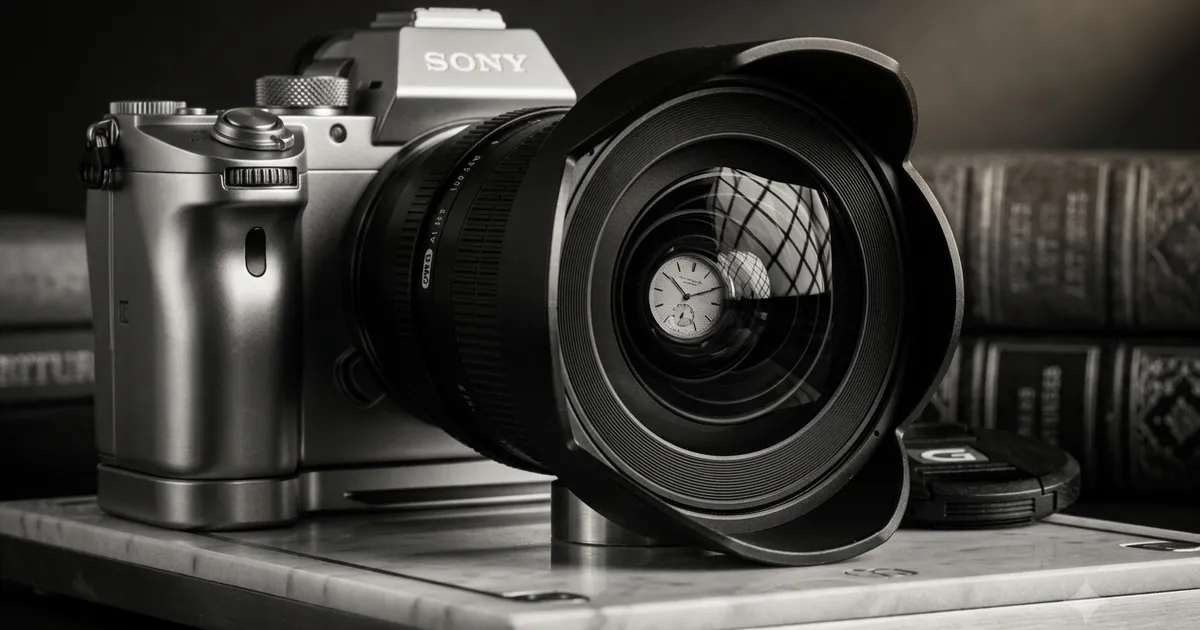
It’s the most common trap in photography. You’ve been shooting for a year, your photos look “okay,” but they lack that professional “pop” you see on Instagram or in galleries. Your immediate instinct is to look at the latest $3,000 flagship camera body. You think, “If I only had 60 megapixels and 30 frames per second, my photos would be world-class.”
In 2026, I am here to tell you: Your camera body is almost certainly not the problem.
Looking for the bigger picture? Check out our complete Photography Guide for Beginners for gear recommendations, camera fundamentals, and editing workflows.
The digital sensor is the second half of the equation. The first, and arguably most important, is the glass. A mediocre camera body from five years ago paired with a high-end prime lens will outperform a $5,000 flagship paired with a basic kit lens in almost every visual metric that matters.
This is a guide to why “glass first” is the only sustainable philosophy in photography, how a great lens can save a “bad” camera, and how to stop wasting money on megapixels you don’t need.
1. The Anatomy of an Image: Glass as the Gatekeeper
To understand why the lens is so critical, we have to look at the light path. Light doesn’t just “hit” your sensor. It has to travel through multiple layers of glass, coatings, and mechanical apertures before it ever reaches the silicon.
Resolving Power vs. Megapixels
One of the biggest myths in photography is that more megapixels equal more detail. In reality, megapixels are just a capacity. If your sensor has 45 million pixels, but your lens is only sharp enough to “resolve” 12 million pixels worth of detail, the other 33 million pixels are just capturing blurry information.
Cheap kit lenses (like the 18-45mm or 18-55mm zooms that come in the box) are designed for cost, not quality. They often struggle to resolve the fine detail that modern sensors are capable of. When you put a high-end lens on a “mediocre” 24MP sensor, you are finally seeing what that sensor can actually do. The difference in perceived sharpness isn’t subtle; it’s transformative.
Light Collection: The Aperture Advantage
A “mediocre” camera usually struggles in low light. You see grain (noise) in the shadows, and the image looks “muddy.” Most beginners try to fix this with a new body that has a better “High ISO” rating.
However, a standard kit lens usually has a maximum aperture of f/3.5 or f/5.6. A high-quality prime lens often has an aperture of f/1.4 or f/1.8.
- The Math: f/1.8 lets in about 8 times more light than f/5.6.
- The Result: Instead of shooting at ISO 6400 on your cheap lens, you can shoot at ISO 800 with the prime lens.
Even a 10-year-old sensor looks incredible at ISO 800. By upgrading your lens, you’ve effectively “upgraded” your sensor’s low-light performance by three full stops without touching the body.
2. Defining the “Mediocre” Camera in 2026
What exactly is a “mediocre” camera in today’s market? In 2026, the baseline has shifted significantly.
We are no longer talking about the grainy 6MP DSLRs of 2005. A “mediocre” camera today is likely something like:
- An entry-level mirrorless: Like the Canon R100, Nikon Z30, or Sony ZV-E10.
- An older flagship: Like a Sony A7 III or a Nikon Z6 from 2018.
- A mid-range DSLR: Like a Canon 90D or Nikon D7500.
These cameras all share something in common: They are technically excellent. They have 20-24 megapixels, decent dynamic range, and usable autofocus. The reason they might feel “mediocre” to you is usually because they are being choked by the lens you are using.
The Diminishing Returns of Sensor Tech
Between 2010 and 2018, sensor technology moved in leaps and bounds. In 2026, however, we have reached a plateau. The difference between a sensor from 2020 and a sensor from 2026 is marginal in terms of color science and dynamic range. The real innovation is happening in speed (stacked sensors) and AI features.
If you don’t need to shoot 40 frames per second of a flying bird, your “mediocre” 2020 sensor is perfectly capable of producing professional-grade work. It just needs a better eye, and better glass.
3. The 5 Superpowers of Great Glass
When you take a $200 entry-level body and put a $1,000 professional lens on it, five things happen immediately that no amount of software or megapixel-chasing can replicate.
1. Sharpness and Micro-Contrast
Sharpness is obvious, the ability to see individual eyelashes or the texture of a leaf. But micro-contrast is what gives an image that “3D look.”
High-end lenses use specialized glass (ED, Aspherical, Flourite) to ensure that the transition between light and dark areas is extremely crisp. Cheap lenses tend to “smear” these transitions, making the photo look flat. A great lens creates a sense of depth and “bite” that makes people stop and look at a photo.
2. The Bokeh and Subject Separation
The “Pro Look” is almost always associated with a shallow depth of field, where the subject is sharp and the background is a creamy blur.
- The Kit Lens: At f/5.6, the background is often distracting and busy.
- The Pro Prime: At f/1.4, the background disappears into a smooth wash of color, making your subject “pop” out of the frame.
This is a physical property of optics. A $5,000 camera body cannot make a cheap lens have better bokeh. But a cheap camera body can capture the beautiful bokeh of an expensive lens.
3. Chromatic Aberration and Distortions
Have you ever seen purple or green “fringing” around the edges of a building or branches against a bright sky? That’s Chromatic Aberration (CA). Cheap lenses are riddled with it. While you can “fix” it in Lightroom to some degree, the process often leaves the edges looking soft and gray. High-quality lenses are designed to focus all colors of light on exactly the same point, resulting in cleaner, punchier images straight out of the camera.
4. Autofocus Speed (Linear Motors)
Many people blame their “slow” camera for missing a shot. While the camera’s processor handles the “brain” of the autofocus, the lens handles the “muscles.” Professional lenses use Linear Motors (VCM) that can move the internal glass elements almost instantly. Cheap kit lenses often use slower, noisier “stepping motors.” If your camera feels slow to lock focus, it might just be waiting for the lens to catch up.
5. Color Rendering and Flare Resistance
Every lens manufacturer has a “look.” Leica is known for its “glow,” Zeiss for its high contrast, and Canon’s L-series for its warm skin tones. High-end coatings (like Nano Crystal or Fluorine) also mean that when you shoot toward the sun, you get beautiful, controlled flares rather than a washed-out, hazy mess.
4. Lens vs. Body: The ROI Table (2026 Perspective)
If you have $1,000 to spend, where should it go? Let’s look at the return on investment.
| Feature Improvement | $1,000 Spent on Body Upgrade | $1,000 Spent on Lens Upgrade | Winner |
|---|---|---|---|
| Sharpness | Marginal (more pixels, same blur) | Massive (Resolving power) | Lens |
| Low Light | +1 to 1.5 stops (Sensor tech) | +3 stops (Aperture) | Lens |
| Background Blur | Zero | Transformative | Lens |
| Autofocus Speed | Incremental (Tracking AI) | Significant (Better motors) | Lens |
| Resale Value | Drops 20-30% per year | Holds 80-90% for years | Lens |
The Conclusion: If your goal is “Better Looking Photos,” the lens wins every single time. If your goal is “Better Video Codecs” or “Faster Burst Shooting,” only then should you look at the body.
5. The Economics: Lenses are Assets, Bodies are Liabilities
This is the “Senior Engineer” approach to photography gear. Camera bodies are electronics. Like your smartphone or your laptop, they have a shelf life. Every year, a new sensor comes out, making the previous one look “old.” Within 4-5 years, a camera body usually loses 60-70% of its value.
Lenses are optical instruments. Optical physics doesn’t change every year. A lens that was sharp in 2016 is still sharp in 2026. If you buy a high-quality 35mm f/1.4 lens today, you will likely still be using it 10 years from now, even if you’ve gone through three different camera bodies in that time.
When you buy a lens, you aren’t “spending” money; you are “parking” money in an asset that happens to take photos.
6. Case Study: The “Body-Saver” Setup
Let’s look at a real-world comparison. Imagine you are shooting a portrait in a dimly lit room.
Setup A (The Beginner Mistake):
- Body: Sony A7R V (61 Megapixels), $3,500
- Lens: Sony 28-70mm f/3.5-5.6 (Kit Zoom), $200
- Total: $3,700
- The Result: To get a decent exposure, the ISO has to be cranked to 12,800 because the lens is so “slow” (f/5.6). The image is noisy, the background is busy, and despite the 61MP sensor, the fine details are smeared by the mediocre glass.
Setup B (The Smart Pro):
- Body: Sony A7 III (24 Megapixels, used), $800
- Lens: Sony 50mm f/1.2 GM (Pro Prime), $1,900
- Total: $2,700
- The Result: Because the lens is so “fast” (f/1.2), the ISO stays at a clean 400. The subject’s eyes are razor-sharp with incredible micro-contrast, the background melts into professional bokeh, and the photo looks like it belongs on the cover of a magazine.
The Lesson: Setup B cost $1,000 less and produced an image that is objectively superior in every visual category.
7. Recommendations: The “Body-Savers”
If you’re currently rocking a mediocre camera and want to see what it’s truly capable of, here are the three types of lenses you should consider.
1. The “Nifty Fifty” (50mm f/1.8)
Every brand has one. It’s usually their cheapest lens (~$200), yet it’s sharper than almost every zoom lens under $1,000. It’s the “gateway drug” to real photography. If you only own a kit lens, buy this today. It will change your life.
2. The 35mm or 85mm Prime
Once you’ve mastered the 50mm, look at the 35mm (for street and storytelling) or the 85mm (for incredible portraits). Primes are almost always better than zooms because the engineers only have to optimize for one focal length.
3. The f/2.8 Constant Zoom
If you absolutely must have a zoom for versatility (like travel or events), avoid the f/3.5-6.3 “dark” zooms. Look for a lens with a constant f/2.8 aperture. It’s larger and heavier, but it provides the consistency and low-light performance that a pro needs.
Deep Dive: Best Cameras for Beginners in 2026
8. Conclusion: Focus on the Light, Not the Silicon
In the age of AI-powered editing and computational photography, it’s easy to forget that photography is, at its heart, the capture of light.
Your camera body is the net that catches the light, but your lens is the funnel that directs it. If your funnel is small, dirty, and bent, it doesn’t matter how big your net is, you’re still going to have a hard time catching anything worth keeping.
Stop looking at the spec sheets of the new flagship bodies. Stop worrying about whether you have 30 or 60 megapixels. Take your “mediocre” camera, buy a piece of world-class glass, and go shoot. You’ll be amazed at how “pro” your old gear suddenly feels when you give it the light it deserves.
Ready to Upgrade Your Gear?
Check out our other 2026 photography guides:
- Cheap Manual Lenses for Beginners
- DSLR vs Mirrorless for Beginners
- Photography Buying Guide
- Sensor Size Guide: MFT, APS-C, and Full Frame Explained
What’s in your bag? Let us know in the comments if a lens upgrade changed your photography more than a body upgrade.
Related Articles
OM SYSTEM PEN First Look: Retro Charm Meets Modern Power
First look at the OM SYSTEM PEN, announced September 2026: 20.4MP sensor, built-in OLED EVF, IPX1 weather sealing, creative dial, $999, ships October.
Photography Buying Guide: Everything You Need to Start in 2026
The complete guide to buying your first camera in 2026. From budget options to the DSLR vs mirrorless debate, we cover everything without the gear-head jargon.
Olympus PEN E-PM2 Review: A Hidden Gem for Beginners
Discover why the Olympus PEN Lite E-PM2 is a hidden gem for photography enthusiasts and bored office workers alike. Specs, prices, and tips included.