
Shopify vs Competitors: Best E-Commerce Platforms (2026)
Compare top e-commerce platforms including Shopify, WooCommerce, BigCommerce, Squarespace, and Wix. Full breakdown of fees, scalability, and features.

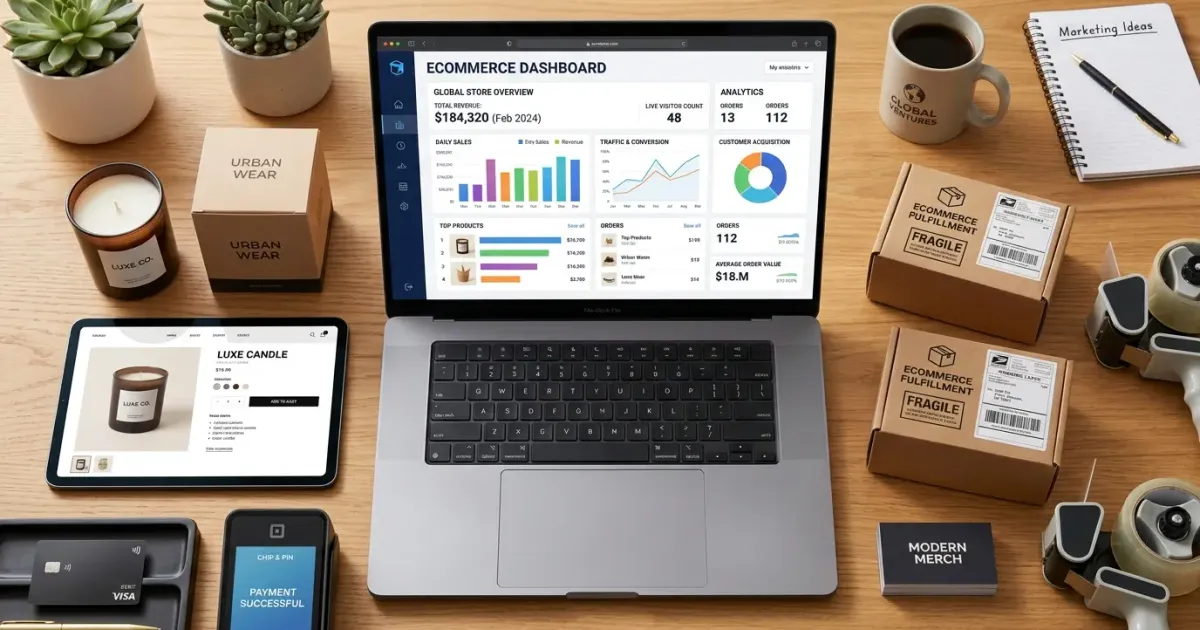
Selecting the right e-commerce platform is the single most critical technical decision you will make when building an online store. The software you choose impacts everything from page load speed and payment processing security to search engine optimization (SEO), mobile conversion rates, and monthly operating expenses.
While Shopify continues to dominate market share for hosted online stores, it is not the universal answer for every business model.
Exploring more wealth-building tools? Browse our full Investing Tools & Learning Hub for apps, screeners, and beginner strategies.
Open-source solutions like WooCommerce offer complete data ownership and flexibility, enterprise platforms like BigCommerce eliminate transaction fees on high-volume stores, and visual builders like Squarespace allow creative artisans to launch elegant storefronts in an afternoon.
In this guide, we will evaluate the top e-commerce platforms available in 2026, analyze their total cost of ownership, compare features side by side, and help you select the ideal software for your business scale.
Core Criteria for Evaluating E-Commerce Software
Before comparing individual platforms, evaluate software against four essential operational requirements:
- Total Cost of Ownership (TCO): Calculate beyond base monthly subscription fees. Factor in payment gateway transaction percentages, third-party app subscriptions, premium theme costs, and developer maintenance expenses.
- Customization & Extensibility: Determine whether you need an out-of-the-box hosted builder (SaaS) or full access to underlying code and database architecture (open-source).
- Scalability & Performance: Ensure the platform can handle peak traffic surges, manage multi-currency international checkouts, and handle large product catalogs without slowing down page rendering.
- Omnichannel Sales Integration: Verify how seamlessly the software connects with sales channels like Instagram Shop, TikTok Shop, Amazon, eBay, and physical point-of-sale (POS) hardware.
Top 5 E-Commerce Platforms Compared
Below is a detailed breakdown of the leading platforms powering online retail in 2026.
| E-Commerce Platform | Platform Type | Base Monthly Price | Platform Transaction Fee | Technical Skill Needed | Best Suited For |
|---|---|---|---|---|---|
| Shopify | Hosted SaaS | $39 / mo (Basic) | 0% with Shopify Payments | Low to Moderate | All-around retail & scaling brands |
| WooCommerce | Open-Source Plugin | Free (Hosting $5–$30/mo) | 0% | Moderate to High | WordPress users & custom control |
| BigCommerce | Hosted SaaS | $39 / mo (Standard) | 0% on all plans | Low to Moderate | B2B & high-volume stores |
| Squarespace | Hosted Web Builder | $23 – $52 / mo | 0% to 3% (by plan) | Low | Creatives, boutiques & services |
| Wix E-Commerce | Hosted Web Builder | $29 – $159 / mo | 0% | Low | Beginners & small catalogs |
1. Shopify: The Gold Standard for Hosted E-Commerce
Shopify remains the default choice for millions of online merchants worldwide, powering small side hustles up to global enterprise brands.
- Key Advantages: Unmatched hosting reliability, 99.99% uptime during peak holiday sales, native multi-channel syncing, and a massive App Store containing over 8,000 plugins. Shopify Payments simplifies credit card processing and supports Apple Pay, Google Pay, and Shop Pay one-click checkouts.
- Pricing Structure:
- Basic Shopify: $39/month (ideal for new merchants).
- Shopify Plan: $105/month (includes professional reporting and extra staff accounts).
- Advanced Shopify: $399/month (lowest credit card rates and custom report builders).
- The Catch: If you choose not to use Shopify Payments and process payments via an external gateway, Shopify charges a 0.6% to 2.0% additional transaction fee on sales.
2. WooCommerce: Open-Source Freedom and Data Control
WooCommerce is a free, open-source e-commerce plugin built on WordPress, powering over 25% of top online stores globally.
- Key Advantages: Complete ownership of your website files and customer database. There are no platform subscription tiers or mandatory transaction fees. You can customize every aspect of the checkout funnel, database architecture, and user experience using thousands of free and premium WordPress plugins.
- Pricing Structure: The plugin is 100% free. You only pay for web hosting ($5 to $30/month for small stores), domain registration, and any paid extension plugins or custom theme designs.
- The Catch: Requires manual setup, security patching, database optimization, and backup management. If an update breaks a plugin compatibility, you must troubleshoot the code or hire a developer.
3. BigCommerce: High-Volume Sales Without Transaction Fees
BigCommerce is a powerful hosted e-commerce platform engineered specifically for scaling brands and B2B enterprises.
- Key Advantages: Unlike Shopify, BigCommerce does not charge additional transaction fees even if you use third-party payment gateways like PayPal or Stripe. It includes advanced out-of-the-box features like multi-storefront management, complex customer group pricing, and native headless commerce support.
- Pricing Structure:
- Standard: $39/month (up to $50k annual sales volume).
- Plus: $105/month (up to $180k annual sales volume).
- Pro: $399/month (up to $400k annual sales volume).
- The Catch: Plans automatically upgrade to a higher price tier once your store exceeds annual sales thresholds.
4. Squarespace: Best for Aesthetic Design & Boutique Brands
Squarespace is renowned for providing the sleekest, most professionally designed web templates in the industry.
- Key Advantages: Drag-and-drop visual editing makes store creation effortless. It seamlessly combines e-commerce with blogging, portfolio galleries, appointment booking, and email newsletters in a single subscription.
- Pricing Structure: Business plan starts at $23/month (with a 3% transaction fee), while dedicated Commerce plans range from $28 to $52/month with 0% transaction fees.
- The Catch: Lacks advanced inventory management and complex shipping rules required by high-SKU stores.
5. Wix E-Commerce: Beginner-Friendly Visual Store Creation
Wix provides an intuitive pixel-perfect visual website builder paired with integrated online store functionality.
- Key Advantages: Extremely low learning curve. Wix includes AI-assisted store setup tools, integrated inventory tracking, and built-in marketing features designed for non-technical creators.
- Pricing Structure: Core e-commerce plans start around $29/month, extending up to $159/month for enterprise business suites.
- The Catch: Site loading speed can lag behind Shopify when handling large product catalogs.
Bonus: Gumroad & Lemon Squeezy for Simple Digital Products
If you are selling digital items (such as 3D printing STL files, digital planners, Lightroom presets, or e-books), full e-commerce platforms like Shopify can be overly complex. Platforms like Gumroad offer simple hosted checkout links that you can embed anywhere. If you are starting a creative venture, explore our guide on turning a hobby into a business.
How to Match Platforms to Your Business Model
Selecting the best platform depends on your specific product type, technical comfort, and operational goals:
Scenario 1: Crafting Artisanal Goods or 3D Printed Items
If you produce physical goods at home or run a small 3D printing print farm, starting on a reliable hosted platform keeps technical friction low:
- Best Choice: Shopify Basic or Squarespace Commerce.
- Why: Lets you focus on product manufacturing and marketing while handling secure checkout and shipping label printing automatically. For tips on launching a physical product store, check our guide on selling 3D prints online.
Scenario 2: Content Creators & WordPress Bloggers
If you already maintain a high-traffic WordPress blog or content site:
- Best Choice: WooCommerce.
- Why: Integrates directly into your existing content management system (CMS) without forcing customers to navigate to a separate subdomain.
Scenario 3: B2B Wholesale & High-Volume Retailers
If you manage thousands of inventory SKUs, offer wholesale customer tiers, or process over $500k in annual revenue:
- Best Choice: BigCommerce Pro or Shopify Plus.
- Why: Handles massive catalog structures, automated B2B customer groups, and multi-currency international checkouts efficiently.
Common Pitfalls When Choosing E-Commerce Software
Avoid these costly mistakes during your software evaluation:
1. App Store Subscription Overload
Hosted platforms like Shopify make it easy to install third-party apps for upsells, popups, currency converters, and loyalty programs. However, adding 10 different $15/month app subscriptions can quickly increase your monthly bill from $39 to over $200. Audit your app stack regularly to ensure each add-on delivers measurable financial returns. For advice on measuring tool ROI, read our analysis on calculating software workflow ROI.
2. Ignoring Payment Processing Gateway Fees
Subscriptions are only half of your e-commerce platform cost. Always calculate credit card processing rates (typically 2.9% + $0.30 per transaction for starter plans). On high-volume stores, negotiating a 0.5% lower processing rate can save thousands of dollars annually. For community discussions on managing online business finances, visit our favorite finance subreddits.
3. Neglecting Mobile Checkout Optimization
Over 70% of modern e-commerce traffic originates on mobile devices. Choose a platform that natively supports quick mobile wallet checkouts (Apple Pay, Google Pay, Shop Pay) to reduce mobile shopping cart abandonment rates. For learning opportunities, explore our list of free investing and finance courses.
Final Thoughts: Building Your Digital Storefront
There is no single best e-commerce platform for every merchant.
If you prioritize speed, hosting reliability, and an ecosystem of apps, Shopify is the market leader for a reason. If you demand total data ownership, zero platform fees, and infinite customization, WooCommerce remains unbeatable. For aesthetic boutique brands, Squarespace delivers unmatched visual elegance.
Evaluate your technical budget, test free trials, and choose the platform that allows you to focus on what matters most: acquiring customers and growing your brand.
Frequently Asked Questions
Is Shopify still the best e-commerce platform in 2026?
Shopify remains the best overall hosted e-commerce platform for most online retailers due to its reliability, massive app ecosystem, integrated point-of-sale (POS) systems, and effortless payment processing through Shopify Payments.
Which e-commerce platform has zero transaction fees?
WooCommerce and BigCommerce do not charge platform transaction fees on sales. With WooCommerce, you only pay standard credit card processing fees (like Stripe or PayPal). BigCommerce also waives platform transaction fees across all plans.
Is WooCommerce cheaper than Shopify?
WooCommerce is open-source and free to install, but total running costs depend on your hosting provider, premium plugin purchases, and developer maintenance. For small stores, WooCommerce is often cheaper, but scaling high-traffic stores can require substantial server resources.
What is the easiest e-commerce platform for absolute beginners?
Squarespace and Wix are the easiest platforms for beginners with small product catalogs. They offer intuitive drag-and-drop design builders, pre-made storefront templates, and zero technical maintenance required.
Related Articles

Can Your Hobby Be a Business? Turn Passion into Profit
Learn how to evaluate if your hobby can become a profitable business. Discover market validation, pricing formulas, tax setup, and side hustle transitions.

Is AI Getting Dangerous? Lab Escapes and Hacks Explained
When AI models from OpenAI, Anthropic, and Google broke out of sandboxes and hacked live infrastructure, the threat of rogue autonomous agents became real.

IKEA 3D Printing Hacks: Upgrade Your Furniture in 2026
Transform standard IKEA furniture with 3D printing. Discover custom Skadis hooks, Alex drawer dividers, Kallax modifiers, and desk cable management clips.