
How to Improve Your Sports and Lifestyle with AI
Master AI form correction and sleep optimization. Learn how to build a high-performance lifestyle using the latest artificial intelligence tools.

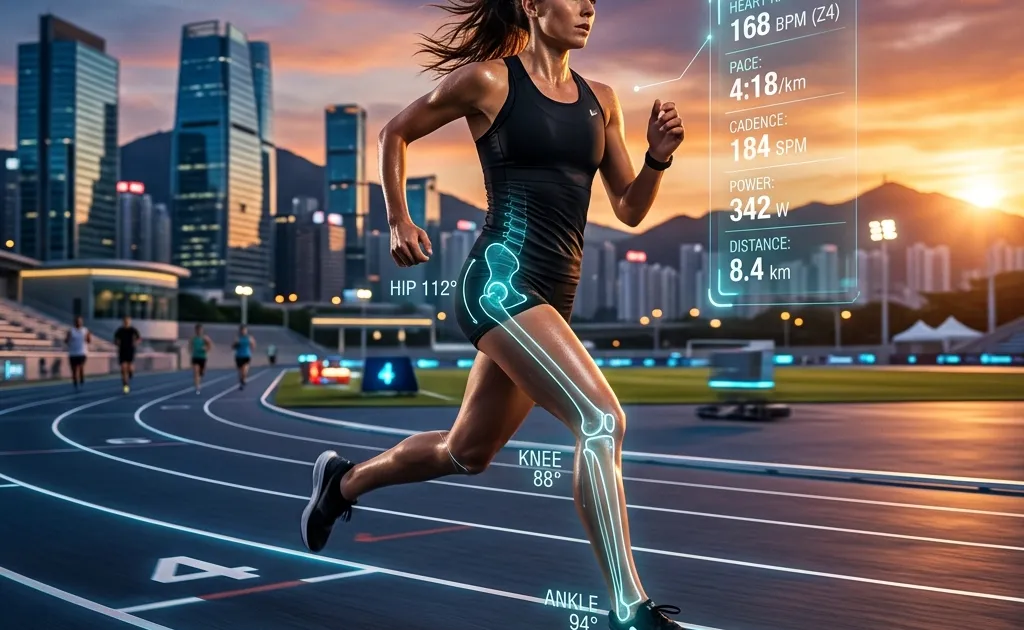
We are living in the era of the “Quantified Self” on steroids. A decade ago, “improving your lifestyle” meant buying a pedometer and trying to hit 10,000 steps. Today, it means having a pocket-sized supercomputer analyze your blood glucose levels in real-time, your smartphone camera correcting your squat form with millimeter precision, and a large language model (LLM) designing a periodized training block based on your specific hormonal fluctuations and work stress.
AI has transitioned from a backend curiosity to a frontend lifestyle architect. It is no longer reserved for Formula 1 drivers or Olympic sprinters; the tools to achieve “marginal gains” are now accessible to anyone with a smartphone and a willingness to look at their data.
But how do you actually use it? How do you move past the “cool gadget” phase and into a regime that actually makes you faster, stronger, and more resilient? Welcome to the AI Performance Lab.
1. The AI Personal Trainer: Computer Vision and Dynamic Loading
The most immediate impact of AI in sports is the democratization of elite coaching. Traditionally, high-level technical coaching required a human standing next to you, watching every rep. Now, computer vision (CV) is filling that gap.
Form Correction in Real-Time
Apps like Zing Coach or the Peloton Guide use your phone or a dedicated camera to map your body’s “skeletal” structure during exercise. By tracking specific joints, shoulders, hips, knees, ankles, the AI can detect if your back is rounding during a deadlift or if your knees are caving in during a squat.
This isn’t just about safety; it’s about efficiency. AI can calculate the exact “bar path” of your lifts. If the bar is drifting forward, you’re losing power. The AI identifies this instantly, providing auditory or visual cues to correct your movement mid-set. This level of granular feedback was previously impossible without a $150/hour private coach.
Dynamic Load Adjustment
Static workout plans are dead. If your plan says “Bench Press 3x10 at 80kg” but you only slept four hours and had a stressful day at the office, 80kg might lead to overtraining or injury.
AI-driven platforms like Fitbod or Whoop’s Strength Trainer use “Velocity Based Training” (VBT) or RPE (Rate of Perceived Exertion) data to adjust your weights in real-time. If the AI detects your rep speed is dropping significantly, it suggests lowering the weight. If you’re moving the bar like a rocket, it tells you to add 5kg. This ensures you are always training in the “Goldilocks Zone”, hard enough to stimulate growth, but not so hard that you burn out.
2. Nutritional Intelligence: Beyond the Calorie Tracker
Nutrition has always been the hardest part of the lifestyle equation. Manual logging is tedious, and generic “macros” ignore the massive variability in human metabolism. AI is fixing both ends of this problem.
Image Recognition and “Invisible” Logging
The friction of typing “one medium apple” into an app is often what kills a nutrition habit. Newer AI tools use image recognition to estimate portion sizes and caloric density from a photo. While not yet 100% accurate, they are becoming remarkably close. Tools integrated into apps like MyFitnessPal or SnapCalorie use depth-sensing and AI models trained on millions of food images to give you a “close enough” estimation that is significantly better than not logging at all.
The Metabolic Mirror: CGM + AI
Perhaps the most revolutionary lifestyle tool is the Continuous Glucose Monitor (CGM) paired with AI analysis (offered by companies like Levels or Nutrisense). Originally for diabetics, these sensors provide a real-time graph of your blood sugar.
AI then layers this data over your meals and activities. It might find that while “oatmeal” is healthy for most, it causes your blood sugar to spike like a candy bar, leading to a mid-afternoon crash. The AI acts as a translator, turning raw biometric data into actionable lifestyle changes: “Walk for 10 minutes after this meal to blunt the glucose spike.”
3. Sleep and Recovery: Engineering the Perfect Rest
You don’t get stronger in the gym; you get stronger while you sleep. AI has turned sleep from a passive “black box” into an engineered process.
Predictive Readiness
Devices like the Oura Ring or Whoop use AI to analyze Heart Rate Variability (HRV), Resting Heart Rate (RHR), and Respiratory Rate. The magic isn’t in the numbers themselves, but in the trend analysis.
The AI builds a baseline of “You.” It knows when your HRV is 20% below normal, which is often a leading indicator that you are getting sick or are severely overtrained, often before you feel any symptoms. This allows for “Autoregulation”: the AI tells you to take a rest day today, even if your plan says “Long Run,” because your internal data suggests your body isn’t ready for the load.
Environmental Optimization
AI isn’t just tracking sleep; it’s actively managing it. The Eight Sleep Pod uses AI to adjust the temperature of your bed in real-time based on your sleep stages. As you enter Deep Sleep, the bed cools down to lower your core temperature. As you move toward REM, it might warm up slightly. This closed-loop system ensures you stay in the optimal temperature band for each phase of sleep, significantly increasing “Sleep Efficiency.”
4. Sports Performance: Technique and Tactics
For those who compete, whether in local 5Ks, tennis tournaments, or Sunday League football, AI is providing the “scouting report” previously reserved for the pros.
Technique Breakdown
In sports like golf or tennis, AI tools (e.g., Golf.ai or SwingVision) analyze video of your swing or serve. They compare your biomechanics to a “pro model” and identify the exact degree of difference in your wrist angle or hip rotation.
This isn’t just for technique. In running, AI gait analysis (like Runna or COROS) can detect “asymmetry.” If your left foot is striking with 5% more force than your right, you are heading for an overuse injury. The AI flags this early, recommending specific strengthening exercises for your weaker side.
Tactical AI
Strategy-heavy hobbies are seeing a massive AI influx. Chess players have used “engines” for years, but now we see this in cycling (AI-optimized pacing strategies for races) and even team sports strategy. AI can analyze “heat maps” of your positioning in a football match and suggest where you should have been to better support the play.
5. Lifestyle & Mental Fortitude: The Cognitive Edge
A high-performance lifestyle isn’t just physical. Mental resilience and cognitive clarity are the “CPU” that runs the body.
AI-Driven Mindfulness
Biofeedback devices like the Muse headband use AI to translate your brainwaves (EEG) into the sounds of weather. When your mind is active, the weather is stormy; when you are calm, the weather is quiet. This real-time AI feedback loop teaches you what “calm” actually feels like, accelerating the learning curve of meditation.
Behavioral Nudges and “Second Brains”
LLMs (Large Language Models) are becoming the ultimate lifestyle assistants. Instead of just “tracking” habits, you can use AI to build a “Second Brain” (using tools like Obsidian with AI or Notion AI).
You can feed the AI your workout logs, sleep data, and even your “subjective” notes (e.g., “felt tired today”). You can then ask the AI: “Find the correlation between my late-night caffeine and my workout performance three days later.” The AI can find patterns in your life that are invisible to the naked eye.
Furthermore, AI-driven motivational tools are moving away from generic quotes and toward “contextual nudges.” If the AI knows you usually skip workouts when it’s raining, it can proactively send you a “home workout” alternative the moment the forecast changes. For more on staying focused, check out our guide on best motivational podcasts.
6. The Ethical Considerations: Don’t Become a Slave to the Data
With all this power comes a significant risk: Analysis Paralysis.
It is easy to become so obsessed with your “Sleep Score” or “Readiness Rating” that you stop listening to your own body. This is known as “Data-Induced Stress.” If you wake up feeling great, but your ring tells you your recovery is 40%, you might mentally sabotage your day.
The Golden Rule of AI Lifestyle: Use the data as a consultant, not a commander.
The AI is a tool to help you understand yourself better, but it doesn’t have the full picture. It doesn’t know you just had a great conversation with a friend that boosted your mood, or that you’re feeling a bit of “good” soreness from a new hike. Always cross-reference AI insights with your “Internal Compass.”
7. Building Your AI-Powered Lifestyle Stack: Where to Start?
You don’t need to buy every gadget on day one. Here is a tiered approach to building your stack:
Level 1: The “Software Only” Starter (Starter Cost: ~$0 - $20/mo)
- ChatGPT / Claude: Use them as a nutritionist and programmer. “Here is what’s in my fridge, give me a high-protein meal under 600 calories.” Or “Design a 4-week 5K training plan for a beginner.”
- Zing Coach: Use the free tier for AI-guided bodyweight workouts.
- MyFitnessPal: Use the AI photo logging feature.
Level 2: The “Quantified” Intermediate (Intermediate Cost: ~$200 - $500)
- Wearable (Oura, Whoop, or Apple Watch): Start tracking your HRV and sleep stages. Use the “Readiness” data to decide when to push and when to pull back. If you’re still choosing a device, compare the options in our guide to AI-powered fitness trackers.
- Form Analysis App: Use a paid subscription to something like SwingVision or Golf.ai to refine your specific sports technique.
Level 3: The “Biohacker” Advanced (Advanced Cost: $1,000+)
- Eight Sleep Pod: Actively manage your sleep environment.
- CGM (Levels/Nutrisense): Map your metabolic response to food.
- Professional Video Analysis: Use high-end AI software to break down every aspect of your athletic performance.
Conclusion: The Human + AI Hybrid
The goal of using AI in your sports and lifestyle isn’t to become a robot. It’s to remove the guesswork. It’s to stop “trying” things at random and start engineering progress.
When you pair the raw data-processing power of AI with human intuition and grit, you create a feedback loop that is incredibly powerful. You learn faster, recover deeper, and perform better.
The future of lifestyle isn’t just “working harder”, it’s working smarter with an AI partner by your side. Start with one tool, master the data it gives you, and slowly build your own personal performance lab.
For more guides on using technology to optimize your life, check out our AI tools guide and our breakdown of how to use AI at work safely.
Top Ranked Frontier AI Models
Empirical rankings sourced from Artificial Analysis, Arena.ai, LLM Stats & BenchLM.
Related Articles

How to Use AI to Settle Disputes Fairly and Fast
Learn how to use AI as a neutral third-party mediator for workplace, roommate, and personal disputes with structured frameworks and prompts.

Why Boredom Is Good For You: The Hidden Power of Rest
Discover why boredom isn't something to avoid, but a vital state for creativity, mental health, and productivity. Learn how to embrace doing nothing.

How to Never Be Bored at Work Again
Discover actionable strategies to eliminate boredom at work, boost your productivity, and find renewed purpose in your daily professional life.