
How to Prepare for Dark Season: Desk, Mood & Routine
Prepare your home office, mood, and daily routine for the dark season. Discover proven light therapy, circadian habits, and cozy workstation upgrades.

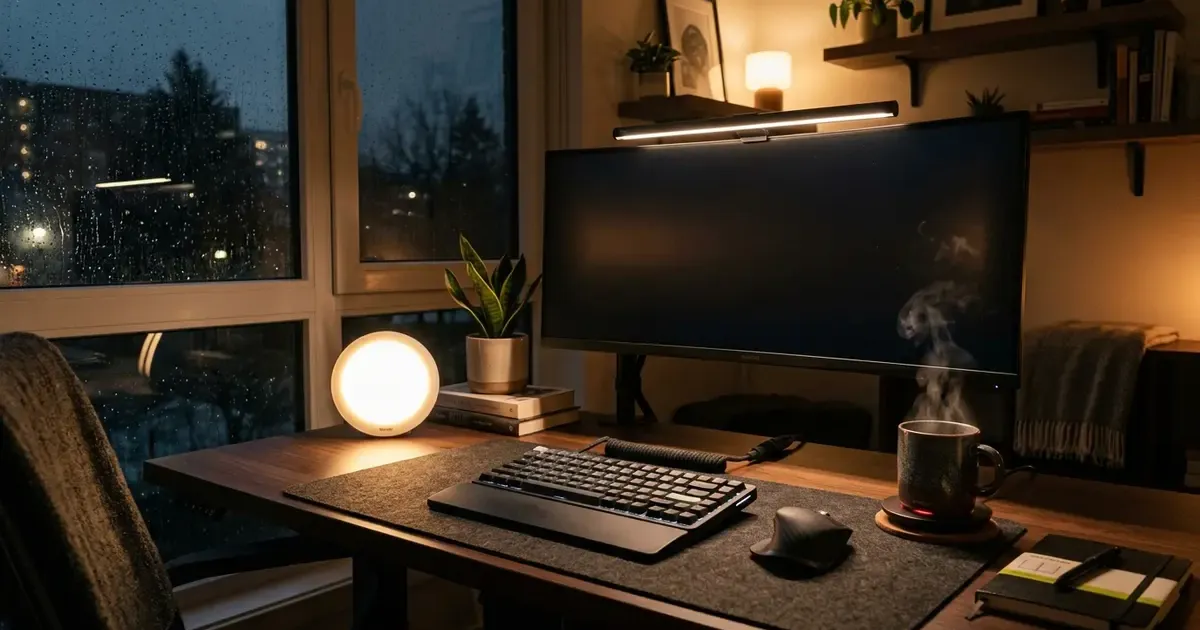
As autumn fades into November, the days shrink rapidly. For remote workers, freelancers, and desk professionals, the transition into the “dark season” often brings an unwelcome physiological tax: sluggish morning awakenings, persistent afternoon brain fog, diminished focus, and an instinctual desire to hibernate under heavy blankets.
This seasonal energy drop is not a lack of discipline; it is human biology reacting to the abrupt collapse of natural sunlight. When ambient daylight drops from sixteen hours to fewer than eight, our internal circadian pacemaker falls out of sync. Cortisol production delays in the morning, serotonin levels dip, and melatonin continues leaking into our bloodstream well past breakfast.
However, entering the colder, darker months does not mean surrendering your productivity or wellbeing. With deliberate adjustments to your workstation lighting, indoor climate, movement schedule, and desk comfort, you can transform the dark season into your most focused, restorative, and productive quarter of the year.
In this comprehensive guide, we explore how to optimize your biology, workstation setup, and daily habits to thrive throughout the winter months.
Quick Picks: Dark Season Preparation at a Glance
| Focus Area | Key Upgrade or Habit | Primary Biological Impact | Recommended Benchmark |
|---|---|---|---|
| Morning Alertness | 10,000 Lux Light Therapy Lamp | Suppresses morning melatonin and resets circadian clock | 20–30 mins at 16–24 inches (7:00–8:30 AM) |
| Workstation Visuals | Asymmetric Monitor Light Bar | Eliminates screen glare and reduces eye strain in dark rooms | 4000K–5000K daytime, 2700K evening |
| Tactile Warmth | Natural Wool Felt Desk Pad | Shields forearms from freezing cold desk surfaces | 900x400mm thick merino wool or dense felt |
| Indoor Climate | Ultrasonic Cool Mist Humidifier | Protects vocal cords, prevents dry eyes, and cuts static | Maintain 40% to 50% relative humidity |
| Thermal Comfort | Gravity-Induction Ceramic Mug Warmer | Keeps hot coffee, matcha, or herbal tea at steady 55°C | 18W auto-shutoff heated desktop coaster |
| Circadian Health | Post-Sunset Warm Ambient Lighting | Enables natural melatonin synthesis for deep sleep | Smart bulbs dimmed to 2200K (Amber tone) |
Building a dedicated workspace? Explore our comprehensive Desk Upgrade & Home Office Guide for complete ergonomics, monitor setups, and productivity workflows.
1. Mastering Light: The Biological Foundation of Winter Energy
Light is the single most potent synchronizer (known in chronobiology as a zeitgeber) of the human master clock located in the suprachiasmatic nucleus. When natural morning light disappears behind overcast winter skies, you must actively engineer your photonic environment.
| Time of Day | Lighting Strategy | Color Temperature (Kelvin) | Primary Biological Objective |
|---|---|---|---|
| Morning (7:00 – 9:00 AM) | High-intensity light box (10,000 Lux) | 5000K – 6500K (Cool Daylight) | Halt melatonin, spike cortisol, boost alertness |
| Midday (9:00 AM – 4:00 PM) | Diffused task light + monitor light bar | 4000K – 4500K (Neutral White) | Maintain high cognitive focus, eliminate eye fatigue |
| Sunset (4:00 – 7:00 PM) | Soft background fill lighting | 3000K (Warm White) | Smooth transition without harsh contrast |
| Night (7:00 – 10:30 PM) | Low-placed indirect ambient lamps | 2200K – 2700K (Warm Amber / Candle) | Stimulate natural melatonin synthesis for restorative sleep |
The 10,000 Lux Morning Anchor
Looking out a double-glazed window on a rainy November morning provides fewer than 1,000 to 2,000 lux of illuminance. Standard indoor office lighting delivers a meager 300 to 500 lux, which is biologically insufficient to signal wakefulness to your brain.
To trigger your morning circadian reset, position a dedicated 10,000 lux light therapy lamp on your desk:
- Placement: Position the light box roughly 16 to 24 inches away from your face at a 30 to 45-degree angle (do not stare directly into the LEDs).
- Duration: Run the lamp for 20 to 30 minutes while reviewing morning emails, planning your daily priorities, or drinking your first glass of water.
- Consistency: Use it within 60 minutes of waking up every day, including weekends, to anchor your sleep-wake schedule.
Monitor Light Bars for Contrast Management
In summer, bright ambient room light balances out the luminance of computer monitors. In winter, working in a dim or dark room while staring at a bright monitor creates severe optical contrast, causing rapid pupil contraction, dry eyes, and tension headaches.
An asymmetric monitor light bar mounts cleanly to the top of your display, casting a wide pool of glare-free light across your keyboard and workspace without reflecting off the screen glass. For a complete breakdown of top mounting brackets, wireless rotary dials, and auto-dimming sensors, check out our roundup of the best monitor light bars.
The Evening Amber Transition
Just as morning blue-enriched light wakes you up, evening exposure to bright 6500K ceiling lights tricks your brain into thinking it is noon, delaying REM sleep onset.
At sunset (which can occur as early as 4:30 PM in northern latitudes), shift your workstation lighting:
- Switch smart desk lamps to warm amber (2200K to 2700K).
- Lower light sources to eye level or below using floor lamps and monitor backlights rather than harsh overhead fixtures.
- Enable OS-level night shift modes across all laptops and tablets.
2. Workstation Ergonomics: Designing a Warm, Inviting Desk
A sterile, cold workspace magnifies winter lethargy. When your wrists rest against icy aluminum laptop chassis or cold laminate tabletops, blood vessels constrict, leading to stiff fingers and sluggish typing speed. Upgrading the physical tactile surfaces of your desk makes sitting down to work feel welcoming.
| Workspace Upgrade | Typical Material | Key Functional Benefit |
|---|---|---|
| Heavyweight Wool Felt Desk Mat | 100% Merino Wool / High-Density Felt | Insulates wrists and forearms from cold desk surfaces |
| Desk Cable Organization Tray | Steel under-desk raceway | Keeps heating and charger cables organized and dust-free |
| Smart Heated Coaster | Tempered glass / Ceramic heater | Prevents hot beverages from cooling within minutes |
| Breathable Lumbar Support Cushion | High-density memory foam | Maintains spinal posture during longer indoor work sessions |
Natural Wool Felt and Leather Desk Mats
Swapping out a thin plastic mousepad for a substantial merino wool or thick felt desk mat immediately transforms your desk’s thermal profile. Wool provides natural thermal insulation, cushioning your wrists against cold desktop materials while dampening keyboard sound resonances.
To compare dimensions, stitching durability, and water-resistant coatings, read our practical review of the best desk mats.
Hot Beverage Management
Few things disrupt winter workflow faster than a hot cup of tea or coffee turning ice-cold within fifteen minutes due to chilly ambient room temperatures.
An induction mug warmer or double-walled vacuum-insulated tumbler keeps beverages at an exact, soothing temperature (typically 50°C to 55°C / 122°F to 131°F) for hours. Staying warm on the inside reduces muscular shivering and keeps your fingers nimble through long coding or writing sessions.
If you are upgrading accessories on a tight budget, our home office gifts under $100 guide doubles as a self-purchase list, ranked by the complaint each upgrade fixes.
3. Circadian Routine Engineering: Defeating Afternoon Brain Fog
When the sun sets before the workday ends, psychological motivation often drops sharply around 2:00 PM. Structuring your workday around natural biological energy cycles prevents late-day burnout.
| Daily Phase | Circadian Focus | High-Leverage Habits |
|---|---|---|
| Morning (8:00 – 11:30 AM) | Peak Cognitive Capacity | Deep analytical work, writing, coding, complex problem solving |
| Midday (11:30 AM – 1:30 PM) | Metabolic & Light Reset | Nutrient-dense warm meal, 15-minute outdoor walk, zero screen break |
| Early Afternoon (1:30 – 3:30 PM) | Natural Alertness Dip | Routine administrative tasks, team check-ins, organizing inbox |
| Late Afternoon (3:30 – 5:30 PM) | Second Focus Wave | Execution sprint, project review, tomorrow’s priority staging |
| Evening (6:00 PM onward) | Work-Life Boundary Shutdown | Workstation blackout, physical movement, offline leisure |
The Mandatory 15-Minute Noon Walk
Even on heavily overcast winter days, outdoor ambient light delivers between 5,000 and 15,000 lux, far outperforming any standard indoor ceiling lamp.
Step outside between 11:30 AM and 1:00 PM for a brisk 15-minute walk without sunglasses. This midday photons injection provides two vital benefits:
- It reinforces your circadian clock, signaling to your brain that the day is still underway.
- The physical movement increases core body temperature and stimulates blood circulation, clearing accumulated metabolic waste from your muscles.
Protecting Work-Life Boundaries
When it is pitch black outside at 5:30 PM, the psychological distinction between “work time” and “evening personal time” blurs easily. Remote workers frequently fall into the trap of continuous, aimless working simply because the outside world looks the same at 4:00 PM as it does at 9:00 PM.
Establish a rigid Workstation Shutdown Ritual:
- Close all browser tabs and log out of workplace communication tools (Slack, Teams).
- Physically turn off your monitor light bar and desk accessories.
- Step away from the desk and change out of your daytime work clothes into comfortable evening wear.
For sustainable techniques on avoiding boundary fatigue, review our practical guide on how to achieve genuine work-life balance.
4. Nutritional & Environmental Optimization: Indoor Air and Vitality
Winter indoor environments present unique physiological stressors. Central heating dries out nasal membranes, while closed windows cause carbon dioxide levels to climb, leading to drowsiness and headaches.
| Environmental Metric | Poor Winter Condition | Optimized Target Level | Remediation Tool |
|---|---|---|---|
| Relative Humidity (RH) | 15% – 25% (Extremely Dry) | 40% – 50% (Optimal) | Ultrasonic cool mist humidifier |
| Carbon Dioxide ($CO_2$) | > 1,200 ppm (Stale Air) | < 750 ppm (Fresh Air) | 5-minute cross-ventilation every 2 hours |
| Airborne Particulates | High dust & skin flakes | Zero PM2.5 / Low Allergens | True HEPA H13 air purifier |
| Vitamin D3 Level | Deficient (< 20 ng/mL) | Optimal (40 – 60 ng/mL) | Medical consultation & D3+K2 drops |
Combating Desert-Dry Heating Air
Indoor heating acts like a giant dehumidifier, often pulling relative humidity below 20%, which is drier than parts of the Sahara Desert. Low humidity dries out the tear film on your eyes (worsening screen fatigue), irritates vocal cords, and promotes static electricity on your desktop.
Place an ultrasonic cool-mist humidifier near your workspace. Maintaining relative humidity between 40% and 50% keeps mucous membranes lubricated, protects your skin, and helps trap floating dust particles so they fall out of the air.
The Power of “Shock Ventilation” (Stoßlüften)
Leaving a window slightly cracked in winter merely wastes heating energy while failing to circulate fresh air effectively. Instead, practice rapid cross-ventilation: open windows fully on opposite sides of your home for four to five minutes twice a day.
This rapidly flushes out accumulated carbon dioxide and volatile organic compounds without cooling down the thermal mass of your walls and furniture.
5. Psychological Sanctuary: Embracing Winter Focus & Deep Work
Instead of viewing the dark season as an obstacle to endure, top-performing professionals reframe winter as a seasonal deep-work sprint.
Without the social distractions, outdoor events, and bright evening daylight of summer, winter provides a unique psychological sanctuary. The calm, quiet evenings are ideal for reading substantial non-fiction books, mastering technical skills, and building personal creative projects.
| Winter Mindset Shift | Summer Traps | Winter Superpower |
|---|---|---|
| Distraction Level | High (Outdoor events, social invites) | Minimal (Quiet, uninterrupted focus) |
| Cognitive Pace | Fast, reactive, fragmented | Deep, reflective, structured |
| Evening Energy | Restless social stimulation | Restorative reading and skill building |
| Project Output | Surface-level maintenance | Major portfolio and technical leaps |
Building an Offline Cozy Reading Nook
After logging off your computer, avoid transitioning directly to another bright OLED screen like a television or smartphone. Designating a cozy corner of your living room with a dedicated reading chair, a warm throw blanket, and a glare-free digital reading device creates a soothing wind-down ritual.
If you are setting up an evening reading sanctuary, explore our guide to creating a cozy reading nook setup and our comparison of the best e-readers for reading to protect your eyes before sleep.
6. The Complete 4-Week Dark Season Preparation Schedule
To make your transition seamless, follow this structured weekly countdown starting in late autumn:
| Timeline | Phase | Actionable Checklist |
|---|---|---|
| Week -4 (Early October) | Lighting & Optics Audit | • Test and dust off 10,000 lux SAD light therapy lamp. • Clean monitor screens and install monitor light bar. • Program smart bulbs to automate warm 2200K evening dimming. |
| Week -3 (Mid October) | Workstation Comfort | • Lay down wool felt desk mat to insulate cold surfaces. • Set up induction mug warmer and insulated drinkware. • Tidy under-desk cabling to prepare for space heaters or footrests. |
| Week -2 (Late October) | Climate & Environment | • Clean and descale ultrasonic humidifier; replace filters. • Place digital hygrometer on desk to track 40–50% humidity target. • Inspect home office air purifier HEPA filters. |
| Week -1 (Clock Change) | Circadian Calibration | • Shift bedtime 15 minutes earlier each night. • Commit to the 7:30 AM light therapy window. • Schedule a recurring 12:00 PM calendar block for the daily outdoor walk. |
| Week +1 (Dark Season Peak) | Routine Enforcement | • Execute daily rigid 5:30 PM desk shutdown ritual. • Transition evenings to offline reading nooks and warm beverages. • Track sleep quality and energy levels to adjust light timing. |
Frequently Asked Questions
How many lux do I need for effective morning light therapy?
Clinical studies on Seasonal Affective Disorder (SAD) recommend a lamp providing 10,000 lux of UV-filtered light. At this intensity, a 20 to 30-minute session placed 16 to 24 inches from your eyes provides optimal biological stimulation.
What is the best color temperature for desk lighting during winter?
Use bright, cool-white lighting (4500K to 6500K) during morning work hours to boost alertness and suppress daytime melatonin. Transition to warm, amber light (2200K to 2700K) after sunset to protect your natural sleep cycle.
How do I prevent dry air and static electricity in a heated home office?
Run an ultrasonic cool-mist humidifier to maintain indoor relative humidity between 40% and 50%. This prevents dry eyes from screen glare, reduces airborne dust, and eliminates static shocks from wool desk mats.
Why do I feel exhausted at 2:00 PM during the dark season?
Winter afternoon fatigue stems from circadian misalignment caused by insufficient morning sunlight exposure and excessive artificial lighting at night. A brisk 10-minute outdoor walk, proper hydration, and targeted task batching help reset alertness.
Summary: Turning the Dark Season into Your Most Productive Season
The dark season is not a seasonal handicap; it is an annual invitation to slow down, eliminate superficial distractions, and cultivate a deeply satisfying work routine.
By taking control of your personal ecosystem, introducing high-lux morning photons, warming up your physical workstation surfaces, humidifying your indoor air, and protecting your evening rest, you can maintain vibrant energy, sharp cognitive clarity, and genuine comfort all winter long.
Invest in your environment now, and let the quiet winter months become your secret season of peak accomplishment.
Related Articles
TRMNL: The E-Ink Dashboard That Reclaims Your Desk and Focus
Is your desk setup missing something? Discover TRMNL, the minimalist E-ink display that gives you glanceable data without the distraction of a standard monitor.
10 Practical Desk Upgrades You Can 3D Print for Under $1
Transform your workspace from a cable-cluttered mess to a productivity powerhouse with these 10 cheap, fast, and functional 3D prints.
IKEA 3D Printing Hacks: Upgrade Your Furniture in 2026
Transform standard IKEA furniture with 3D printing. Discover custom Skadis hooks, Alex drawer dividers, Kallax modifiers, and desk cable management clips.