
How Prediction Markets Work: A Beginner's Guide (2026)
Prediction markets explained simply. How event contracts work, where the money goes, and whether Kalshi and Polymarket are worth it.

Disclaimer: This article explains how prediction markets work for educational purposes. Nothing here is financial advice. Prediction markets involve real money and risk. Always do your own research before participating.
You’re reading the news, half-paying attention, and a headline catches your eye: “Fed Expected to Pause Rate Cuts in June.” And you think, yeah, obviously. I called that two weeks ago. Everyone with a pulse called that.
But what if you could have put money on it?
That’s prediction markets in a nutshell. Instead of just having opinions about the future, you trade on them. Will the Fed cut rates? Who wins the next election? Will a certain bill pass Congress? You buy a contract. If you’re right, you profit. If you’re wrong, you lose.
It sounds like gambling, and there’s a genuine debate about where the line is. But prediction markets have proven remarkably good at forecasting real-world events, often better than polls, pundits, or models. The 2024 US presidential election was the landmark example: Polymarket processed over $3.3 billion in volume on the presidential race and called the outcome more accurately than virtually every traditional polling outlet.
In 2026, prediction markets have gone mainstream. Here’s how they actually work.
The Basics: How Event Contracts Work
A prediction market contract is simple. It’s a binary bet on whether something will happen.
The Mechanics
- A platform lists an event: “Will the Fed cut rates in June 2026?”
- The contract trades between $0.00 and $1.00
- The current price represents the market’s implied probability
- If the event happens → the contract pays $1.00
- If the event doesn’t happen → the contract pays $0.00
Example Trade
The contract “Fed cuts rates in June 2026” is trading at $0.65.
- If you think it’s more likely than 65%: Buy the “Yes” contract at $0.65. If the Fed does cut, you get $1.00, a profit of $0.35 per contract.
- If you think it’s less likely than 65%: Buy the “No” contract at $0.35 ($1.00 - $0.65). If the Fed doesn’t cut, you get $1.00, a profit of $0.65 per contract.
- You can also sell early: If you bought at $0.65 and the price rises to $0.80, you can sell for a $0.15 profit without waiting for the event to resolve.
Why Prices = Probabilities
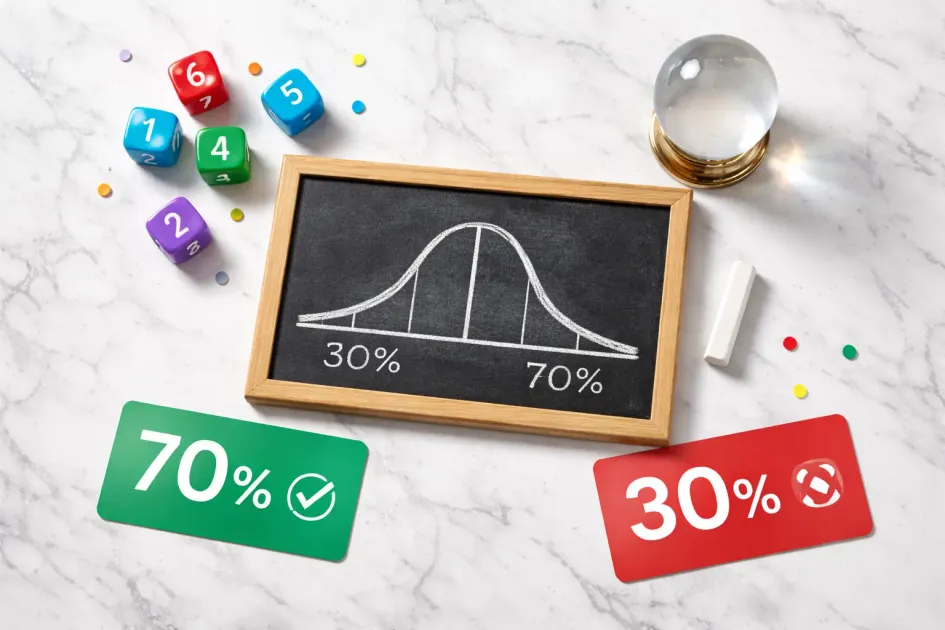
This is the clever part. Because contracts settle at $1.00 or $0.00, the market price naturally reflects the crowd’s best estimate of probability.
| Price | Implied Probability |
|---|---|
| $0.10 | 10% chance |
| $0.35 | 35% chance |
| $0.50 | Coin flip |
| $0.65 | 65% chance |
| $0.90 | 90% chance |
When thousands of people trade on an outcome, each with their own information, analysis, and conviction level, the resulting price tends to be remarkably accurate. This is called the “wisdom of crowds” effect, and it’s why prediction markets often outperform individual experts.
What Can You Trade?
Prediction markets cover a wide range of events. Here’s what’s typically available:
Politics
- Election outcomes (presidential, congressional, gubernatorial)
- Policy decisions (will a specific bill pass?)
- International events (leadership changes, treaties, conflicts)
This is where prediction markets got famous. Political contracts typically have the deepest liquidity and most trading volume.
Economics
- Federal Reserve decisions (rate cuts, holds, hikes)
- Inflation data (will CPI come in above or below X%?)
- Employment numbers (will unemployment rise above X%?)
- GDP growth figures
Economic contracts are popular with sophisticated traders because the outcomes are data-driven and regular (monthly reports, quarterly meetings).
Sports
- Game outcomes, point spreads, over/unders
- Championship futures
- Player performance milestones
Sports contracts look a lot like traditional sports betting, but they trade on regulated exchanges with transparent pricing.
Science and Technology
- Will a specific product launch by a certain date?
- Climate and weather events
- Space exploration milestones
Pop Culture and Miscellaneous
- Award show outcomes (Oscars, Grammys)
- Box office performance
- “Will X happen before Y date?” contracts
The Major Platforms in 2026
Two platforms dominate the prediction market space:
Kalshi
| Feature | Details |
|---|---|
| Regulation | CFTC-regulated Designated Contract Market (DCM) |
| US Access | Yes, 42+ states |
| Currency | USD (bank transfer, debit card) |
| Fees | ~1-3.5% taker, ~0.25-0.875% maker |
| Best For | US users who want easy access |
| Mobile App | iOS + Android |
Kalshi is the easy-start option for US-based users. It’s fully CFTC-regulated, accepts USD deposits via ACH or debit card, and has native mobile apps. The interface is clean and beginner-friendly.
The downside: fees are higher than Polymarket, and liquidity can be thinner on some markets (meaning wider spreads and harder fills on large orders).
Polymarket
| Feature | Details |
|---|---|
| Regulation | Global: offshore (Polygon blockchain). US: CFTC-regulated DCM (limited access) |
| US Access | Waitlist/invite-only (via regulated US entity) |
| Currency | Global: USDC (crypto). US: USD |
| Fees | 0-3% taker, 0% maker (global) |
| Best For | Deep liquidity, international events |
| Mobile App | Web-based (global), iOS (US) |
Polymarket is the larger platform by volume, especially for politics and crypto-related markets. The global platform runs on crypto (USDC on Polygon), which means deeper liquidity but a crypto learning curve. The US-regulated entity is newer and still rolling out access.
For a detailed comparison: Polymarket vs Kalshi, Fees, features, regulation, and which to choose.
How to Get Started (Step by Step)
Step 1: Choose a Platform
If you’re in the US and want the easiest start: Kalshi. Sign up with your email, verify your identity (takes minutes), deposit via bank transfer or debit card, and start trading.
If you’re outside the US or want deeper liquidity: Polymarket (global version). You’ll need a crypto wallet and USDC.
Step 2: Start Small
Seriously, start with $20-50. Prediction markets look simple, but trading them well takes practice. You need to understand:
- How to read an order book
- The difference between market orders and limit orders
- How fees affect your profitability on small trades
- How to size positions appropriately
If you want to practice without real money first, paper trading apps can teach you order types and market mechanics, even though they don’t simulate event contracts specifically.
Step 3: Understand the Market You’re Trading
Before buying any contract, ask yourself:
- What do I know that the market might not? If you don’t have an edge, you’re just gambling.
- What’s the base rate? How often has this type of event happened historically?
- What could change the probability? News events, data releases, announcements.
- What are the fees? On small trades, fees can eat most of your profit.
Step 4: Watch Before You Trade
Spend your first week just watching. Pick 3-5 markets that interest you. Track how prices move in response to news. Note when markets seem to overreact or underreact. This builds intuition you can’t get from reading about prediction markets, you have to watch them move.
The Math: Is It Actually Profitable?
Let’s be honest about the economics.
The Zero-Sum Problem
Prediction markets are zero-sum (minus fees). For every dollar someone makes, someone else loses a dollar. The platform takes a cut on top. This means the average participant loses money (by the amount of total fees paid).
Who Profits?
| Participant Type | Typical Outcome |
|---|---|
| Market makers | Small, consistent profits from spreads |
| Information-edge traders | Profitable on specific events they follow closely |
| Casual/recreational traders | Slight losses (entertainment cost) |
| Impulse/emotional traders | Significant losses |
Realistic Expectations
If you follow certain topics closely, say, Federal Reserve policy or a specific election, you may genuinely have better information than the average market participant. That’s where profit potential exists. Tools like free stock screeners and stock news apps can help you stay informed on economic events.
But if you’re trading random events for fun, treat it like entertainment with a budget. Set aside a fixed amount (say, $50-100/month) and don’t exceed it.
Why Prediction Markets Matter (Beyond Trading)
Even if you never trade, prediction markets are useful as information tools. Sites like Metaculus aggregate crowdsourced forecasts on science, technology, and geopolitical events, and publish the track records of their predictions, making them a useful benchmark for accuracy.
Better Than Polls
The 2024 election demonstrated this definitively. While polls showed a tight race, prediction market prices signaled a clearer outcome, and the markets were right. This is because markets aggregate diverse information from thousands of participants, each with their own data sources and analysis.
Real-Time Probability Estimates
Want to know the market’s best estimate of whether the Fed will cut rates? Check Kalshi or Polymarket. Want to gauge the likelihood of a geopolitical event? Check the contract price. These probabilities update in real time as new information arrives.
Accountability
Unlike pundits who make predictions with no consequences, prediction market participants put money behind their beliefs. This naturally filters out noise and incentivizes accuracy.
Financial Education
Trading prediction markets teaches you concepts that apply to all investing:
- Probability thinking, Assessing likelihoods, not certainties
- Position sizing, How much to risk on any single trade
- Emotional discipline, Not chasing losses or over-betting on conviction
- Information edge, Understanding what you know vs. what the market knows
If you’re new to investing concepts, our best free investing courses cover the fundamentals that also apply to prediction markets.
These are also skills that make you a sharper thinker at work. If you’re using slow afternoons to follow prediction markets, you’re in good company, check out 25 productive things to do when bored at work for more ideas.
Common Mistakes Beginners Make
1. Overconfidence
You think an event is 90% likely. The market says 70%. You load up on contracts. But the market often has information or perspectives you don’t. If the market price seems “obviously wrong,” ask yourself what you might be missing before betting big.
2. Ignoring Fees
A contract at $0.90 that pays $1.00 looks like a 10% return. But after 2-3% in fees, your actual profit is 7-8%. And if you’re wrong, you lose $0.90 plus fees. The risk/reward on high-probability contracts is often worse than it appears.
3. Treating It as Gambling
Prediction markets are most profitable when approached analytically, reading reports, following data releases, building models. If you’re trading based on gut feelings or rooting for an outcome, you’re gambling, and the house (fees) always wins long-term.
4. Not Diversifying
Putting all your prediction market capital into one event is pure speculation. If you’re going to trade, spread across multiple uncorrelated events to smooth out variance.
5. Emotional Attachment
Don’t trade events you’re emotionally invested in. If you desperately want a candidate to win, you’re likely to overestimate their probability and overpay for contracts. Trade with your head, not your heart.
Taxes and Legal Stuff
Is It Legal?
In the US, CFTC-regulated prediction markets (Kalshi, Polymarket US) are legal financial instruments. They’re classified as event contracts, similar to futures. Access varies by state, Kalshi operates in 42+ states, with some states restricting or prohibiting participation.
Unregulated platforms (like Polymarket’s global crypto version) are legally accessible in most countries but are off-limits to US residents for real-money trading.
Tax Treatment
Prediction market profits are taxable in the US. The exact treatment is still evolving, but generally:
- Kalshi: Issues 1099 forms for users who meet IRS reporting thresholds
- Short-term gains: Taxed as ordinary income if you held the contract less than a year
- Losses: May be deductible against gains (consult a tax professional)
- Polymarket (crypto): USDC transactions may trigger additional crypto tax reporting requirements
Bottom line: Keep records of all your trades. Use a tax professional if your activity is significant.
Should You Try Prediction Markets?
Yes, if:
- You’re interested in probability, forecasting, or economics
- You have disposable income you can afford to lose
- You follow news and events closely enough to form independent opinions
- You treat it as a learning experience, not a get-rich strategy
- You’ve already established a core investment portfolio (index funds, retirement accounts), see our best investing apps for beginners if you haven’t started yet
No, if:
- You’re still building an emergency fund
- You haven’t started basic investing yet
- You’re prone to gambling-like behavior
- You’re looking for guaranteed returns
Start here: Open a Kalshi account, deposit $25, and make one small trade on an event you follow. Watch how the market moves over the next week. That single experience teaches more than any article can.
Next steps: Polymarket vs Kalshi for a detailed platform comparison, or head back to the Investing Tools Guide for the full toolkit.
Related Articles
Polymarket vs Kalshi (2026): I Tried Both, Here's My Pick
Polymarket vs Kalshi compared side by side, fees, markets, regulation, and UX. Which prediction market platform is actually worth it?
8 Best Investing Podcasts for Beginners and Beyond (2026)
I listen to investing podcasts during work hours. Here are the 8 best in 2026, ranked by level, from total beginner to advanced strategy.
12 Best Finance Subreddits for Investors (2026 Guide)
I've been lurking these finance subreddits for years. Here are the 12 that actually help you learn investing, manage money, and avoid bad advice in 2026.