
The Real Dangers of 3D Printing: Fumes, Fires & Safety
Understand the hidden hazards of 3D printing. Learn about VOCs, ultrafine particles, fire risks, resin toxicity, and essential home workshop safety.

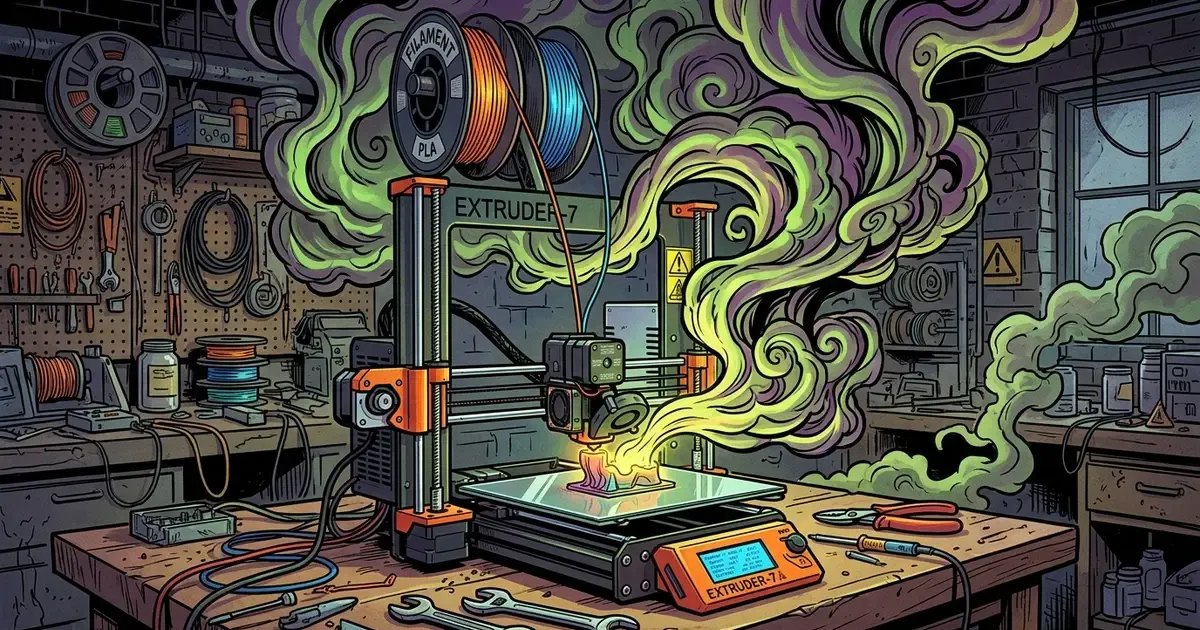
Desktop 3D printing has transformed from a niche hobby into an accessible manufacturing tool found in thousands of home offices, basements, and maker spaces. Modern high-speed machines make turning a digital 3D model into a physical object effortless. Yet, the ease of modern 3D printers often obscures a critical reality: 3D printers are industrial thermal and chemical tools operating inside residential spaces.
When heating plastic polymers past 200°C (392°F) or curing liquid photopolymers with concentrated ultraviolet light, microscopic airborne emissions, intense thermal energy, and hazardous chemicals come into play. Ignoring these factors can lead to respiratory irritation, long-term allergic sensitization, or severe workshop fires.
Master 3D printing from start to finish: Dive into our complete 3D Printing Guide for Beginners covering printers, troubleshooting, and project ideas.
Understanding the genuine risks of additive manufacturing allows you to build a safe, sustainable home setup without endangering your health or living space. In this comprehensive safety guide, we break down the primary hazards of FDM and SLA printing, evaluate the scientific evidence on airborne particulates, and detail practical, cost-effective safety measures.
1. Airborne Hazards: VOCs and Ultrafine Particles (UFPs)
The most insidious danger in 3D printing is what you cannot see. When molten thermoplastic is pushed through a brass or hardened steel nozzle, it undergoes thermal degradation, releasing two distinct classes of airborne byproducts: Volatile Organic Compounds (VOCs) and Ultrafine Particles (UFPs).
Ultrafine Particles (UFPs)
Ultrafine particles are microscopic airborne particles smaller than 0.1 microns (100 nanometers) in diameter. For scale, a human hair is roughly 70 microns thick. Because these particles are so miniscule, standard home air filters and standard dust masks fail to capture them.
When inhaled, UFPs bypass the respiratory tract’s natural filtration systems, penetrating deep into the pulmonary alveoli and passing directly into the bloodstream. Scientific studies from the National Institute for Occupational Safety and Health (NIOSH) and Georgia Institute of Technology have demonstrated that desktop FDM printers emit billions of UFPs per minute during operation.
Volatile Organic Compounds (VOCs)
VOCs are organic chemicals with high vapor pressure at room temperature. Different filaments generate vastly different chemical off-gassing profiles:
- ABS (Acrylonitrile Butadiene Styrene): Releases substantial concentrations of styrene, a volatile aromatic hydrocarbon classified as a probable human carcinogen. Exposure to styrene fumes causes immediate headaches, eye fatigue, nausea, and long-term neurotoxic effects.
- Nylon (Polyamide): Emits caprolactam, which can trigger severe throat burning, coughing, and eye irritation.
- ASA (Acrylonitrile Styrene Acrylate): Formulated as a UV-resistant alternative to ABS, but shares an identical styrene backbone and poses comparable respiratory hazards.
- PLA (Polylactic Acid): Emits predominantly lactide and small amounts of sweet-smelling volatile esters. While considered significantly less toxic than ABS, high concentrations of PLA ultrafine particles can still trigger inflammation in sensitive individuals and asthmatics.
- PETG (Polyethylene Terephthalate Glycol): Features one of the lowest VOC emissions profiles among technical filaments, though moderate UFP generation remains present during continuous extrusion.
Filament Toxicity Comparison
| Filament Material | VOC Emission Level | Dominant Chemical Compounds | UFP Generation Rate | Safe Indoor Rating |
|---|---|---|---|---|
| PLA | Very Low | Lactide, natural esters | Moderate | Moderate (Needs Airflow) |
| PETG | Low | Trace aldehydes | Moderate | High (Needs Basic Venting) |
| TPU | Moderate | Isocyanates, trace VOCs | Moderate | Moderate (Needs Basic Venting) |
| ABS | Critical | Styrene, ethylbenzene | Very High | Dangerous (Requires Enclosure & Venting) |
| ASA | High | Styrene, acrylic derivatives | Very High | Dangerous (Requires Enclosure & Venting) |
| Nylon (PA) | High | Caprolactam, amines | High | Dangerous (Requires Enclosure & Venting) |
| PC (Polycarbonate) | High | Bisphenol-A, phenols | High | Dangerous (Requires Enclosure & Venting) |
2. Liquid Resin (SLA) Dangers: Chemical Sensitization and Toxicity
While filament printing poses predominantly airborne risks, stereolithography (SLA) resin printing introduces direct chemical contamination dangers. Liquid UV-curable photopolymers are reactive chemical mixtures consisting of acrylic monomers, oligomers, photoinitiators, and synthetic pigments.
Irreversible Skin Sensitization
Direct contact with liquid photopolymer resin causes chemical burns and skin irritation. More alarmingly, prolonged or repeated exposure triggers contact dermatitis and permanent chemical sensitization. Once your immune system develops an allergic response to acrylates, even minute future exposures can cause severe hives, swelling, and chronic eczema.
Crucially, standard latex household gloves do not offer adequate protection against UV resins. Acrylate monomers penetrate latex within minutes. Only chemical-resistant nitrile gloves provide a secure barrier during resin handling.
Isopropyl Alcohol (IPA) Fire and Vapor Hazards
Post-processing SLA prints requires washing uncured liquid resin in high-purity (99% or 91%) Isopropyl Alcohol (IPA). Storing multiple liters of volatile, highly flammable alcohol in ultrasonic cleaners or wash stations creates significant vapor build-up and elevated fire hazards. Operating an automated wash station near open sparks or ungrounded switches can ignite concentrated alcohol vapors.
Environmental Aquatic Toxicity
Uncured resin is classified as hazardous waste that is severely toxic to aquatic life with long-lasting effects. Never rinse uncured resin down household sinks or storm drains. All cleaning paper towels, contaminated gloves, and wash alcohol must be fully cured under UV light or exposed to sunlight until solid before disposal in regular household trash.
3. Fire Hazards and Electrical Failures
A standard desktop 3D printer incorporates multiple high-wattage heating components: a print bed running between 50°C and 110°C (122°F to 230°F), and an all-metal hotend exceeding 250°C to 300°C (482°F to 572°F). When sustained heat combines with continuous mechanical motion and consumer-grade electronics, fire hazards become a legitimate concern:
| Primary Fire Hazard | Failure Mechanism | Prevention & Mitigation |
|---|---|---|
| Thermal Runaway | Thermistor dislodges while heating cartridge runs at 100% duty cycle | Firmware thermal runaway protection & auto shutoff |
| Terminal Block Meltdown | Bare soldered wires deform (solder creep), causing high-resistance arcing | Crimp stranded wires with ferrules before clamping |
| PSU & Wiring Overload | Undersized power cables or cheap uncertified power supplies fail | Certified Mean Well PSUs & appropriately gauged silicone wire |
Thermal Runaway
Thermal runaway occurs when a temperature sensor (thermistor) fails or drops out of the heater block while the heating cartridge continues to receive full power. The mainboard assumes the hotend is cold and drives constant electrical current, driving the temperature past 400°C (752°F). At these temperatures, aluminum heater blocks soften, brass components degrade, and surrounding plastic fans or print head mounts ignite.
Modern open-source firmware (such as Klipper, Marlin, and RepRapFirmware) includes software safety cutoffs that shut down power if temperature fluctuations deviate from expected heating curves. However, budget printers running outdated custom firmware may have these safety checks disabled or improperly tuned.
High-Current Screw Terminals
The heated bed draws between 150W and 500W of electrical power. On budget mainboards, direct-clamped tinned wires inserted into screw terminals can deform over time (a phenomenon known as solder creep). As the connection loosens, electrical resistance spikes, generating extreme localized heat that can melt the connector housing and ignite adjacent circuit board components.
To eliminate this vulnerability, reputable printer manufacturers crimp stranded copper wires with ferrules rather than soldering the bare tips before inserting them into screw clamp connectors.
4. Physical and Mechanical Hazards
Beyond invisible fumes and thermal risks, the rapid kinetic movements of modern CoreXY and delta 3D printers present mechanical pinch points and physical safety concerns.
- High-Speed Pinch Points: Modern CoreXY printers accelerate at rates exceeding 20,000 mm/s². Belts, stepper motors, and linear rails generate substantial torque capable of bruising or crushing fingers caught in the motion system during homing or leveling sequences.
- Razor Scrapers and Glass Shards: Removing stubborn prints from glass or PEI build plates using sharp metal spatulas or razor scrapers causes numerous maker injuries every year. Slip incidents frequently lead to deep puncture wounds.
- Nozzle Contact Burns: Contact with a 220°C nozzle causes immediate second-degree burns and skin blistering within milliseconds. Always use heat-resistant silicone socks over heater blocks and handle maintenance with dedicated pliers.
5. The Comprehensive Safety Blueprint for Home Makers
Creating a safe 3D printing environment does not require an industrial cleanroom. Implementing a few structured engineering controls dramatically reduces exposure to toxic fumes, eliminates fire risks, and safeguards your household.
Step 1: Strategic Room Placement
Never locate a 3D printer inside a bedroom, nursery, or unventilated enclosed closet. The ideal location is a dedicated workshop, garage, or a spare room equipped with openable exterior windows.
If you must operate a printer in an office where you spend several hours daily, enclose the machine and install dedicated active air extraction to the outside.
Step 2: Active Filtration and Ventilation
Relying solely on open windows is often insufficient in extreme weather. Implement active air purification systems:
- HEPA Filtration: Captures 99.97% of airborne ultrafine particles and micro-plastics down to 0.3 microns.
- Activated Carbon Granules: Adsorbs hazardous VOC gases and styrene odors. Look for filters containing thick, pelletized activated carbon beds rather than thin carbon-infused foam sheets.
- Dedicated Air Recirculators: Systems like the Nevermore Micro or Bentobox sit directly inside printer enclosures, scrubbing fumes continuously before warm air escapes into the room.
| Safety Layer | Hardware Component | Primary Protective Function |
|---|---|---|
| 1. Enclosure | Sealed Acrylic / Aluminum Chamber | Traps thermal drafts, acoustic noise, and VOC off-gassing |
| 2. Active Filtration | BentoBox (HEPA + Carbon Pellets) | Recirculates and purifies internal air volume |
| 3. Detection | Optical Smoke Alarm above unit | Immediate audible warning at earliest smolder |
| 4. Automation | Smart Relay Plug / Cutoff Switch | Automatically cuts mains power upon hazard detection |
Step 3: Fire Safety and Smart Automation
Equip your printing area with dedicated safety gear:
- Optical Smoke Detector: Mount a dedicated smoke detector directly above your printer cluster.
- Automatic Fire Extinguisher Balls: Mount an automatic fire extinguishing sphere (like an AFO fire ball or StoveTop firestop) inside or above the printer enclosure. These devices automatically activate upon direct flame contact, dispersing non-toxic dry chemical powder.
- Smart Power Outlets: Connect your printer through a high-current smart plug linked to home automation (Home Assistant, Apple Home, or Google Home). Configure safety automations to cut primary power immediately if a smart smoke sensor detects an alarm.
Step 4: Personal Protective Equipment (PPE) for Resin Printing
For stereolithography enthusiasts, maintain a dedicated PPE station:
- Heavy-Duty Nitrile Gloves: Always wear chemical-resistant nitrile gloves during resin vat filling, build plate washing, and support removal.
- Organic Vapor Respirator: Wear a fitted half-mask respirator equipped with organic vapor (OV/P100) cartridges when working with open resin bottles or isopropyl alcohol wash stations.
- Impact-Resistant Safety Goggles: Shield eyes from unexpected resin splashes or snapping support pieces during post-processing.
- Silicone Slap Mats: Place durable silicone trays beneath your entire resin workstation to catch accidental chemical drips and protect desk surfaces.
6. Safety Checklist: Is Your Setup Ready?
Before launching your next multi-hour print, verify your workshop against this essential safety audit:
| Category | Safety Check | Status |
|---|---|---|
| Firmware | Thermal runaway protection verified and tested | Required |
| Wiring | Power supply and heated bed wires ferruled and secured | Required |
| Air Quality | Activated carbon and HEPA filtration active for high-VOC filaments | Required |
| Location | Setup located outside bedrooms and high-traffic family spaces | Required |
| Fire Prep | Working smoke alarm and automatic extinguisher installed nearby | Recommended |
| Resin PPE | Nitrile gloves, safety goggles, and organic vapor mask available | SLA Required |
| Waste Disposal | UV curing area established for resin wash water and contaminated wipes | SLA Required |
To understand plastic lifecycle sustainability, review our in-depth report on the environmental impact of 3D printing.
Summary
Desktop 3D printing is a profoundly rewarding and creative technology. However, treating 3D printers with the respect required for high-temperature electrical machinery and chemical processing equipment is essential for protecting your long-term health and home.
By choosing sensible filament materials, investing in solid enclosure filtration, securing your electrical connections, and establishing rigorous resin PPE habits, you can build intricate physical prototypes and functional parts with complete peace of mind.
Related Articles
AI Tools for 3D Printing: Revolutionize Your Workflow
Discover the best AI tools for 3D printing in 2026, from AI-assisted CAD and intelligent slicing to automated print monitoring for faster, reliable prints.

3D Printable Car Gadgets: 15 Useful Upgrades to Print
Upgrade your drive with the best 3D printable car gadgets in 2026. Discover practical vehicle mods, phone mounts, and heat-resistant filaments.

Kindle Won't Turn On or Charge? 9 Fixes That Work
Your Kindle won't turn on or won't charge? Here are 9 fixes, starting with the 40-second hard reset that revives most frozen or dead Kindles in minutes.