
How to Not Feel Down After Work: Beating the 5 PM Slump
Feeling exhausted when you log off? Discover actionable strategies to break the post-work slump, reclaim your evenings, and enjoy your personal time.

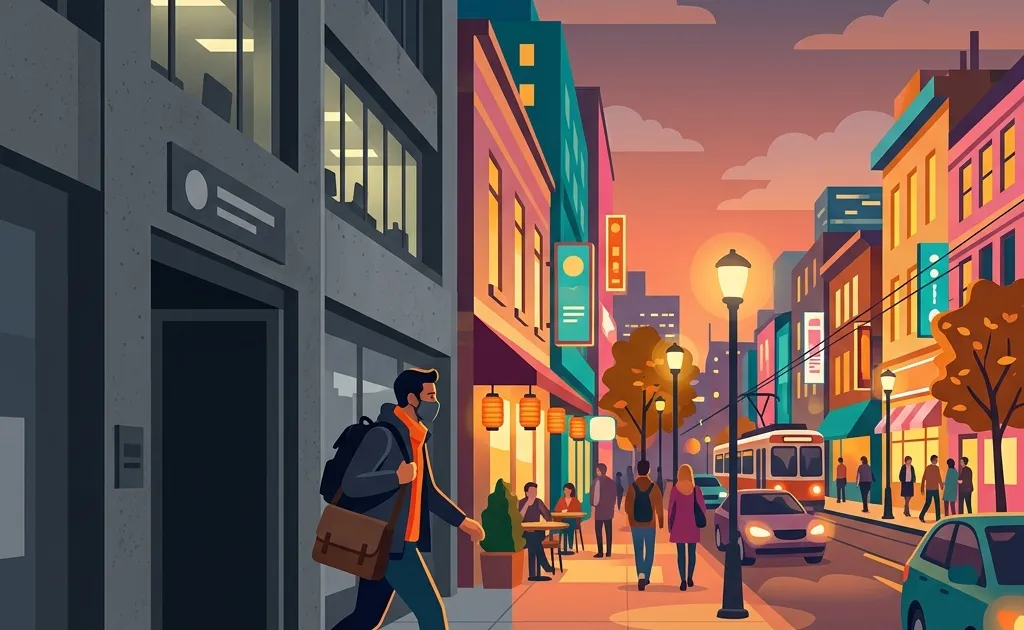
It is 5:01 PM. You have finally closed your laptop or walked out the office door. The emails have stopped, the meetings are over, and your time is supposedly your own again. But instead of feeling liberated or excited about the evening ahead, you feel a profound sense of emptiness. You crash onto the couch, stare blankly at your phone, and a heavy, unexplainable sadness settles over you.
If this sounds familiar, you are absolutely not alone. The post-work slump is a very real phenomenon that affects millions of professionals every single day. We spend eight to ten hours operating in high gear, navigating office politics, meeting deadlines, and making countless decisions. When the pressure suddenly lifts, the emotional and physical crash can be intense.
In this guide, we are going to explore exactly why this happens and, more importantly, how you can structure your evenings so that you actually have a life outside of your job. Because your time off should be about more than just recovering so you can go back to work the next day. This is a comprehensive look at reclaiming your personal hours, overcoming the mental fog, and ensuring that you have energy left for the things and people that actually matter to you.
The Science Behind the Post-Work Crash
Before you start blaming yourself for being lazy or unmotivated, it is important to understand the physiological and psychological mechanisms at play. Feeling down after work is rarely a character flaw, it is usually a biological response to the environment you have been in all day. Your body and mind are reacting to systemic exhaustion, and ignoring these biological realities will only make the slump harder to beat.
The Cortisol Drop
Throughout the workday, your body is often operating on elevated levels of cortisol and adrenaline. Even if your job is not traditionally dangerous, the stress of modern knowledge work keeps your nervous system in a mild state of fight or flight. When you log off, those hormone levels plummet. This sudden drop can mimic the symptoms of mild depression, leaving you feeling lethargic, unmotivated, and emotionally flat. Your body essentially registers that the “threat” is gone and immediately shuts down to conserve energy, pulling you into a state of deep lethargy.
Decision Fatigue
Every email you answer, every project you prioritize, and every interaction you navigate requires a small amount of mental energy. By the time 5 PM rolls around, your brain has made hundreds, if not thousands, of decisions. This cognitive depletion, known as decision fatigue, makes even the simplest evening choices feel overwhelming. Deciding what to make for dinner or what to watch on TV suddenly feels like an impossible burden, leading you to default to the path of least resistance. You choose the easiest, least demanding activity available, which is usually scrolling on your phone or staring at the television.
The Lack of Transition
In previous generations, the commute served as a built-in buffer between work and home. Even if it was stressful, it was a defined “third space” that allowed the brain to shift gears. With the rise of remote work and shorter commutes, the boundary has vanished. Closing a tab on your browser is not a strong enough psychological signal for your brain to switch from “work mode” to “life mode.” You are still physically in the same environment, carrying the same mental load, and your brain struggles to recognize that the workday has actually concluded.
The Impact of Screen Time and Blue Light
Most of us spend our entire workday staring at screens. The constant exposure to blue light disrupts our circadian rhythms and causes significant eye strain. When we finish work and immediately switch to another screen (our phones or televisions) to relax, we are essentially extending the same sensory input that exhausted us in the first place. The visual and mental fatigue continues to compound, making the feeling of lethargy even worse as the evening progresses.
The Trap of the Immediate Reward
When we feel depleted, our brains scream for dopamine. The quickest, easiest ways to get that dopamine are usually the things that make us feel worse in the long run. We grab junk food, we pour a drink, or we fall into the black hole of social media algorithms designed to keep us scrolling endlessly.
The problem with these immediate rewards is that they are entirely passive. They do not actually restore your energy, they simply numb the exhaustion. It is a form of pseudo-rest that leaves you feeling groggy and unfulfilled. If you have ever spent three hours scrolling through short-form video content only to feel more exhausted and slightly disgusted with yourself than when you started, you know exactly how this mechanism works.
To break the cycle, you need to replace passive numbing with active recovery. Active recovery requires a small amount of effort up front, but it yields a massive return in energy, mood, and overall well-being.
Strategy 1: Create a Clear Transition Ritual
If you want to stop feeling down after work, you have to formally signal to your brain that the workday is over. You cannot just drift from your desk to your living room and expect your mindset to change automatically.
The Fake Commute
If you work from home, the “fake commute” is one of the most powerful habits you can adopt. When you finish work, immediately leave your house. Go for a 15-minute walk around the block. You do not need to walk fast or track your steps, just get outside, breathe some fresh air, and change your physical environment. When you walk back through your front door, you are arriving home from work, not just stepping away from your desk. This physical boundary creates a mental boundary.
The Brain Dump
Before you log off, take five minutes to write down every task, idea, and worry floating around in your head. Put it on a physical piece of paper or in a digital document that you will review tomorrow. By externalizing these thoughts, you are giving your brain permission to stop actively managing them for the evening. If you struggle with boundary setting and cannot stop ruminating about your projects, reading about feeling stuck in corporate life might offer some perspective on why leaving work at work is so difficult in modern office cultures.
The Senses Shift
Engage your senses to mark the transition. This could mean taking a quick, warm shower the moment you finish work to physically wash off the day. It could mean changing out of your rigid work clothes into something distinctively comfortable. It might involve lighting a specific candle, turning on warmer ambient lighting, or putting on a specific playlist. The goal is to create sensory cues that your brain strictly associates with relaxation and personal time, differentiating the evening from the rigid structure of the workday.
Strategy 2: Plan Your Evening in Advance
Remember decision fatigue? You can bypass it entirely by making your evening decisions in the morning or the night before. If you reach 5:30 PM and have to figure out what is for dinner, you will likely default to ordering takeout. If you have to figure out what activity to do, you will default to the couch.
Remove the friction. Have your workout clothes already laid out on your bed. Have the ingredients for dinner chopped and ready in the fridge. Decide in the morning that you are going to read a specific book or watch a specific movie tonight. When the evening arrives, you do not have to think, you just have to execute the plan you made when you actually had energy. Planning removes the burden of choice when your cognitive resources are at their absolute lowest point.
Strategy 3: Engage in Active Recovery
Active recovery means engaging in activities that replenish your mental and physical resources. It sounds counterintuitive to do something active when you are tired, but it is often exactly what your brain needs to shake off the slump and generate genuine energy.
Physical Movement
You do not need to do a high-intensity interval training session if you are exhausted. But you do need to move the blood around your body. A 20-minute session of stretching, yoga, or a brisk walk can completely change your neurochemistry. Physical movement flushes out stress hormones and stimulates the release of endorphins. It forces you out of your head and into your physical body, breaking the cycle of rumination.
Creative Hobbies
One of the best ways to disconnect from a stressful job is to engage in an activity that has absolutely no stakes. A creative hobby allows you to focus on the process rather than the outcome. Whether it is drawing, cooking a new recipe, playing an instrument, or woodworking, hobbies provide a sense of identity and achievement outside of your professional life. If you do not have a hobby and feel completely lost on where to start, check out our extensive guide on how to choose a hobby for practical advice on finding something you love.
Social Connection
When we feel down, our instinct is often to isolate. But humans are fundamentally social creatures. Calling a friend, meeting someone for coffee, or even just chatting with a neighbor can snap you out of a post-work funk. Social interaction requires a different type of cognitive engagement than work tasks, and it can be incredibly grounding and emotionally restorative.
Learning Something New
Engaging your brain in a completely different way can actually be refreshing. If your job involves analyzing spreadsheets all day, spending twenty minutes learning a new language or reading about ancient history uses different neural pathways. It reminds you that the world is large and full of interesting things beyond the scope of your daily professional responsibilities.
Strategy 4: Redefine Your Relationship With Work
Sometimes the post-work slump is a symptom of a much larger problem. If you consistently feel depressed after work, it might be a sign that your job is extracting more from you than it is providing, or that you have allowed work to consume your entire identity.
Protecting Your Energy
You have to actively protect your energy. Your employer pays you for a set number of hours and a set amount of output. They do not own your capacity for joy, your physical health, or your evenings. Establishing firm boundaries is not just about time management, it is about deep self-preservation. For a deeper dive into establishing these boundaries, our article on how to improve work-life balance offers several actionable techniques for taking back control of your schedule.
The Danger of Tying Identity to Output
Many professionals fall into the trap of believing their worth is entirely dependent on their productivity. If they had a “bad” day at work, they feel like a failure in life, which inevitably leads to an evening of feeling down and defeated. It is vital to cultivate an identity that has nothing to do with your career. You are a friend, a partner, an artist, an athlete, or simply a human being experiencing the world. Divorcing your self-esteem from your economic output is one of the most powerful ways to stop the post-work depression from taking hold.
The Main Event
Stop treating your evenings as simply the waiting room for the next workday. Your personal time is the main event. Your job is just the mechanism that funds it. When you shift your perspective and realize that your actual life happens between the hours of 5 PM and 9 AM, you will naturally start treating that time with more respect, excitement, and intentionality.
Strategy 5: Audit Your Evening Environment
Your environment shapes your behavior far more than your willpower ever could. If your living room is designed entirely around the television, guess what you are going to do when you sit down?
Take a critical look at the spaces where you spend your evenings. Are they conducive to the activities you actually want to be doing? If you want to read more, make sure there is a comfortable chair with good lighting and a book already waiting there. If you want to play guitar, leave the guitar out on a stand where you can easily grab it, not hidden away in a case in the back of your closet.
Conversely, make the habits you want to break much more difficult. Put the TV remote in another room or take the batteries out. Delete the social media apps from your phone before you leave the office. By designing your environment to support your goals, you remove the need for willpower when your energy is at its absolute lowest. You simply follow the path that your environment encourages.
Conclusion: Give Yourself Grace
Breaking the post-work slump will not happen overnight. You have spent years, perhaps decades, wiring your brain to react to the end of the workday in a specific way. It will take time, immense patience, and conscious effort to build new, healthier pathways and routines.
There will still be days when you are genuinely just too exhausted to do anything but order a pizza and watch a movie. And that is perfectly fine. The goal is not toxic productivity or optimizing every single second of your life. The goal is simply to have a choice. The goal is to ensure that when you crash on the couch, it is because you intentionally decided to relax, not because you were too drained, anxious, and depressed to do anything else.
Start small. Pick one single strategy, perhaps the fake commute or the brain dump, and try it out this week. Notice how it makes you feel. Observe the shifts in your energy and your mood. Over time, you can stack these small habits to create an evening routine that actually restores you, allowing you to completely reclaim your time and your energy. You work hard enough during the day, you absolutely deserve to enjoy the time that belongs to you.
Related Articles
Do You Really Need to Be Productive All the Time?
Society pushes us to optimize every minute. Explore why constant productivity is a toxic trap, the true value of rest, and how to detach self-worth from output.
Feeling Stuck in Corporate Life? How to Break Free
Are you feeling trapped in a mundane corporate job? Discover actionable steps to reignite your passion, pivot your career, and find fulfillment outside work.
Alcohol, Drugs, and the Corporate Ladder: The Hidden Costs
Explore the relationship between substance use and corporate ambition. Learn to recognize unhealthy coping mechanisms and protect your mental health.