
AI Glasses and Privacy Issues: What You Need to Know
Explore the growing privacy concerns surrounding AI glasses in 2026. Learn about covert recording, facial recognition risks, data security, and regulations.

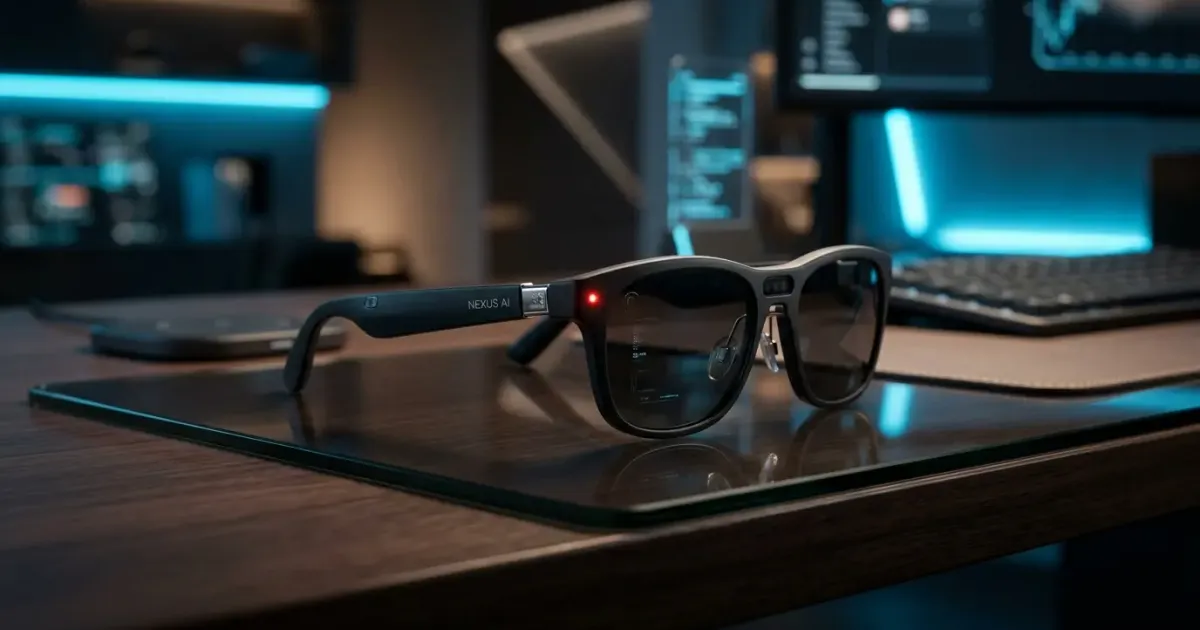
Smart glasses have evolved at a breakneck pace over the past few years. What began as bulky prototypes like Google Glass over a decade ago has transformed into indistinguishable everyday eyewear packed with high-resolution cameras, multi-microphone arrays, spatial audio speakers, and powerful on-device multimodal artificial intelligence models. Today, smart glasses from major tech giants and independent hardware startups allow users to record video clips, translate foreign languages in real time, analyze physical surroundings, summarize documents, and ask AI assistants for contextual contextual feedback without ever looking down at a smartphone screen.
However, as AI glasses transition from niche gadgets for tech enthusiasts into mainstream consumer products, they bring unprecedented surveillance capabilities directly into public spaces. The seamless integration of cameras and multimodal AI onto a user’s face fundamentally challenges traditional boundaries of personal privacy, consent, and data security. In this article, we examine the major privacy issues surrounding AI glasses, how technology companies are addressing bystander concerns, the legal landscape governing spatial recording, and what steps consumers can take to navigate this emerging paradigm.
Want a structured roadmap? Check out our comprehensive Guide to Learning AI in 2026 with step-by-step milestones, free courses, and career advice.
The Evolution of AI-Powered Wearable Eyewear
To understand the scope of current privacy concerns, it is essential to trace how smart eyewear reached its current sophistication. Early smart glasses were primarily heads-up displays designed to project basic notifications, calendar alerts, or turn-by-turn navigation arrows onto a small optical prism. Their utility was limited, battery life was short, and public pushback against integrated cameras led to widespread social taboos.
Modern AI glasses, by contrast, rely on cloud-connected and edge-processed generative AI models. Instead of simply capturing raw photos or displaying smartphone widgets, these devices process continuous environmental streams. Built-in cameras analyze visual scenes to identify objects, text, facial features, and context, while spatial microphones listen for voice commands or ambient conversation.
The convergence of lightweight optical designs with ultra-efficient neural processing units has made smart glasses virtually indistinguishable from standard prescription frames or fashion sunglasses. As a result, bystanders often have no visual indicator that the person sitting across from them at a cafe or riding next to them on public transit is wearing a device capable of recording video, transcribing spoken dialogue, or identifying individuals.
Major Privacy Concerns Surrounding AI Glasses
The integration of AI models with wearable sensors creates several distinct privacy vectors that affect both wearers and the general public.
1. Surreptitious Recording and Lack of Bystander Consent
The most immediate privacy challenge posed by smart glasses is covert recording. Unlike smartphones, which require a user to hold up a visible device aimed toward a target, smart glasses record from eye level. A wearer needs only to glance in a direction, tap a temple frame, or speak a quiet phrase to begin capturing high-definition video or audio.
This passive recording capability severely undermines the expectation of privacy in semi-private or public environments:
- Coffee Shops and Restaurants: Conversations at neighboring tables can easily be picked up by directional beamforming microphones.
- Fitness Centers and Locker Rooms: Compact frames make it difficult to detect active cameras in sensitive environments where recording is strictly forbidden.
- Workplaces and Meetings: Employees or visitors can record confidential discussions, whiteboard sessions, or sensitive computer monitors without explicit authorization.
While manufacturers install tiny light-emitting diodes to indicate when recording is active, these indicator lights are frequently criticized for being too small, easily covered with tape or dark paint, or obscured in bright sunlight.
2. Real-Time Facial Recognition and Information Overlay
The combination of wearable cameras and real-time facial recognition algorithms presents a major concern for anonymity in public spaces. In demonstration projects and third-party software experiments, developers have demonstrated the ability to pair camera streams with public data sources.
When a wearer looks at a stranger, the software can extract facial embeddings, cross-reference them against public database records, social media profiles, or public records, and instantly display personal details on an internal screen or whisper them through directional speakers. Details can include:
- The individual’s full name and current occupation
- Linked social media handles and recent public posts
- Publicly available residential addresses or contact info
This capability eliminates public anonymity. Walking through a city street could subject individuals to non-consensual identity scans, enabling stalking, harassment, or unwanted commercial profiling.
3. Continuous Audio Transcripts and Eavesdropping
Beyond visual capture, modern AI glasses rely heavily on voice interaction. To function effectively as contextual assistants, these devices frequently maintain low-power microphone listeners waiting for wake words or continuous ambient context.
In multi-person environments, AI glasses can generate real-time transcripts of conversations happening nearby. These transcripts may be uploaded to cloud servers for AI processing, summaries, or long-term memory storage. This poses significant legal challenges under wiretapping and eavesdropping regulations, particularly in two-party consent jurisdictions where recording audio without every participant’s permission is a criminal offense.
4. Cloud Data Ingestion and Corporate Surveillance
AI glasses rely heavily on cloud architecture to execute complex multimodal reasoning models. When a user asks an AI assistant to explain a document, translate a menu, or identify a plant, visual images and audio snippets are compressed and transmitted to vendor servers.
This continuous data pipeline creates enormous telemetry repositories maintained by technology companies:
- Visual Data Harvesters: Corporate servers receive raw imagery of private home interiors, family members, proprietary workplace documents, and personal habits.
- Location Tracking: Geolocation data paired with video streams allows companies to map physical movements and retail browsing habits with high precision.
- Model Training Risks: Unless explicitly opted out, user media streams could be incorporated into future AI model training sets, potentially exposing sensitive visual data.
If a vendor experiences a data breach or is served with third-party subpoenas, sensitive user video logs and contextual conversation transcripts could be compromised or handed over to authorities.
Safeguards Implemented by Manufacturers
Recognizing the potential for severe public backlash and regulatory intervention, smart glass manufacturers have introduced several hardware and software privacy safeguards:
| Privacy Feature | Implementation Mechanism | Potential Vulnerability |
|---|---|---|
| LED Capture Indicators | Bright LED lights built into the front frame turn on during active video capture. | Can be covered with opaque tape, stickers, or paint by malicious users. |
| Tamper Detection | Sensors detect if the front LED light is covered and block video capture. | Optical sensor workarounds or firmware modifications can bypass checks. |
| Physical Camera Shutters | Mechanical sliders physically cover the camera lens when not in use. | Relies on user discipline to manually close the shutter. |
| On-Device AI Processing | Face detection and speech recognition occur locally on neural processors without cloud upload. | Requires localized storage and high power consumption; limited model depth. |
| Voice Command Prompts | Requires audible voice commands (e.g., “Hey AI, record video”) to alert surroundings. | Users can trigger recording via discrete physical button taps instead. |
While these features offer partial mitigation, privacy advocates argue that technical safeguards remain insufficient as long as hardware components allow effortless, eye-level recording.
Legal and Regulatory Frameworks
Governments across the world are grappling with how to enforce existing privacy laws on facial hardware.
European Union (GDPR)
The European Union’s General Data Protection Regulation sets strict boundaries on processing personal data, including images and audio of identifiable living individuals. Under GDPR, capturing video of bystanders in public settings for personal or household activities is generally exempt, but processing that data using automated AI systems, facial recognition, or commercial cloud uploads removes the exemption. Companies offering AI glasses in the EU face heavy fines if their devices collect and process bystander data without a clear legal basis.
United States Federal and State Laws
In the United States, privacy regulation is fragmented across federal guidelines and state statutes:
- First Amendment Protections: Recording in public spaces where individuals have no reasonable expectation of privacy is generally protected under federal law.
- Audio Consent Statutes: Over a dozen US states enforce two-party (all-party) consent laws for audio recording. Capturing audio of a conversation using AI glasses without informing all participants can violate state wiretapping laws.
- Biometric Privacy Statutes: Regulations like Illinois’ Biometric Information Privacy Act strictly prohibit private entities from collecting or storing biometric identifiers (including face geometry) without explicit written consent.
Private Property Bans
Regardless of government legislation, private property owners hold full authority to restrict smart eyewear. Gyms, movie theaters, concert venues, courtrooms, corporate offices, and casinos increasingly enforce zero-tolerance policies regarding smart glasses, requiring visitors to remove or store them before entry.
Best Practices for AI Glasses Wearers
If you own or plan to use smart AI glasses, practicing responsible digital citizenship is critical to respecting public privacy and avoiding legal or social conflicts:
- Be Transparent: Inform friends, colleagues, and acquaintances when you are wearing active smart glasses, especially if you intend to capture video or summarize conversations.
- Respect Restricted Spaces: Remove smart glasses or disable recording functions entirely when entering private venues, restrooms, locker rooms, medical facilities, or confidential business meetings.
- Do Not Bypass Indicators: Never cover, disable, or tamper with built-in recording LEDs or privacy notification sensors.
- Review Data Retention Settings: Routinely check your device’s cloud management dashboard to audit saved media, delete unused transcripts, and opt out of telemetry sharing or model training programs.
- Comply with Local Laws: Familiarize yourself with local audio recording and consent statutes before using voice features in public or multi-party settings.
Balancing Technological Innovation with Personal Privacy
AI glasses represent a genuine breakthrough in human-computer interaction. By placing digital intelligence directly into our field of view, they promise to streamline daily tasks, bridge language barriers, and liberate users from constantly staring at handheld screens.
However, widespread social acceptance of AI glasses depends on establishing trust. Technology vendors must prioritize robust hardware-level privacy protections, transparent data practices, and clear opt-out options. Simultaneously, legal frameworks must evolve to protect individual anonymity without suffocating technological innovation. Until clear boundaries are established, the tension between personal convenience and public privacy will remain one of the defining technology debates of the decade.
Top Ranked Frontier AI Models
Empirical rankings sourced from Artificial Analysis, Arena.ai, LLM Stats & BenchLM.
Related Articles

Ray-Ban Meta Smart Glasses Review After 2 Weeks of Use
My honest Ray-Ban Meta review after 2 weeks of daily use, including a helicopter flight over Dubai. Camera, battery, audio, the full picture.

Bambu Lab H3C vs Prusa INDX: Tool-Changer Showdown
Bambu Lab H3C vs Prusa CORE One+ INDX 8-Tool: We compare multi-material tool-changing speed, build volume, waste elimination, TPU support, and pricing.

Kindle Paperwhite Review 2026: Still the One to Buy?
Our 2026 Kindle Paperwhite review: 7-inch screen, waterproofing, warm light, and weeks of battery for $199.99. Here is who should buy it and who should not.