
Rumored iPhone Fold: Specs, Release Date & Price
Everything about Apple's rumored iPhone Fold: supply chain leaks, crease-free display patents, expected launch windows, pricing, and custom iOS features.
 Mehdi
Mehdi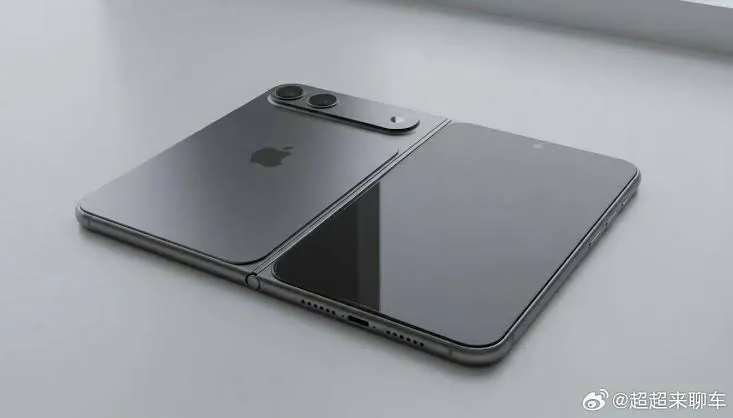
While Android manufacturers have iterated through multiple generations of foldable smartphones, Apple has noticeably abstained from entering the foldable arena. Devices like the Samsung Galaxy Z Fold series, the Google Pixel Fold, and the OnePlus Open have proven that flexible display technology is no longer just an experimental gimmick. It has matured into a viable product category for power users, mobile professionals, and tech enthusiasts.
Yet, Cupertino has remained characteristically silent. Apple has never been eager to be the first to adopt a new form factor. Instead, the company traditionally waits until a emerging technology matures, identifies the remaining friction points, and attempts to deliver a refined, polished experience that defines the market.
Behind the scenes, however, supply chain movements, regulatory patent filings, and analyst disclosures tell a much more active story. Rumors regarding a flexible Apple device, tentatively dubbed the “iPhone Fold” or “iPad Fold”, have intensified significantly. In this comprehensive guide, we synthesize the latest industry reports, examine key patent filings, break down expected hardware specifications, analyze pricing models, and evaluate what a foldable iOS experience might look like.
The Evolution of Apple Foldable Patents and Rumors
The paper trail for an Apple foldable dates back further than many realize. As early as 2018, Apple began filing patent applications with the United States Patent and Trademark Office (USPTO) concerning flexible display structures, specialized stress-relief layers, and self-healing cover materials.
Initially, rumors were split on which direction Apple would choose for its first flexible device. Industry observers debated whether Apple would release a compact clamshell device (an “iPhone Flip”) similar to the Galaxy Z Flip, or a large book-style foldable (an “iPhone Fold”) that opens into a tablet-sized inner display. Recent supply chain tracking from prominent industry analysts, including Ming-Chi Kuo and Display Supply Chain Consultants (DSCC) chief Ross Young, suggests Apple shifted its core development focus toward the larger book-style hybrid form factor.
| Generation | Timeline | Key Characteristics & Friction Points |
|---|---|---|
| Generation 1 | 2019–2021 | Plastic screens, visible deep crease, delicate hinges, fragile build |
| Generation 2 | 2022–2024 | Early UTG glass, waterdrop hinges, IPX8 waterproofing added |
| Generation 3 | 2025–2026+ | Zero-crease target, liquid metal, ultra-thin chassis, hybrid OS scaling |
Apple’s reluctance to launch a foldable earlier stems directly from strict internal quality control thresholds. Reports indicate that Apple executives refused to sign off on early prototypes due to two major dealbreakers: display creasing and device thickness. While competitor foldables have made significant strides, early iterations suffered from deep horizontal or vertical grooves along the fold line, as well as bulky profiles when closed. Apple appears determined not to release a foldable until the display is visually seamless and the chassis remains as sleek as a standard iPhone Pro Max.
Display Technology: The Quest to Eliminate the Crease
The display is indisputably the centerpiece of any foldable phone, and it is also where Apple is concentrating its heaviest engineering resources. According to leaks from display panel manufacturers in South Korea, Apple has been co-developing custom flexible OLED panels with Samsung Display and LG Display.
Ultra-Thin Glass (UTG) and Stress Relief Matrices
Traditional rigid smartphones use thick sheets of chemically strengthened cover glass (such as Ceramic Shield or Gorilla Glass). Foldables, however, require a cover material flexible enough to bend hundreds of thousands of times without cracking or degrading optically. Current foldables rely on Ultra-Thin Glass (UTG), which is processed to a thickness of just a few dozen micrometers.
Apple’s patent filings outline a sophisticated approach to UTG construction. Rather than relying on a uniform layer of thin glass, Apple’s designs feature a variable-thickness glass substrate. The glass is chemically etched along the folding axis to be micro-thin, allowing for a tight bend radius, while remaining thicker near the outer edges to provide structural rigidity against drops and impacts.
Apple Crease-Free Display Patent Architecture:
- Self-Healing Elastomeric Top Layer: Recovers from surface scratches and minor micro-indentations.
- Variable-Thickness UTG: Ultra-thin along the central axis for smooth bending, thicker on outer edges.
- Liquid Metal Filler & Micro-Struts: Spring-loaded support plates and liquid metal fill the central channel to prevent sagging.
- Flexible OLED & Touch Sensor Matrix: Base display layer engineered for multi-million bend longevity.
To prevent the center channel from sagging or forming a groove over time, the patent describes a liquid metal or elastomeric filler placed underneath the glass along the hinge axis. When the device is opened flat, spring-loaded support plates push upward against the display panel, leveling out the surface so the seam becomes imperceptible to both the eye and the fingertip.
Self-Healing Coatings
Another fascinating area of Apple’s display research involves self-healing materials. Patent documentation shows a protective cover layer infused with an elastomeric polymer that can recover from minor scratches and indentations. When exposed to ambient heat, light, or an internal micro-heating element along the hinge, the polymer matrix relaxes and flows back into tiny surface imperfections, keeping the screen pristine despite heavy daily use.
Expected Display Sizes
Sources familiar with prototype testing suggest the iPhone Fold will feature a dual-display configuration:
- Outer Cover Screen: A 5.8-inch to 6.3-inch OLED display with a standard 19.5:9 aspect ratio, allowing users to handle quick messages, phone calls, and camera shots without unfolding the device.
- Inner Folding Display: A 7.8-inch to 8.3-inch flexible OLED screen with ProMotion dynamic refresh rate technology (ranging from 1Hz to 120Hz) and high peak brightness, expanding into a canvas comparable to an iPad Mini.
Hinge Mechanics and Industrial Engineering
If the display is the heart of a foldable, the hinge is its spine. Designing a hinge capable of surviving 300,000 fold cycles while keeping out dust, lint, and moisture is one of the toughest mechanical engineering challenges in modern consumer electronics.
| Feature / Component | Expected Specification |
|---|---|
| Outer Display | 6.1-inch ProMotion OLED (1–120Hz) |
| Inner Display | 8.1-inch Seamless Foldable OLED (1–120Hz) |
| Chassis Material | Grade 5 Titanium Outer Frame + Ceramic Glass |
| Hinge Mechanism | Multi-Pivot Waterdrop Hinge with Liquid Metal |
| Processor | A20 Pro / M-Series Custom Apple Silicon |
| Camera System | Triple-Lens Array + Under-Display Interior Camera |
| Biometrics | Touch ID Power Button + Under-Display Face ID |
| Battery | Dual-Cell Split Battery Architecture |
Apple has reportedly prototyped several hinge mechanisms, moving away from complex gear-heavy structures toward multi-pivot waterdrop hinges. A waterdrop hinge allows the inner display to form a teardrop shape inside the body when closed. This avoids pinching the glass at an acute angle, reducing mechanical stress on the OLED layer and allowing the two halves of the phone to fold completely flat without a visible gap.
Titanium Materials and Weight Reduction
Weight is a critical consideration. A device that combines a large battery, dual displays, and a complex metal hinge can easily become uncomfortably heavy for single-handed use. Apple is expected to leverage Grade 5 titanium for the outer frame and structural hinge housing, building upon the material expertise developed for recent iPhone Pro models. Titanium offers an extraordinary strength-to-weight ratio, allowing Apple to shave off precious grams while maintaining rigid structural integrity.
Protection against environmental elements remains another focus. Current water-resistant foldables achieve IPX8 ratings, meaning they can survive immersion in fresh water but lack certified protection against fine particles like sand or dust. Apple’s hinge patents detail micro-bristles and silicone gaskets engineered to sweep debris out of the internal gear cavity whenever the phone opens and closes.
Protecting high-end mobile hardware requires thoughtful care. Many users already debate whether to use protective cases or minimalist skins on standard devices, as outlined in our analysis of phone cases vs minimalist skins. For a foldable costing nearly two thousand dollars, protective accessories will become an even more crucial consideration.
Performance, Camera Systems, and Battery Architecture
A flagship foldable demands top-tier internal performance to drive demanding multi-window multitasking and graphics workflows.
Next-Gen Apple Silicon
The iPhone Fold is rumored to feature Apple’s next-generation silicon, built on an advanced 2-nanometer process. Depending on how Apple positions the device within its lineup, it could run on an A-series Pro processor or a dedicated variant of an M-series chip optimized for low thermal dissipation in ultra-slim enclosures.
The chip will need to manage independent display controllers, smoothly transitioning app states between the small outer cover screen and the expansive inner panel without dropping frames. Furthermore, on-device AI processing will play a central role, leveraging high-efficiency Neural Engine cores to execute complex language model tasks locally.
Dual-Cell Battery System
To maintain balanced weight distribution and maximize internal volume, Apple is implementing a dual-cell split battery design:
- Left Wing Chassis: Houses Battery Cell A (~2,200 mAh) alongside dedicated power management circuitry.
- Right Wing Chassis: Houses Battery Cell B (~2,600 mAh) alongside the main Apple Silicon processor.
- Central Hinge Routing: A flexible power bus cable connects both wings across the hinge mechanism seamlessly.
Combined battery capacity is expected to range between 4,800 mAh and 5,200 mAh, providing all-day battery life despite the power demands of the large 8-inch internal display.
Camera Modules: Overcoming Physical Limits
Camera hardware presents an engineering tradeoff in foldable devices. Because each half of a foldable chassis is significantly thinner than a standard slab smartphone, fitting deep telephoto periscope lenses without creating a massive camera bump is exceptionally difficult.
Apple is rumored to equip the outer cover of the iPhone Fold with a triple-lens camera module, while utilizing an under-display camera (UDC) or a micro-punch hole for the internal screen to keep video calls unobstructed. Advanced algorithmic processing will compensate for physical sensor size limitations, reflecting the broader industry transition toward software-driven imaging explored in our guide on computational photography vs dedicated camera systems.
iOS for Foldables: Bridging the Gap to iPadOS
Hardware innovation is only half the equation. The success of an Apple foldable will ultimately hinge on software integration. A folding hardware design is useless if the operating system treats the inner screen merely as a blown-up smartphone view.
| Mode | Display Canvas | Expected iOS Behavior & Layout |
|---|---|---|
| Folded State | Cover Screen | Standard single-window iOS interface optimized for one-handed use |
| Unfolded State | Inner Canvas | Dual-column layout with shared AI Context Shelf & drag-and-drop support |
| Flex Mode (90°) | Split Horizontal | Top screen displays content/video; bottom half morphs into trackpad or controls |
Apple is reportedly developing a tailored version of iOS (incorporating key productivity elements from iPadOS) specifically designed for flexible screen geometries. Potential software features include:
- Continuity App Continuity: Opening an app on the cover screen and unfolding the device immediately expands the workspace into a multi-column desktop layout without reloading state.
- Advanced Split View and Slide Over: Dragging an app icon to either side of the inner display instantly creates a 50/50 or 70/30 split-screen environment. Users will be able to drag images, text blocks, and files seamlessly between side-by-side windows.
- Flex Mode / Desk Stand Orientation: Partially folding the phone at a 90-degree angle transforms the bottom half into a virtual trackpad, keyboard, or control panel while video playback or controls occupy the top half.
- Contextual AI Spatial Canvas: Leveraging on-device machine intelligence to automatically organize workspace windows based on ongoing tasks. For instance, opening a travel planning app could automatically surface email confirmations and map tools in a tiled layout.
As operating systems grow more integrated across desktop and mobile form factors, software platforms are expanding rapidly, a trend discussed in our review of recent iOS and macOS updates. The iPhone Fold could serve as the ultimate hardware bridge between pocket mobility and desktop capability.
Expected Price and Launch Timeline
Acquiring a foldable smartphone has never been cheap, and an Apple-branded foldable will undoubtedly sit at the apex of premium pricing.
| Device Model | Form Factor | Estimated / Actual Retail Price |
|---|---|---|
| iPhone Pro Max (512GB) | Flagship Slab | $1,399 |
| Samsung Galaxy Z Fold 6 / 7 | Book Foldable | $1,899 |
| Google Pixel Fold 2 / 3 | Book Foldable | $1,799 |
| Rumored iPhone Fold | Book Foldable | $1,899 – $2,199 |
Pricing Analysis
Industry analysts estimate that the iPhone Fold will enter the market between $1,899 and $2,199 for base storage configurations. This premium positioning accounts for the high bill of materials (BOM), including specialized titanium hinges, dual 120Hz OLED panels, custom UTG glass substrates, and advanced thermal cooling assemblies.
Component costs across the entire consumer electronics sector have seen upward pressure in recent years, a pattern detailed in our analysis of the rising cost of mobile hardware. Apple is unlikely to sacrifice profit margins on a groundbreaking halo product, ensuring the iPhone Fold remains a luxury device targeted at early adopters and enterprise executives.
Release Window
When can consumers expect an official announcement? While optimistic rumors once pointed to early 2025, recent supply chain audits and yield rate reports from panel manufacturers suggest a revised timeline:
- Late 2026 Announcement: The earliest realistic window for an official reveal, potentially alongside Apple’s traditional autumn hardware event or a dedicated special keynote.
- 2027 Commercial Availability: If display yield rates require further refinement to meet Apple’s stringent zero-crease standard, mass production could shift into early 2027.
Apple is clearly in no hurry to rush an unrefined product to store shelves. The company would rather let competitors test market appetite while its engineers refine display durability and manufacturing consistency in secrecy.
Should You Wait for the iPhone Fold?
With a rumored launch window spanning late 2026 into 2027 and a price tag approaching two thousand dollars, should you hold off on upgrading your current smartphone?
| Wait for iPhone Fold if: | Buy a Current Flagship if: |
|---|---|
| You want an iPad-sized screen that fits in your pocket | You need a reliable phone today for work/daily use |
| Budget is not a constraint and you want cutting-edge tech | You dislike heavy devices or mechanical hinges |
| Mobile multitasking & multi-app workflows are central | You prefer straightforward flat glass durability |
For most consumers, waiting two years for a rumored, high-cost first-generation product is impractical. Modern slab smartphones like the iPhone 15 Pro, iPhone 16 Pro, and current Android flagships offer extraordinary battery life, world-class cameras, and immaculate displays at a fraction of the cost.
However, if you are a mobile professional who constantly switches between a smartphone and an iPad while commuting or traveling, a crease-free foldable running an optimized version of iOS could be a game-changer. It represents the logical destination of mobile hardware: a single device that seamlessly morphs from a pocketable smartphone into a full-featured workstation tablet.
For readers seeking to simplify their relationship with mobile technology altogether, taking a step back from constant screen notifications can be remarkably refreshing, as highlighted in our look at dumb phones for deep work.
Final Verdict
The iPhone Fold remains one of the most anticipated unannounced products in tech history. Apple’s patent filings and supply chain investments confirm that Cupertino is taking flexible displays very seriously. By focusing on eliminating the screen crease, perfecting hinge mechanics with titanium alloys, and tailoring iOS for multi-window spatial productivity, Apple aims to redefine what users expect from a foldable device.
While we wait for official confirmation from Cupertino, one thing is clear: when Apple finally unveils its flexible iPhone, it will not just be entering a market; it will be attempting to set the new benchmark for mobile computing.
Frequently Asked Questions
Is Apple working on a foldable iPhone?
Industry reports, patent filings, and supply chain analysts strongly indicate that Apple is actively prototyping foldable displays and hinge mechanisms for a future iPhone Fold or iPad Fold.
When is the iPhone Fold expected to release?
Analyst consensus points toward a potential release window between late 2026 and 2027, as Apple prioritizes perfecting crease resistance and display durability over being first to market.
How much will the iPhone Fold cost?
Rumored pricing estimates suggest the iPhone Fold could launch in the premium tier between $1,800 and $2,200, competing directly with flagship foldable devices from Samsung and Google.
Will the iPhone Fold have a visible screen crease?
Patents indicate Apple is developing specialized glass matrix and liquid metal hinge designs aimed at minimizing or completely eliminating the visible display crease common in current foldables.
Related Articles
Phone Skins vs Cases: Which Is Best for Your Device in 2026?
Choosing between a phone skin and a case? We compare dbrand, XtremeSkins, and rugged cases to help you decide the best protection for your device.

AirPods Pro 3 Review: Still Worth It in 2026?
AirPods Pro 3 review after months of daily use: 8h battery, best-ever ANC, IP57 and $249. Worth it new, but a skippable upgrade from Pro 2. Honest verdict.

The State of Electric Vehicles in 2026
Explore the global electric vehicle market in 2026. Discover how new battery tech, expanded charging networks, and lower prices are changing the industry.