
How to Stop Buying Tech You Don't Need (Decision Guide)
Struggling with tech addiction and buying new gadgets? Use our step-by-step decision making framework before you buy your next pair of headphones or camera.

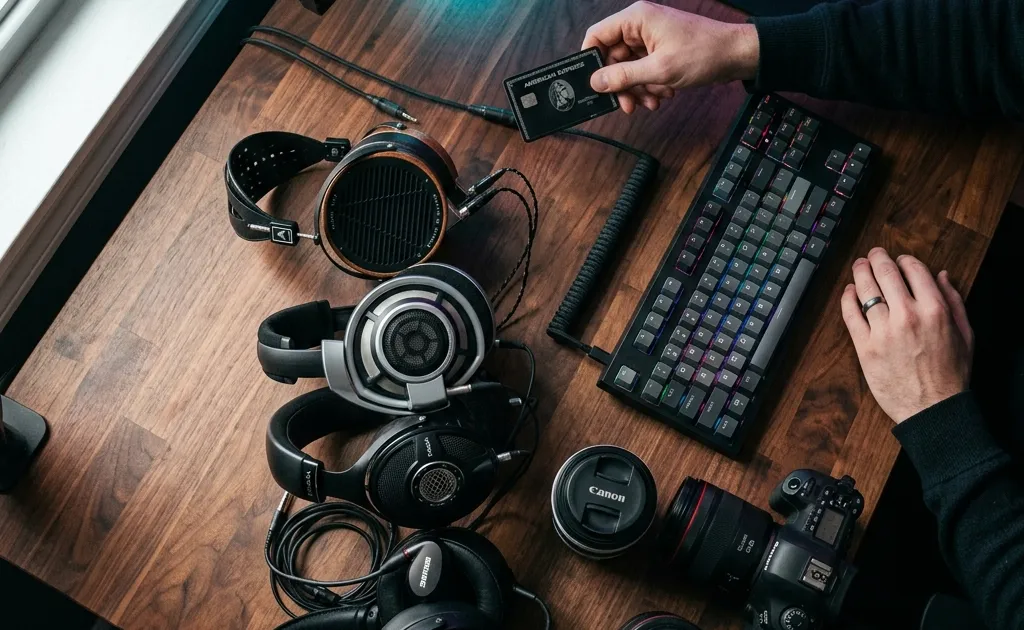
Have you ever found yourself browsing Amazon at 2:00 AM, desperately convinced that a new pair of noise-canceling headphones is the missing key to unlocking your ultimate productivity? You might already own three perfectly good pairs: the daily drivers, the workout earbuds, and the old over-ear ones that are technically fine but slightly scuffed. Yet, your brain insists that this new pair, with its 15 percent better battery life and slightly sleeker profile, will revolutionize your work life.
Welcome to the modern tech consumerism trap. It is a loop that many of us fall into, especially when we work from home, spend hours at a desk, or harbor creative aspirations like photography or 3D printing. The thrill of the purchase, the anticipation of the delivery, and the temporary dopamine hit of unboxing a new gadget are powerful psychological drivers. But this endless cycle of buying new tech we do not actually need is draining our wallets, cluttering our workspaces, and ultimately distracting us from the very work or hobbies we claim to be optimizing.
Exploring more wealth-building tools? Browse our full Investing Tools & Learning Hub for apps, screeners, and beginner strategies.
If you are struggling with the urge to constantly buy new stuff, this guide is for you. We are going to unpack the psychology behind why we buy gadgets we do not need, and provide a concrete, step-by-step decision-making framework to help you evaluate your next purchase. Before you click “Buy Now” on that fifth pair of headphones or that new vintage camera lens, read this.
The Psychology Behind Tech Consumerism
To stop buying tech you do not need, you first have to understand why you are buying it in the first place. Tech companies spend billions of dollars on marketing designed to exploit our psychological vulnerabilities. They do not just sell a product; they sell an idealized version of ourselves.
The Illusion of Productivity
One of the most common justifications for buying new tech is the “Illusion of Productivity.” We convince ourselves that our current output is limited by our tools, rather than our habits or discipline. We believe that a new mechanical keyboard will make us type faster, a new ultra-wide monitor will make us a better programmer, or a new productivity app subscription will magically organize our chaotic lives.
This is rarely the case. If you are procrastinating on a single monitor, you will likely just procrastinate across two monitors. As we discussed in our Home Office Setup Budget Guide, true productivity comes from systems and focus, not hardware. The new tool might provide a temporary burst of motivation, but once the novelty wears off, your baseline habits will return.
Perceived Obsolescence
Tech companies are masters of “perceived obsolescence.” This is different from planned obsolescence, where a product is designed to break after a certain period. Perceived obsolescence is when a perfectly functional product is made to feel outdated because a newer, shinier version exists.
Think about smartphones. The leap from an iPhone 13 to an iPhone 15 is objectively marginal for the average user. But the marketing engine emphasizes the slightly better camera sensor or the new titanium frame, making your two-year-old phone feel like an ancient relic. This psychological pressure keeps consumers on a constant upgrade treadmill, chasing incremental improvements that rarely translate into meaningful lifestyle changes.
The Dopamine Cycle
Ultimately, much of our tech buying is driven by dopamine. The modern e-commerce experience is gamified to maximize anticipation and reward. Researching a product, watching endless YouTube reviews, reading Reddit threads, and finally hitting the checkout button all trigger dopamine release in the brain. Handing the research step to a chatbot can shorten that loop considerably, and our guide to AI assisted shopping covers where that helps and where it just relocates the problem.
The problem is that the high is temporary. Once the item arrives and is unboxed, the reality of ownership sets in. The gadget is no longer a magical artifact of potential; it is just a thing sitting on your desk. And so, the brain starts looking for the next hit, leading you right back to the Amazon search bar.
The 5-Step Decision-Making Framework
Awareness of the psychology is the first step, but you also need practical tools to break the cycle. The next time you feel the overwhelming urge to buy a new piece of tech, run it through this 5-step decision-making framework.
Step 1: The 48-Hour (or 30-Day) Rule
The single most effective way to curb impulse spending is to create friction between the urge to buy and the actual purchase.
When you find a gadget you “must have,” do not buy it immediately. Instead, add it to a wishlist or a dedicated “Cool Stuff I Want” spreadsheet, and impose a mandatory waiting period. For smaller purchases (under $100), wait 48 hours. For larger purchases, wait 30 days.
During this waiting period, do not actively research the product. Do not watch reviews. Just let the idea sit. In my experience, about 80 percent of the time, the overwhelming urge to buy dissipates within a week. You will realize that you were caught up in the hype, and the desire will fade. If, after 30 days, you still consistently feel that the item will add significant value to your life, you can proceed to the next step.
Step 2: The “Will It Change My Workflow?” Test
Before buying a new tool, ask yourself a brutally honest question: Will this fundamentally change or improve my daily workflow, or is it just a lateral move?
Let us return to the headphone example. If you currently own basic Apple EarPods and you work in a noisy open-plan office, upgrading to high-end active noise-canceling headphones will fundamentally change your workflow. It will reduce distractions, lower your stress levels, and allow you to focus. That is a justifiable purchase.
However, if you already own a pair of Sony WH-1000XM4s and you want to buy the XM5s because they have slightly better treble response, that is a lateral move. It will not change your workflow; it will only satisfy a fleeting desire for novelty. Be ruthless in your assessment. If the tool does not solve a specific, painful problem you are currently experiencing, you do not need it.
Step 3: The Cost-Per-Use Calculation
A $2000 laptop that you use for eight hours a day, five days a week, for four years is a fantastic investment. Its cost-per-use is pennies. A $500 drone that you fly three times a year on vacation is an incredibly expensive novelty.
When evaluating a purchase, estimate how often you will realistically use the item over its lifespan. Divide the purchase price by the estimated number of uses to find your cost-per-use.
This metric is incredibly helpful for distinguishing between aspirational purchases and practical tools. We often buy gear for the person we want to be (the rugged outdoorsman, the prolific vlogger) rather than the person we actually are. If the cost-per-use calculation reveals that you are paying $50 every time you pick up that new camera lens, it might be better to just rent it for the weekend.
Step 4: The One-In, One-Out Policy
If you have decided that you truly need a new item, implement the “One-In, One-Out” policy. For every new gadget you bring into your home, you must sell, donate, or recycle an old one of a similar category.
If you are buying a new mechanical keyboard, the old one has to go. If you are buying a new 3D printer, the old Ender 3 needs to find a new home.
This policy does two things. First, it prevents physical clutter from overtaking your workspace. Second, it forces you to confront the financial reality of your purchases. If you are not willing to part with your current gear to make room for the new gear, it is a strong indicator that you do not actually need the upgrade. Furthermore, selling your old gear on eBay or Facebook Marketplace can offset the cost of the new purchase, making it a more financially responsible decision.
Step 5: Can I Upgrade What I Already Have?
Before replacing an entire device, consider whether it can be repaired, upgraded, or modded to meet your needs. We live in a throwaway culture, but many tech products have longer lifespans than we give them credit for.
If your laptop is running slowly, check if you can upgrade the RAM or swap out the old hard drive for a fast SSD before buying a whole new machine. If your favorite headphones are uncomfortable, look into buying replacement third-party earpads instead of dropping $300 on a new pair. If your 3D printer is producing sloppy prints, spend a weekend calibrating it and perhaps printing some structural upgrades, rather than throwing your hands up and buying a Prusa.
As we discussed in our article on Buy vs. 3D Print Tools, sometimes the most satisfying solution is the one that requires a bit of DIY effort, rather than simply throwing money at the problem.
Common Tech Traps and How to Avoid Them
Different hobbies and professions have their own unique consumerism traps. Recognizing these specific pitfalls can help you avoid them.
The Audio Trap
Audiophile culture is notorious for the pursuit of marginal gains. The difference between a $50 pair of headphones and a $200 pair is massive. The difference between a $500 pair and a $1000 pair is often subjective, requiring specialized DACs (Digital-to-Analog Converters) and lossless audio files to even perceive.
The audio trap lies in chasing the “perfect” sound signature. You buy bass-heavy headphones for hip-hop, analytical headphones for classical, and a different pair of IEMs for the gym.
How to avoid it: Find one good, versatile pair of headphones that you enjoy and stop reading audiophile forums. Use software EQ (equalization) to tweak the sound profile to your liking rather than buying new hardware.
The Photography Trap
Photographers are uniquely vulnerable to “Gear Acquisition Syndrome” (GAS). There is always a sharper lens, a sensor with better low-light performance, or a new vintage glass adaptation to try. The trap is believing that better gear equals better photos.
How to avoid it: Challenge yourself to shoot with only one focal length for a month. Focus on composition, lighting, and storytelling. Remember that some of the most iconic photos in history were taken on cameras that are technologically inferior to the smartphone currently sitting in your pocket. If you are interested in exploring camera formats, check out our Sensor Size Guide to understand what you actually need.
The Workspace Trap
The rise of the aesthetic home office has created a whole new category of tech consumerism. We buy specific mechanical keyboard switches for the “thock” sound, custom coiled cables that serve no functional purpose, and expensive desk mats to complete a color theme.
How to avoid it: Acknowledge when a purchase is purely aesthetic rather than functional. There is nothing wrong with wanting a beautiful workspace, but do not justify a $200 artisan keycap as a “productivity investment.” Budget for it as decor, not as a necessary tool.
Redirecting the Urge: What to Do Instead
When the urge to buy strikes, you need a healthy outlet to redirect that energy. You cannot just suppress the desire for novelty; you have to replace it with something more productive.
Invest the Money Instead
Take the exact amount of money you were about to spend on that gadget and transfer it to an investment account. If you were about to drop $400 on a new smartwatch, buy $400 worth of an S&P 500 index fund instead.
Watching your portfolio grow can provide a similar, but much more sustained, dopamine hit compared to buying depreciating tech. Over time, you will start to view unspent money not as a missed opportunity for a gadget, but as fuel for your financial independence. If you are new to this concept, our guide on Free Investing Courses and Resources is a great place to start.
Learn a New Skill With Your Current Gear
Often, the desire for new gear is actually a masked desire to improve at a skill. Instead of buying a new tool, commit to mastering the tool you already have.
If you want a new camera, spend a weekend taking a free online course on advanced Lightroom editing techniques. If you want a new 3D printer, learn how to design your own models in Fusion 360 or Blender. By investing time into skills rather than money into hardware, you will see vastly more improvement in your output.
Clean and Maintain Your Stuff
Sometimes, making old gear feel new again is as simple as giving it a deep clean. Spend an hour cleaning the gunk out of your keyboard switches, wiping down your monitors, and managing the cables under your desk. Perform a clean installation of your operating system to make your old laptop feel snappy again.
Maintaining your equipment fosters a sense of appreciation and stewardship that counteracts the endless desire for the new.
Conclusion
The 5th pair of headphones will not make you happier, more productive, or more successful. It will simply be another object to manage, charge, and eventually discard.
Breaking the cycle of tech consumerism requires self-awareness, discipline, and a willingness to confront the psychological triggers that drive our spending. By implementing waiting periods, calculating cost-per-use, and focusing on skill development over hardware acquisition, you can reclaim your focus, declutter your physical space, and keep your hard-earned money where it belongs: in your bank account.
Stop searching for the magic bullet in an Amazon box. The tools you already have are almost certainly enough.
Frequently Asked Questions
What is the 48-Hour Rule for buying tech?
The 48-Hour Rule is a strategy to curb impulse spending. When you want to buy a new gadget, you force yourself to wait at least 48 hours before making the purchase. For larger items, waiting 30 days is recommended. This cooling-off period allows the initial emotional urge to subside, helping you make a more rational decision.
How do I calculate cost-per-use for a gadget?
To calculate cost-per-use, estimate how many times you will realistically use an item over its entire lifespan, then divide the purchase price by that number. For example, a $1000 laptop used daily for four years has a very low cost-per-use, while a $500 drone used twice a year has a very high cost-per-use.
What is Gear Acquisition Syndrome (GAS)?
Gear Acquisition Syndrome (GAS) is a common phenomenon among hobbyists, particularly photographers and musicians, where they obsessively buy new equipment believing it will improve their skills or output. It often distracts from actual practice and skill development.
Related Articles

Offline Travel Tech: Essential Apps & Devices for No-Data Regions
Prepare your smartphone, Kindle, and gear for zero-connectivity travel. Discover offline maps, offline translation packs, travel guides, and power tips.

Gemini 3.8 Flash Review: Benchmarks, Pricing & Verdict
Google Gemini 3.8 Flash reviewed against Google's own model card: real benchmarks vs. Claude Opus 5 and GPT-5.6, API pricing, and who should switch.

12 Best Back to School Tech Gadgets for Students (2026)
Discover the best back to school tech gadgets for 2026. Practical dorm, study, and productivity tools from ANC headphones to digital note-takers.